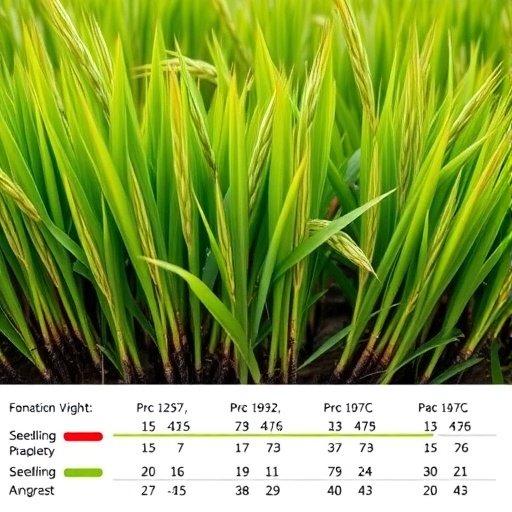
In a groundbreaking study published in Discovery Agriculture, researchers have delved into the variability and genetic advancements concerning seedling vigor in rice (Oryza sativa L.) genotypes. The research, spearheaded by an insightful team comprising Salman, Singh, Raj, and others, aims at unraveling the intricate traits associated with seedling vigor, a critical aspect in the field of agronomy and crop science. This work is poised to make significant contributions to not only agricultural practices but also to global food security.
Seedling vigor is a multifaceted trait that encapsulates several physiological processes. It encompasses germination speed, seedling growth rate, and the ability to thrive in various environmental conditions. All these factors are essential for establishing robust plants capable of yielding optimal crops. Ensuring strong seedling vigor is paramount for rice, a staple food for millions around the world. This makes the results from the study immensely relevant to farmers, agronomists, and policymakers alike.
The research methodology employed by the team was meticulous and comprehensive. It involved evaluating a diverse set of rice genotypes, allowing for an extensive assessment of both genetic and phenotypic variability. By selecting genotypes that represented a wide range of characteristics, the researchers were able to provide a more accurate depiction of the genetic landscape influencing seedling vigor traits. Such a detailed genetic evaluation is crucial for breeding programs that aim to enhance crop resilience and productivity.
One of the pivotal findings of the study revealed significant genetic variability among the rice genotypes investigated. This variability underscores the potential for selective breeding, a phenomenon where advantageous traits can be enhanced over generations. Such advancements in breeding can lead to the development of rice varieties that demonstrate not only improved seedling vigor but also greater resistance to environmental stresses, such as drought or flooding, which are increasingly prevalent due to climate change.
Furthermore, the authors explored various agronomic practices that can enhance seedling vigor. This includes optimal sowing dates, soil preparation techniques, and the application of fertilizers. The interplay between genetic and environmental factors can shape seedling performance in profound ways, making it essential to synthesize both components when aiming for agricultural improvement. This intersection presents an opportunity for holistic approaches that address the needs of modern agriculture.
The genetic advance for seedling vigor traits was another crucial component of the research. The team utilized statistical models to predict the potential for future genetic gains through selective breeding. These predictions are vital, as they can guide breeding programs towards maximizing efficiency and outcomes. By establishing these benchmarks, the study sets a foundation for future research in genetics, as well as practical applications in the field.
In addition to practical agricultural implications, the research calls attention to broader ecological concerns. As rice cultivation expands to meet the dietary needs of a growing population, understanding the genetic factors that contribute to seedling vigor can play a critical role in reducing agricultural inputs and environmental impact. By optimizing seedling performance, farmers can achieve greater yields on less land, conserving resources and promoting sustainable agricultural practices.
The potential impact of this research extends well beyond the confines of academic study. As global populations rise and the demand for food increases, advances such as those investigated in this study can lead to more resilient agricultural systems. The findings give farmers the knowledge they need to select the best rice genotypes for their local conditions, thereby enhancing production levels and food security.
Moreover, the study opens avenues for interdisciplinary collaboration between geneticists, agronomists, and environmental scientists. Understanding the complexities of seedling vigor requires a multifaceted approach that encompasses molecular biology, ecosystem management, and innovative agricultural technologies. This collaborative spirit is essential for addressing the multifactorial challenges posed by modern agriculture.
As the agricultural landscape becomes increasingly technological, the insights gained from such studies provide a richer context for developing precision farming techniques. By integrating genetic data with technological applications, farmers can make informed decisions about crop management that promote both productivity and sustainability. This integration represents a fusion of age-old agricultural wisdom with cutting-edge scientific advancements.
In conclusion, the assessment of variability and genetic advances for seedling vigor traits in rice genotype not only enriches our understanding of plant genetics but also strengthens the framework for future agricultural practices. With food security at the forefront of global challenges, research like this is instrumental in equipping the agricultural sector with the tools necessary to adapt and thrive in an ever-evolving landscape. The intricate balance between genetic potential and environmental adaptability underscores the importance of ongoing research in cultivating a more resilient agricultural future for generations to come.
Through such exhaustive explorations into genetic variability and advancement, researchers are paving the way for a new era in rice cultivation that prioritizes resilience, efficiency, and sustainability. The findings from this study will undoubtedly reverberate through scientific communities, influencing breeding practices and shaping agricultural policy as we strive to meet the needs of a burgeoning global population.
Subject of Research: Assessment of variability and genetic advance for seedling vigor traits in rice (Oryza sativa L.) genotypes.
Article Title: Assessment of variability and genetic advance for seedling vigourtraits in rice (Oryza sativa L.) genotypes.
Article References:
Salman, M., Singh, S., Raj, A. et al. Assessment of variability and genetic advance for seedling vigourtraits in rice (Oryza sativa L.) genotypes.
Discov Agric 3, 282 (2025). https://doi.org/10.1007/s44279-025-00441-y
Image Credits: AI Generated
DOI: https://doi.org/10.1007/s44279-025-00441-y
Keywords: Seedling vigor, rice genotypes, genetic variability, agronomy, sustainable agriculture, crop resilience, selective breeding, food security.
Tags: agronomy and crop scienceenvironmental adaptability of ricegenetic advancements in agriculturegenetic diversity in ricegermination speed in riceglobal food security and agricultureimpact of seedling vigor on farmingimproving rice crop yieldphysiological processes in seedlingsresearch methodology in plant geneticsrice genotypes evaluationseedling vigor traits