


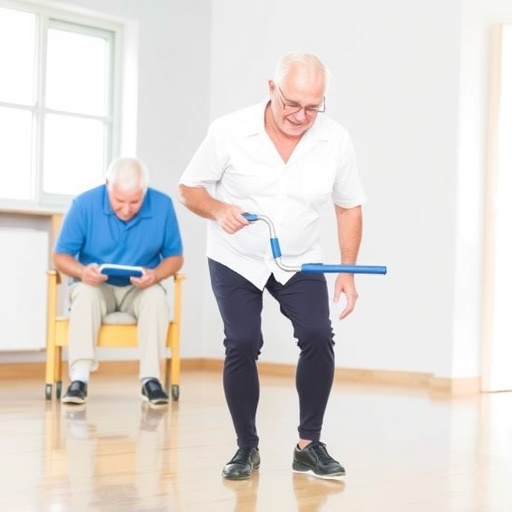
In a groundbreaking systematic review and network meta-analysis, researchers Liang, S., Ying, Z., and Ji, Y., along with their collaborating team, have shed light on the comparative effectiveness of community-based rehabilitation programs tailored for older adults recovering from hip fractures. This critical analysis, which is set to be published in BMC Geriatrics, promises to offer valuable insights that could transform rehabilitation practices and, ultimately, the recovery trajectories of older individuals who have experienced this debilitating injury.
The prevalence of hip fractures among older adults is alarmingly high, with millions affected each year globally. These injuries not only lead to considerable morbidity, but they also pose a significant risk of mortality within a year following the fracture. The recovery process can often be a long and arduous journey, leaving many seniors reliant on family members or professional caregivers. It is within this context that community-based rehabilitation programs are emerging as a focal point of study and development.
Community-based rehabilitation programs have gained traction as effective alternatives to traditional inpatient rehabilitation methods, particularly for elderly patients. The core principle of these programs is to provide rehabilitation services tailored to the needs of individuals within their own community settings, thereby promoting independence and well-being. This recent review assesses various such interventions and their effectiveness on restoring functional abilities after hip fractures in older adults.
The methodology employed in this systematic review is noteworthy, employing network meta-analysis techniques to synthesize data across multiple studies. By comparing different rehabilitation approaches, the researchers were able to assess not only the individual effects of various programs, but also how they stack up against one another in terms of overall effectiveness. This approach allows for a comprehensive understanding of which interventions yield the best outcomes for older adults recovering from hip fractures.
Findings from the analysis indicate that community-based rehabilitation programs are indeed beneficial, with some approaches showing significantly superior outcomes compared to others. The programs often incorporate elements such as physical therapy, occupational therapy, and social support, all geared towards aiding recuperation and enhancing quality of life. This multidimensional approach acknowledges that recovery is not merely a physical endeavor, but one that is deeply intertwined with psychological and social aspects.
Importantly, the review highlights the role of personalized assessments in tailoring rehabilitation interventions to the individual needs of older adults. Factors such as previous mobility levels, the presence of comorbidities, and social support networks all play crucial roles in determining recovery pathways. The researchers advocate for a shift towards more individualized rehabilitation programs that take these factors into account.
Moreover, the review emphasizes the significance of patient engagement in the rehabilitation process. Older adults who take an active role in their recovery—setting goals, participating in therapy, and maintaining open communication with their healthcare providers—tend to experience better outcomes. This finding underscores the importance of fostering a collaborative environment in which patients feel empowered to contribute to their recovery journey.
The implications of these findings extend beyond the realm of clinical practice. Policymakers and healthcare administrators are urged to consider the integration of community-based rehabilitation programs into standard care protocols for older adults recovering from hip fractures. Such a shift not only has the potential to lead to more favorable health outcomes, but it can also reduce healthcare costs associated with extended hospital stays and complications stemming from suboptimal recovery.
One of the compelling aspects of this research is its forward-looking perspective on the future of geriatric rehabilitation. The researchers call for further investigation into the specific components that make certain community-based programs more effective than others. Identifying these key elements could pave the way for standardized best practices that can be widely adopted, ultimately enhancing the care provided to this vulnerable population.
As this study positions itself at the intersection of gerontology and rehabilitation science, it serves as a clarion call for ongoing dialogue and research in this critical field. The insights gained from this review not only aim to inform clinical guidelines but also to inspire a cultural shift in how society views and supports older adults post-injury.
The convergence of aging populations and the rising incidence of hip fractures presents a challenge that cannot be overlooked. Therefore, this research is not merely academic; it is a necessary step towards improving the lives of millions. As we head towards an era where aging populations dominate demographics, the importance of effective rehabilitation strategies becomes increasingly paramount.
In summation, the systematic review led by Liang and colleagues stands as a testament to the evolving nature of rehabilitation science. By placing community-based programs under the microscope, it opens new avenues for research and implementation. The hope is that such findings will not only improve individual outcomes for older adults but will also reshape the broader landscape of elder care, emphasizing the vital role of rehabilitation in promoting healthy aging and functional independence.
As we wait for the full publication, the implications of this research are already resonating through the healthcare community, potentially shaping policies and practices that impact the recovery experiences of countless older adults. The forthcoming year may very well witness a rejuvenation of efforts aimed at enhancing post-hip fracture recovery through enlightened community-based approaches, ultimately leading to a brighter future for aging populations worldwide.
In a world where every improvement can make a significant difference, the work by Liang, Ying, Ji, and their team is a shining example of how rigorous research can drive positive change. We can only anticipate the additional discoveries and innovations that may arise from their ongoing commitment to improving geriatric rehabilitation.
Subject of Research: Effectiveness of community-based rehabilitation for hip fracture recovery in older adults
Article Title: Comparative effectiveness of community-based rehabilitation programs on functional recovery after hip fracture in older adults: a systematic review and network meta-analysis
Article References:
Liang, S., Ying, Z., Ji, Y. et al. Comparative effectiveness of community-based rehabilitation programs on functional recovery after hip fracture in older adults: a systematic review and network meta-analysis. BMC Geriatr (2026). https://doi.org/10.1186/s12877-025-06837-1
Image Credits: AI Generated
DOI:
Keywords: community-based rehabilitation, hip fracture, older adults, systematic review, meta-analysis, geriatric care, functional recovery, rehabilitation programs.
Tags: BMC Geriatrics publication on rehabilitationcommunity rehabilitation programs for seniorscommunity settings for elderly rehabilitationeffectiveness of community-based rehabilitationelderly hip fracture rehabilitationhip fracture recovery strategiesindependent living after hip fracturesmorbidity and mortality after hip fracturesnetwork meta-analysis in geriatric caresystematic review on hip fracture recoverytailored rehabilitation for older adultstransforming rehabilitation practices for seniors



