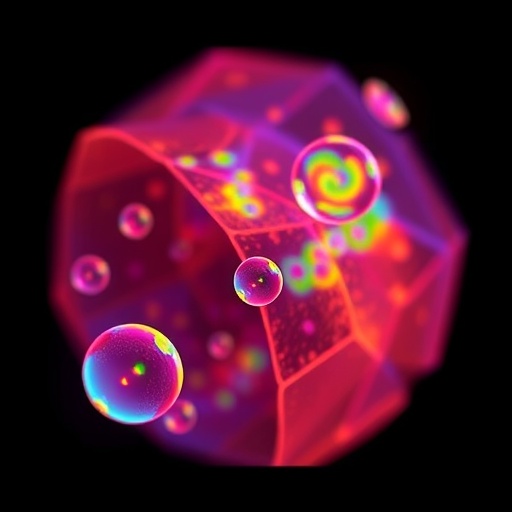
In recent years, the study of liquid-liquid phase separation (LLPS) has gained momentum within the scientific community, particularly due to its implications in cellular processes and disease states. Different biomolecules have been observed to undergo LLPS, forming droplets that serve as dynamic microenvironments for biochemical reactions. The ability to accurately estimate the size of these droplets is crucial, as it provides insights into their properties and functions. A recent article published in Scientific Reports by Enomoto-Kusano and colleagues dives deep into a novel approach for estimating LLPS droplet sizes through UV-Vis spectroscopy, specifically utilizing a microplate reader.
The traditional methods for assessing droplet size have often been limited by their reliance on complex imaging techniques or time-consuming analytical processes. Enomoto-Kusano et al. address this gap by exploring the utility of UV-Vis spectroscopy as a viable alternative. The microplate reader, a common tool in many laboratories, offers a high-throughput and efficient means of measuring absorbance, thus allowing for the rapid estimation of droplet sizes formed during LLPS. Such an approach not only simplifies the analysis but also broadens accessibility to researchers who might lack specialized imaging resources.
At the core of their methodology is the principle that the size of LLPS droplets can be indirectly inferred from their absorbance properties. As the authors detail, the scattering of light by varying diameters of the droplets leads to distinctive absorbance patterns that can be modeled mathematically. By correlating these patterns with known sizes, the researchers established a reliable calibration curve, ultimately allowing them to quantify droplet sizes across a range of biological conditions.
In addition to its technical merits, the study by Enomoto-Kusano et al. shines a light on the significance of droplet size in biological systems. The researchers outline that the size of LLPS droplets can influence processes such as protein interactions, enzymatic activities, and the overall functionality of biomolecular condensates. Understanding these relationships paves the way for potential therapeutic strategies targeting aberrant LLPS events associated with various diseases, including neurodegenerative disorders and cancers.
The implications of this research extend beyond the confines of basic science. With LLPS being a critical factor in numerous biological phenomena, applications in drug development and disease treatment are conceivable. For instance, compounds that modulate droplet size could be essential for regulating biochemical pathways altered in pathological states. By providing a straightforward technique for droplet characterization, the authors open doors to investigating potential small-molecule interventions that could restore normal cellular function.
The novelty of this research lies not only in its findings but also in its potential applications within the field of synthetic biology. As researchers look to engineer novel biomolecular systems, understanding LLPS behavior becomes essential. The ability to manipulate droplet size via UV-Vis spectroscopy could aid in designing artificial cellular compartments, potentially leading to advances in metabolic engineering and biomanufacturing.
As we delve deeper into the practical applications of this research, the authors’ findings resonate with interdisciplinary relevance. Collaborations between chemists, biologists, and engineers are likely to thrive as the implications of LLPS are explored in diverse fields. A robust understanding of droplet dynamics will benefit various sectors, including pharmaceuticals, diagnostics, and even materials science.
Moreover, the use of UV-Vis spectroscopy in this context highlights the increasing trend of employing conventional analytical techniques for novel applications. This study serves to remind researchers of the versatility of existing tools when applied with innovative thinking. As Enomoto-Kusano et al. highlight, re-envisioning how we use such instruments can lead to significant breakthroughs that challenge traditional methodologies.
Interestingly, this research could also spark discussions about the future of LLPS studies. As the field evolves, the quest for even finer resolution measurements and better characterization techniques will undoubtedly continue. The authors’ work lays a foundational framework that future studies can build upon, ultimately refining our understanding of LLPS and its complexities within living systems.
In light of their robust findings, the researchers also emphasize the importance of collaborative efforts. The interplay between different scientific domains will be paramount in cementing the relevance of LLPS research. Enomoto-Kusano et al. encourage other scientists to explore and validate their approach, potentially leading to harmonized protocols and methodologies that can drive the field forward.
As we reflect upon the broader implications of their study, it becomes evident that LLPS droplet characterization through UV-Vis spectroscopy is not merely a technical novelty. It represents a step toward demystifying the complexities of cellular organization and function, unlocking a treasure trove of knowledge that could redefine our understanding of biology.
In conclusion, the publication by Enomoto-Kusano and colleagues is a significant stride in the ongoing research of liquid-liquid phase separation, illustrating a practical method for droplet size estimation using UV-Vis spectroscopy. With its implications reaching the realms of health, synthetic biology, and beyond, the impact of this study is destined to reverberate through the scientific community for years to come. By employing accessible techniques in innovative ways, researchers can continue to unravel the intricacies of biomolecular interactions, ultimately paving the way for groundbreaking advancements in both science and medicine.
Subject of Research: Liquid-liquid phase separation (LLPS) and droplet size estimation using UV-Vis spectroscopy.
Article Title: LLPS droplet size estimation via UV–Vis spectroscopy using a microplate reader.
Article References:
Enomoto-Kusano, M., Kodama, T.S., Anzawa, S. et al. LLPS droplet size estimation via UV–Vis spectroscopy using a microplate reader.
Sci Rep (2025). https://doi.org/10.1038/s41598-025-33638-8
Image Credits: AI Generated
DOI: 10.1038/s41598-025-33638-8
Keywords: LLPS, droplet size estimation, UV-Vis spectroscopy, microplate reader, biomolecular condensates, protein interactions, cellular function, synthetic biology.
Tags: absorbance measurement for droplet sizebiochemical microenvironmentscellular processes and LLPShigh-throughput droplet analysisimplications of LLPS in disease statesinnovative spectroscopy techniquesliquid-liquid phase separationLLPS droplet size estimationmicroplate reader applicationsresearch accessibility in laboratory methodstraditional droplet measurement limitationsUV-Vis spectroscopy in biology