Integrating data on plant traits from the top to the roots will allow researchers to predict the effects of different global change scenarios on plant communities and their functioning across scales.
Carlos Pérez Carmona, Associate Professor of Macroecology at the University of Tartu, has just been awarded the European Research Council Consolidator Grant for an ambitious project to deepen our understanding of how plants respond to environmental change and how these responses affect ecosystems worldwide. At the heart of the project is the concept of plant traits, including characteristics such as the chemical composition of leaves, the thickness of roots or the size of seeds. Plant traits determine how plants grow, reproduce, and survive in different environments. Traits are therefore crucial because they provide insights into the strategies plants use to adapt to their environment, from how they use sunlight and water to how they interact with other organisms. Traits also affect how plants affect different ecosystem processes, such as nutrient cycling or pollination. By studying the traits, scientists can gain a clearer picture of the diversity of plant life and how ecosystems function.
Combining datasets from the top of the plant to its roots
“What sets the project apart is its comprehensive approach, integrating data on both above- and below-ground plant traits to create a unified picture of plant functional diversity. This method moves beyond traditional research that often examines plant characteristics in isolation,” said Carmona. The project will take advantage of the data from the open global network of researchers, TraitDivNet, which Carmona’s research group is currently coordinating. It is the first global standardised sampling of key above- and below-ground traits, a collaborative effort that involves hundreds of scientists from all continents except Antarctica. The research project will combine this data with extensive trait information from existing databases of plant traits.
Carmona will use cutting-edge technology to analyse all the trait data, aiming to shed new light on how plant communities are structured and how they change in response to environmental pressures, such as climate change. Generative artificial intelligence methods that have revolutionised fields such as image recognition and generation will be applied to analyse and predict the complex interactions between plant traits and environmental variables. “These methods can be used by treating trait data as images, a completely novel approach that will allow us to unveil patterns and relationships within the data that traditional analytical methods might miss, thus significantly advancing our understanding of ecosystem dynamics. Ultimately, these innovative methods will create more detailed models to forecast how ecosystems might change under various global change scenarios,” explained Carmona.
New links for informed decisions on biodiversity conservation
The significance of this project extends beyond academic circles, offering crucial insights that can guide both policymaking and practical conservation efforts. By better understanding how plant traits affect ecosystem adaptability to global changes, our work lays the foundation for informed decisions in biodiversity conservation, sustainable agriculture, and holistic ecosystem management. The findings could inform strategies vital for maintaining ecosystems crucial for carbon sequestration, directly addressing climate change mitigation. Additionally, this research enriches the trait-based ecology field, which is instrumental to understanding the ecological and evolutionary forces that shape the natural world. Emphasising biodiversity’s functional role provides a robust framework for policymakers and practitioners alike, enabling the prediction of biodiversity shifts and ecosystem functionality, essential for preserving the natural systems on which all life depends.
The ERC Consolidator Grant amount is €2 million and the research project will run for five years.
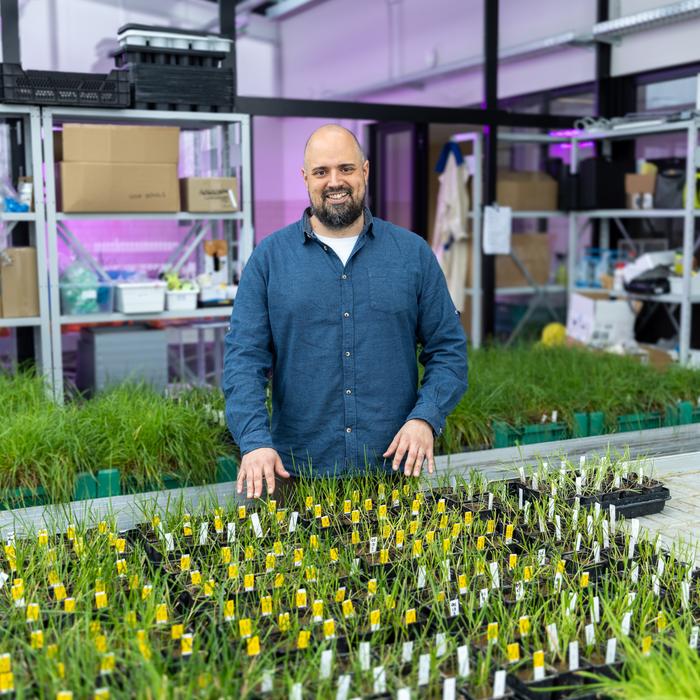
Credit: Andres Tennus, University of Tartu
Integrating data on plant traits from the top to the roots will allow researchers to predict the effects of different global change scenarios on plant communities and their functioning across scales.
Carlos Pérez Carmona, Associate Professor of Macroecology at the University of Tartu, has just been awarded the European Research Council Consolidator Grant for an ambitious project to deepen our understanding of how plants respond to environmental change and how these responses affect ecosystems worldwide. At the heart of the project is the concept of plant traits, including characteristics such as the chemical composition of leaves, the thickness of roots or the size of seeds. Plant traits determine how plants grow, reproduce, and survive in different environments. Traits are therefore crucial because they provide insights into the strategies plants use to adapt to their environment, from how they use sunlight and water to how they interact with other organisms. Traits also affect how plants affect different ecosystem processes, such as nutrient cycling or pollination. By studying the traits, scientists can gain a clearer picture of the diversity of plant life and how ecosystems function.
Combining datasets from the top of the plant to its roots
“What sets the project apart is its comprehensive approach, integrating data on both above- and below-ground plant traits to create a unified picture of plant functional diversity. This method moves beyond traditional research that often examines plant characteristics in isolation,” said Carmona. The project will take advantage of the data from the open global network of researchers, TraitDivNet, which Carmona’s research group is currently coordinating. It is the first global standardised sampling of key above- and below-ground traits, a collaborative effort that involves hundreds of scientists from all continents except Antarctica. The research project will combine this data with extensive trait information from existing databases of plant traits.
Carmona will use cutting-edge technology to analyse all the trait data, aiming to shed new light on how plant communities are structured and how they change in response to environmental pressures, such as climate change. Generative artificial intelligence methods that have revolutionised fields such as image recognition and generation will be applied to analyse and predict the complex interactions between plant traits and environmental variables. “These methods can be used by treating trait data as images, a completely novel approach that will allow us to unveil patterns and relationships within the data that traditional analytical methods might miss, thus significantly advancing our understanding of ecosystem dynamics. Ultimately, these innovative methods will create more detailed models to forecast how ecosystems might change under various global change scenarios,” explained Carmona.
New links for informed decisions on biodiversity conservation
The significance of this project extends beyond academic circles, offering crucial insights that can guide both policymaking and practical conservation efforts. By better understanding how plant traits affect ecosystem adaptability to global changes, our work lays the foundation for informed decisions in biodiversity conservation, sustainable agriculture, and holistic ecosystem management. The findings could inform strategies vital for maintaining ecosystems crucial for carbon sequestration, directly addressing climate change mitigation. Additionally, this research enriches the trait-based ecology field, which is instrumental to understanding the ecological and evolutionary forces that shape the natural world. Emphasising biodiversity’s functional role provides a robust framework for policymakers and practitioners alike, enabling the prediction of biodiversity shifts and ecosystem functionality, essential for preserving the natural systems on which all life depends.
The ERC Consolidator Grant amount is €2 million and the research project will run for five years.
Method of Research
Experimental study