A groundbreaking revelation in the intricate world of immunogenetics has emerged from recent research conducted by Nishiyama, Silverstein, Darlington, and colleagues. Their study, published in Nature Communications in 2026, offers unprecedented insights into the genetic underpinnings of Inflammatory Bowel Disease (IBD) by leveraging expression Quantitative Trait Loci (eQTL) analysis on diseased colon tissue. This innovative approach not only underlines the complexity of gene regulation in affected tissues but also sheds light on potential target genes that could redefine our understanding and treatment of IBD.
Inflammatory Bowel Disease, encompassing conditions such as Crohn’s disease and ulcerative colitis, presents a considerable challenge due to its multifactorial etiology involving genetic susceptibility, environmental triggers, and immune pathways. Traditional genome-wide association studies (GWAS) have mapped numerous loci associated with IBD risk, yet the functional interpretation of these loci often remains elusive. The current study bridges this gap by focusing on eQTLs—genetic variants that influence gene expression—within the very tissue where disease pathology manifests, thus providing a molecular context directly relevant to disease activity.
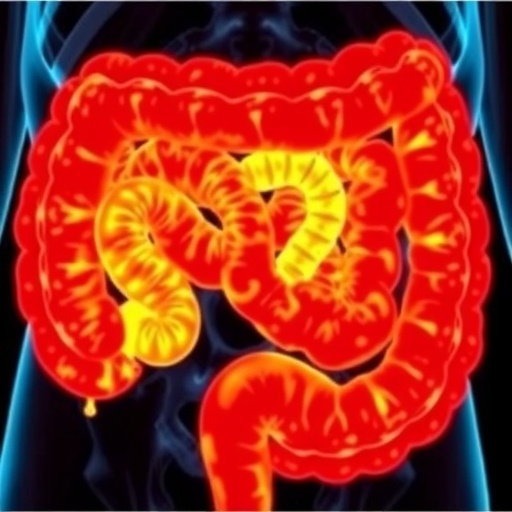
The team utilized colon tissue samples harvested from IBD patients undergoing routine medical procedures, ensuring the captured genetic and transcriptomic data authentically represent the disease state rather than systemic or peripheral effects. By integrating high-throughput RNA sequencing and genotyping, they constructed an extensive eQTL map that correlates specific genomic variants with transcriptomic alterations in the inflamed colon. This mapping reveals a tapestry of gene regulatory networks that are perturbed in IBD, highlighting new avenues for targeted interventions.
One compelling aspect of their findings is the identification of novel candidate genes whose expression is modulated by disease-associated genetic variants. While some genes confirm previously suspected roles in immune regulation and epithelial barrier function, others are newly implicated, expanding the repertoire of molecular actors involved in IBD pathogenesis. The altered expression patterns underscore critical pathways, including cytokine signaling, epithelial integrity, and cellular metabolism, which may be exploited therapeutically.
Importantly, the study distinguishes itself by revealing tissue-specific eQTL effects that are not apparent in non-diseased or blood-derived samples. This observation challenges the prevailing reliance on peripheral tissues for genetic analysis and stresses the necessity of studying the diseased microenvironment directly. It also suggests that many risk variants exert their influence through subtle changes in gene expression confined to affected tissues, a nuance often missed in conventional analyses.
Mechanistically, the interplay between genetic variants and gene expression uncovered by the researchers sheds light on the functional consequences of non-coding regulatory elements identified in GWAS. By linking these regulatory variants to downstream gene expression changes within the diseased colon, the study deciphers the biological relevance of previously enigmatic loci. This advance paves the way for precision medicine approaches tailored to the patient’s genomic and tissue-specific landscape.
The implications of these findings extend beyond academic curiosity, as they propose actionable targets for future drug development. By pinpointing genes directly influenced by IBD-associated genetic variants within the colon, pharmaceutical strategies can be refined to modulate these critical nodes more effectively. Furthermore, understanding the eQTL architecture in diseased tissue enhances biomarker discovery for disease activity, prognosis, and treatment responsiveness, facilitating personalized therapeutic regimens.
The methodology employed in this study exemplifies integration across disciplines—combining genetics, transcriptomics, and computational biology to unravel complex regulatory layers. Such multi-omics approaches are paramount in dissecting diseases with heterogeneous and dynamic phenotypes like IBD. The comprehensive dataset generated serves as a valuable resource for the biomedical community, enabling further investigations and validation studies.
Notably, the research accentuates the heterogeneity within IBD, identifying distinct genetic effects on gene expression that correlate with clinical subtypes or disease severity. This stratification adds granularity to our understanding, emphasizing that personalized treatment requires not only symptom profiling but also molecular characterization at the tissue level. It opens the possibility of categorizing IBD patients based on their unique eQTL profiles, thereby optimizing therapeutic outcomes.
Future directions inspired by this work involve longitudinal studies to assess how these eQTL effects evolve during disease progression or in response to treatment. Understanding temporal dynamics of gene regulation in the inflamed colon will offer clues about disease mechanisms and remission phases. Additionally, expanding this approach to other affected tissues and integrating epigenomic data could further refine the molecular portrait of IBD.
This study also sparks a broader conversation about the necessity for more personalized investigations in chronic inflammatory diseases. The insights into tissue-specific genetic regulation underscore the limitations of blood-based analyses and advocate for tissue-focused research paradigms. As more diseases reveal their molecular intricacies through such approaches, the potential for transformative therapies becomes increasingly feasible.
In conclusion, the work by Nishiyama and collaborators marks a significant milestone in IBD research, transforming raw genetic associations into actionable biological knowledge through the lens of tissue-specific eQTL analysis. By characterizing the intricate regulation of gene expression within diseased colon tissue, the study enhances our molecular understanding and opens new therapeutic vistas. The promise of targeting the precise genetic drivers of inflammation and tissue damage moves a step closer to reality, offering hope to millions affected by IBD worldwide.
Subject of Research: Genetic regulation of gene expression in diseased colon tissue; identification of potential target genes associated with Inflammatory Bowel Disease (IBD) through eQTL analysis.
Article Title: eQTL in diseased colon tissue identifies potential target genes associated with IBD.
Article References:
Nishiyama, N.C., Silverstein, S., Darlington, K. et al. eQTL in diseased colon tissue identifies potential target genes associated with IBD. Nat Commun (2026). https://doi.org/10.1038/s41467-026-69364-6
Image Credits: AI Generated
Tags: Crohn’s disease and ulcerative colitis geneticseQTL analysis in Inflammatory Bowel Diseaseexpression Quantitative Trait Loci researchfunctional interpretation of IBD locigene regulation in colon tissuegenetic susceptibility factors for IBDgenetic underpinnings of IBDimmunogenetics of Inflammatory Bowel Diseaseinnovative approaches to IBD treatmentmultifactorial etiology of IBDNature Communications IBD study findingstranscriptomic data in disease pathology