In a retrospective observational study evaluating cardiac adiposity and lung function in pneumoconiosis, neither epicardial adipose tissue volume nor pericardial adipose tissue volume exhibited a direct, statistically significant main-effect association with spirometric parameters.
The investigation evaluated a clinical cohort comprising 214 male patients diagnosed with pneumoconiosis who were categorized into two distinct occupational exposure profiles: a silica-predominant group and a mixed inorganic dust and metal-fume group. The main analyses included 182 patients with complete data.
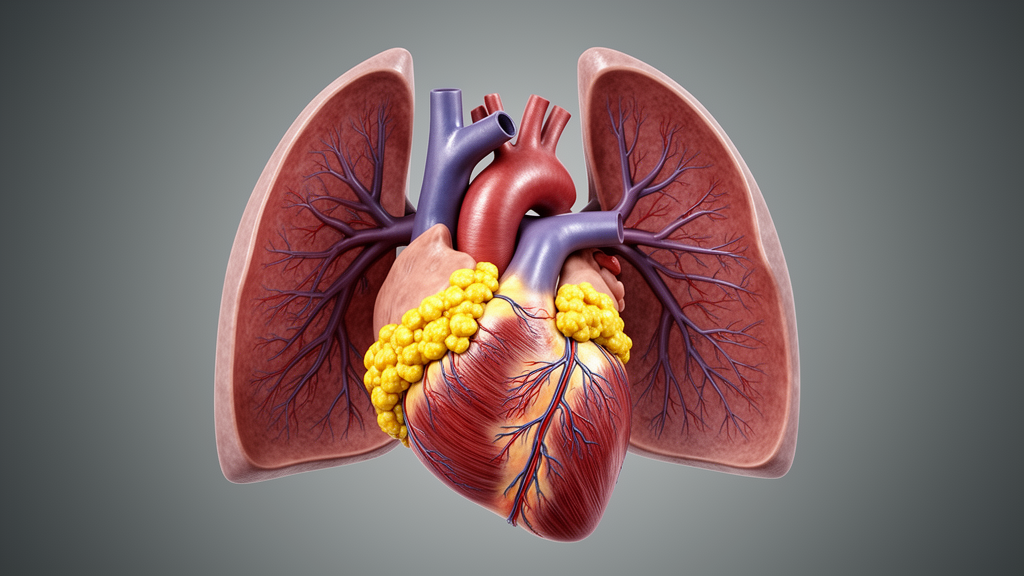
Cardiac fat depots were quantified from non-contrast chest computed tomography scans, measuring both epicardial adipose tissue volume and total pericardial adipose tissue volume. Pulmonary capacity was evaluated through standardized spirometric outcomes, specifically forced expiratory volume in one second percent predicted, forced vital capacity percent predicted, and the forced expiratory volume in one second to forced vital capacity ratio.
To test these relationships, investigators formulated separate multivariable linear regression models across pooled cohorts, stratified exposure subgroups, and interaction analyses. The regression models systematically adjusted for key potential confounders, including patient age, cumulative smoking pack-years, total duration of pneumoconiosis-related occupational work, body mass index, and disease severity categorized according to the three-level International Labour Organization radiographic classification, with pooled models incorporating occupational exposure profile as an independent covariate.
In interaction models, the product term between epicardial adipose tissue volume and the mixed occupational exposure profile was significantly negative for the ratio of forced expiratory volume to forced vital capacity, with a regression coefficient of negative 0.112, a 95 percent confidence interval spanning negative 0.197 to negative 0.028, and a p-value of 0.009. By comparison, the corresponding interaction term for pericardial adipose tissue did not reach statistical significance, showing a coefficient of negative 0.048, a 95 percent confidence interval from negative 0.099 to 0.002, and a p-value of 0.062, with no analogous interactions detected for forced expiratory volume or forced vital capacity percent predicted.
Because within-profile associations were non-significant and findings diminished upon excluding chronic airway diseases, the study authors concluded that these exploratory interactions provide limited evidence and require prospective validation utilizing quantitative exposure metrics and detailed airway imaging.
Although the regression models separated patients according to their occupational exposure profiles—contrasting silica-predominant environments with mixed inorganic dust and metal-fume workplaces—neither epicardial nor total pericardial adipose tissue volume demonstrated a statistically significant relationship with any spirometric parameter within these individual strata.
In sensitivity analyses excluding patients with airflow obstruction, documented chronic obstructive pulmonary disease, or asthma (n = 146), both interaction estimates were attenuated and nonsignificant.
Subject of Research: Association of epicardial and pericardial adipose tissue with spirometric lung function across occupational exposure profiles in pneumoconiosis
Article Title: Exposure profile–specific associations of epicardial and pericardial adipose tissue with spirometric function in pneumoconiosis: a retrospective cross-sectional study
Article References: Celik, Y., Koyuncu, A., Akhan, B. S., Ertürk, H., Sünel, M., Ezber, R., & Şimşek, C. (2026). Exposure profile–specific associations of epicardial and pericardial adipose tissue with spirometric function in pneumoconiosis: a retrospective cross-sectional study. BMC Pulmonary Medicine. https://doi.org/10.1186/s12890-026-04844-5
Image Credits: AI Generated
DOI: 10.1186/s12890-026-04844-5
Keywords: pneumoconiosis, epicardial adipose tissue, pericardial adipose tissue, spirometry, FEV1, FVC, FEV1/FVC ratio, non-contrast chest CT, occupational exposure, silica exposure, inorganic dust, metal fumes, ILO radiographic category, cross-sectional study, linear regression analysis, airflow obstruction, body mass index
News Source: Ophelia Keating. (November 12, 2026). Epicardial Fat Interaction With Lung Function in Pneumoconiosis Attenuates in Sensitivity Analyses. Scienmag.