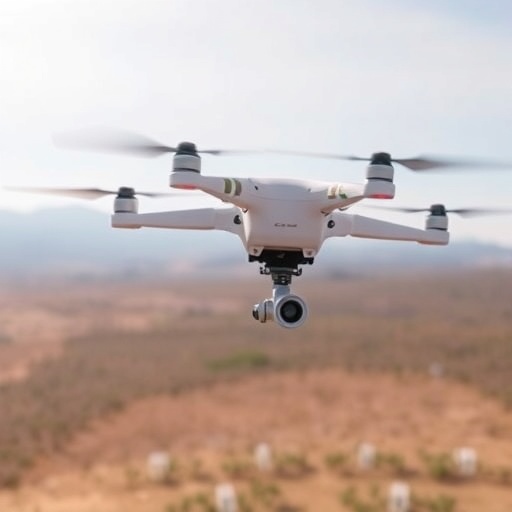
In recent years, the integration of unmanned aerial vehicles (UAVs) within various sectors has witnessed a remarkable surge, leading to innovations in fields like agricultural monitoring, disaster management, and infrastructure inspection. Among the most pressing challenges faced in these applications is the need for accurate and efficient three-dimensional (3D) object detection. In response to these challenges, a groundbreaking study introduces MonoFHD—an innovative approach that leverages flight height data for monocular 3D object detection with UAVs. This study, conducted by researchers Dong, Tuo, Wang, and their colleagues, showcases a significant milestone in enhancing object detection capabilities through the utilization of aerial perspectives.
The capability of UAVs to capture real-time data has been revolutionary, but their effectiveness hinges on the algorithms employed to analyze this data. Traditional methods have relied heavily on stereo vision techniques or depth sensors to achieve accurate 3D object detection. However, these methods come with their own limitations, including high costs, increased complexity, and larger payload requirements. MonoFHD proposes a much simpler alternative, employing a single-camera system while effectively utilizing height data derived from the UAV’s flight—a significant advancement that streamlines the object detection process.
At the core of MonoFHD is the novel methodology that correlates the UAV’s altitude with visual data to construct a 3D representation of the environment. The researchers meticulously crafted algorithms that integrate flight height information, which provides critical context about the spatial arrangement of observed objects. By processing this additional layer of data, the system is able to perform more accurate and reliable object detection without the added burden of multiple camera systems or specialized sensors.
One of the key advantages of MonoFHD is its robustness across varying environmental conditions. UAVs often operate in diverse settings, ranging from urban landscapes to remote agricultural fields. The ability to adapt to these varying elevations ensures that objects can be detected reliably regardless of the UAV’s altitude. Test scenarios demonstrated that the system retains a high accuracy rate in identifying objects, showcasing its potential for real-world applications.
Moreover, the study emphasizes the efficiency of the MonoFHD system in terms of computational resources. Traditional stereo methods can be resource-intensive, often requiring significant processing power and time to analyze the captured data. In contrast, MonoFHD optimizes this process, enabling real-time detection while minimizing the computational load. This efficiency is particularly crucial for applications requiring instantaneous decision-making, such as search and rescue missions or real-time surveillance.
The authors conducted extensive experiments to validate the efficacy of their method. By utilizing datasets generated from various flight altitudes, they explored how differences in elevation impact object detection performance. Results indicated notable improvements in accuracy, demonstrating that even at higher altitudes, the MonoFHD system can reliably discern objects within a complex visual field. These findings bolster the case for adopting MonoFHD in various operational scenarios involving UAVs.
Furthermore, the study outlines the potential implications of integrating MonoFHD into existing UAV frameworks. The approach is not only applicable to commercial UAVs but can also be adapted for burgeoning sectors involving aerial delivery systems or autonomous mapping solutions. The versatility of this technology opens up numerous opportunities, potentially transforming industries reliant on aerial perspectives for data collection and monitoring.
As the application of UAVs expands, the importance of advanced 3D object detection techniques cannot be overstated. MonoFHD addresses this need head-on, offering a practical and effective solution that can enhance the capabilities of UAVs across many domains. The benefits extend beyond technical specifications; they encompass implications for safety, efficiency, and overall operational effectiveness in diverse environments.
In conclusion, MonoFHD represents a significant leap forward in the field of UAV technology, illustrating how flight height data can be leveraged to improve monocular 3D object detection. By transitioning away from more complex systems, this innovative approach not only simplifies the detection process but also enables UAVs to operate more effectively in real-world environments. As the research indicates, this method could reshape our interaction with UAVs, heralding new possibilities for their deployment across various sectors.
In a world increasingly reliant on advanced technology, the introduction of MonoFHD is perfectly timed. The demand for efficient, accurate, and cost-effective solutions has never been higher, and this innovative method stands poised to meet those demands. As we look forward to its real-world applications, the future of UAV technology seems brighter than ever, with MonoFHD leading the charge in the realm of aerial object detection.
Its underlying premise is simple yet profound: by ingeniously integrating height data with visual information, the MonoFHD system not only detects objects but does so with remarkable accuracy and efficiency. This innovative approach redefines standard practices in 3D object detection and is sure to have lasting repercussions on UAV technology in the years to come.
As researchers continue to explore the potential applications of MonoFHD, one can’t help but imagine the myriad of possibilities it can enable in industries such as logistics, environmental monitoring, and urban planning. With its ability to adapt to various altitudes and maintain persistent performance, MonoFHD is not just a technological advancement; it is a transformative tool that has the potential to revolutionize how we perceive and interact with the world from above.
Thus, as January 2026 approaches, the unveiling of MonoFHD promises to be a pivotal moment in the evolution of drone technology, one that will be keenly observed by industry experts, researchers, and enthusiasts alike. The journey of MonoFHD from concept to reality illustrates the power of innovation in addressing contemporary challenges and sets a precedent for future developments in UAV-based detection systems.
Subject of Research: Monocular 3D object detection utilizing flight height data with UAVs.
Article Title: MonoFHD: leveraging flight height data for UAV monocular 3D object detection
Article References:
Dong, H., Tuo, H., Wang, L. et al. MonoFHD: leveraging flight height data for UAV monocular 3D object detection.
AS (2026). https://doi.org/10.1007/s42401-025-00437-y
Image Credits: AI Generated
DOI: 10.1007/s42401-025-00437-y
Keywords: UAV, monocular 3D object detection, flight height data, object detection technology, aerial data analysis.