In the realm of post-stroke rehabilitation, the journey toward regaining function for the wrist and hand presents formidable challenges. As patients progress through their recovery, compensatory movement patterns often emerge, particularly affecting the shoulder and elbow joints. While these adaptations may assist in daily activities, they frequently contribute to a learned disuse of the distal muscles, which can significantly hinder effective motor recovery. Addressing these multifaceted issues requires a comprehensive approach that goes beyond simply restoring motor control; it necessitates improving sensorimotor integration (SMI) between the brain and the muscles being targeted for rehabilitation.
Traditional rehabilitation practices, which include techniques like neuromuscular electrical stimulation (NMES) and vibratory stimulation, have provided some sensory feedback for patients. However, they fall short in effectively combining motor and sensory pathways for optimal recovery. As articulated by Legeng Lin, a researcher from The Hong Kong Polytechnic University, there is a critical need for innovative solutions that can enhance motor control while simultaneously providing the sensory feedback necessary to stimulate neural pathways. The proposed solution, an electromyography (EMG)-driven robotic system with electro-vibro-feedback (EVF), emerges as a promising tool in this regard. This system aims to improve motor function by modulating both ascending and descending neural pathways, thus fostering neuroplasticity in the affected limbs.
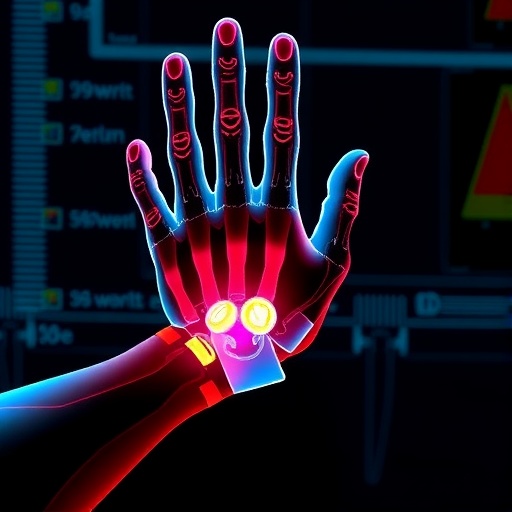
The design of the EMG-driven EVF robot is ingeniously crafted, featuring a soft robotic device outfitted with five pneumatic fingers designed to assist with wrist and hand movements. The functionality of this robotic device hinges on detecting residual EMG signals emitted from the forearm muscles, specifically the extensor (EX) and flexor (FX) muscles associated with the impaired limb. In practical terms, the system operates through two primary mechanisms: voluntary motor control (VME) and somatosensory priming.
Voluntary motor control occurs when the user consciously activates the EX or FX muscles. In response to the EMG signals detected, the robotic system engages to provide mechanical support, which aids in wrist extension or flexion, thereby facilitating hand opening or closing. Somatosensory priming, on the other hand, is equally significant. This innovative approach applies NMES to the EX muscles to stimulate muscle contraction while simultaneously utilizing focal vibratory stimulation (FVS) to the FX muscles. The resulting interaction between effective muscle activation and sensory feedback stimulates mechanoreceptors without inducing spasms, thereby providing a dual benefit that enhances the rehabilitation process.
In a groundbreaking study, the efficacy of the EMG-driven EVF robot was rigorously tested on chronic stroke patients. A single-arm clinical trial involving 15 individuals revealed noteworthy findings regarding the effectiveness of this robotic rehabilitation system. Through a series of assessments, significant improvements were documented within multiple measures of motor functionality. Specifically, increases in scores from the Fugl-Meyer Assessment (FMA)—which evaluates upper extremity functionality—and the Action Research Arm Test (ARAT), particularly in fine motor tasks such as grasping and pinching, were observed.
Moreover, enhancements in sensory perception were supported by the results from the monofilament test, which evaluates tactile sensation. Patients exhibited significant improvements in sensory feedback, notably in areas linked to the median and ulnar nerves, corresponding to the FX muscle activity. Intriguingly, these benefits were not just short-lived; follow-ups at three months post-assessment indicated sustained improvements in motor control within wrist and hand tasks.
Additionally, shifts in corticomuscular coherence (CMC) patterns were observed, reflecting movement towards the contralateral hemisphere for both EX and FX muscles. This suggests that the EMG-driven EVF robot plays a role in re-establishing balanced motor control by enhancing neural connections between the muscles and the cortical areas of the brain responsible for motor function.
Despite these promising results, the study also highlights limitations. The sample size was relatively small, and the duration of the intervention was brief. Future research should focus on broader cohort sizes and prolonged training regimes, examining various impairment levels to gain a comprehensive understanding of the long-term efficacy of this robotic system. The researchers emphasize the need for a more detailed assessment framework throughout the entire rehabilitation timeline to capture dynamic changes that occur as patients progress.
The collaborative authorship behind this significant work includes Legeng Lin, alongside Yanhuan Huang, Wanyi Qing, Man-Ting Kuet, Hengtian Zhao, Fuqiang Ye, Wei Rong, Waiming Li, and Xiaoling Hu. Their collective efforts underscore the importance of integrating advanced technologies within healthcare practices to enhance recovery outcomes for patients suffering from debilitating conditions such as stroke.
This pioneering investigation was made possible through multiple funding sources, including the University Grants Committee Research Grants Council of Hong Kong, the Innovation and Technology Fund, the Strategic Topics Grant, and The Hong Kong Polytechnic University. The paper detailing these findings, titled “Sensorimotor Integration by Targeted Priming in Muscles with Electromyography-Driven Electro-vibro-feedback in Robot-Assisted Wrist/Hand Rehabilitation after Stroke,” is scheduled for publication in the journal “Cyborg and Bionic Systems.” The anticipated revelations within this research provide a beacon of hope for future advancements in rehabilitation methodologies.
The journey toward rehabilitation for stroke patients is fraught with obstacles, but innovations like the EMG-driven EVF robot represent a pivotal advance in effectively integrating voluntary motor control and sensory feedback. As researchers and practitioners continue to pioneer new approaches, the potential to restore not only functionality but also independence for those affected by such motor impairments becomes increasingly tangible.
These findings not only pave the way for future research avenues but also embody the spirit of innovation in addressing the challenges faced by individuals during the rehabilitation process. By reaffirming the significance of bridging motor and sensory pathways, the field of robotic-assisted rehabilitation is set for continued growth and development, paving the way for enhancing lives as recovery from debilitating conditions such as stroke becomes more achievable.
Ultimately, the EMG-driven electro-vibro-feedback robot stands as a testament to the power of interdisciplinary research combining engineering, neuroscience, and rehabilitation science. In doing so, it showcases a pathway toward revolutionizing how rehabilitation is approached, thus providing hope for countless individuals looking to regain control over their motor functions and improve their quality of life after experiencing the challenges of stroke.
Subject of Research: Post-stroke rehabilitation using an EMG-driven robot-assist system
Article Title: Sensorimotor Integration by Targeted Priming in Muscles with Electromyography-Driven Electro-vibro-feedback in Robot-Assisted Wrist/Hand Rehabilitation after Stroke
News Publication Date: January 27, 2026
Web References: Not Provided
References: Not Provided
Image Credits: Legeng Lin, The Hong Kong Polytechnic University
Keywords
Applied sciences and engineering, Health and medicine, Physical sciences
Tags: compensatory movement patternscomprehensive rehabilitation approacheseffective motor recovery strategieselectro-vibro-feedback systemselectromyography-driven therapyenhancing motor control in stroke patientsneural pathway stimulationpost-stroke rehabilitationrobotic hand therapy innovationssensorimotor integration techniquessensory feedback in rehabilitationtargeted muscle priming methods