• HOME
  • NEWS
  • EXPLORE
    • CAREER
      • Companies
      • Jobs
    • EVENTS
    • iGEM
      • News
      • Team
    • PHOTOS
    • VIDEO
    • WIKI
  • BLOG
  • COMMUNITY
    • FACEBOOK
    • INSTAGRAM
    • TWITTER
Friday, January 23, 2026
BIOENGINEER.ORG
No Result
View All Result
  • Login
  • HOME
  • NEWS
  • EXPLORE
    • CAREER
      • Companies
      • Jobs
        • Lecturer
        • PhD Studentship
        • Postdoc
        • Research Assistant
    • EVENTS
    • iGEM
      • News
      • Team
    • PHOTOS
    • VIDEO
    • WIKI
  • BLOG
  • COMMUNITY
    • FACEBOOK
    • INSTAGRAM
    • TWITTER
  • HOME
  • NEWS
  • EXPLORE
    • CAREER
      • Companies
      • Jobs
        • Lecturer
        • PhD Studentship
        • Postdoc
        • Research Assistant
    • EVENTS
    • iGEM
      • News
      • Team
    • PHOTOS
    • VIDEO
    • WIKI
  • BLOG
  • COMMUNITY
    • FACEBOOK
    • INSTAGRAM
    • TWITTER
No Result
View All Result
Bioengineer.org
No Result
View All Result
Home NEWS Science News Chemistry

Enhancing power supply resilience to first responders

Bioengineer by Bioengineer
April 2, 2019
in Chemistry
Reading Time: 2 mins read
0
IMAGE
Share on FacebookShare on TwitterShare on LinkedinShare on RedditShare on Telegram

University of Utah engineer receives $4.4 million grant to develop management system for power distribution systems
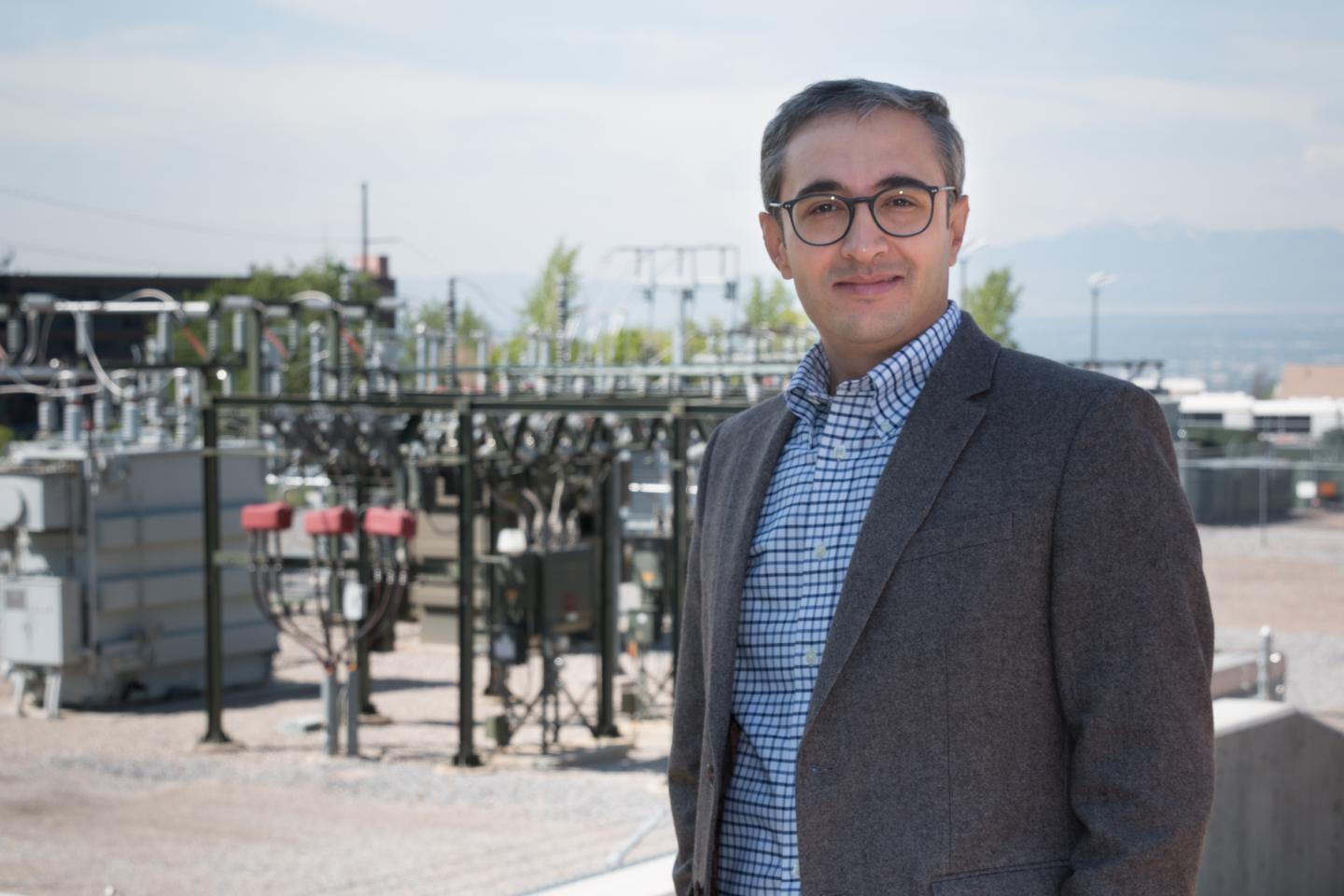
IMAGE

Credit: Dan Hixson/University of Utah College of Engineering

April 2, 2019 — If a city experiences a major power outage due to a natural disaster or a cyberattack, it is vital to bring back power as soon as possible for first responders and critical infrastructure.

University of Utah electrical and computer engineering assistant professor Masood Parvania and his team at his Utah Smart Energy Laboratory (U-Smart) have received a three-year, $4.4 million research award from the U.S. Department of Energy Solar Energy Technologies Office (SETO) to advance solar energy’s role in strengthening the resilience of the U.S. electricity grid. This project will develop an automated resilience management system (ARMS) to enhance the city’s power grid in case of a power outage.

“It is critical to ensure resilience of power supply to emergency services and first responses, such as hospitals, after a major power outage caused by widespread events like natural disasters,” Parvania, says. “The ARMS solution will use distributed solar photovoltaics, distributed energy resources, fault detection sensors, and distribution monitoring and switching equipment to improve the resilience of critical infrastructure and emergency centers.”

The project partners include PacifiCorp, Utah Governor’s Office of Energy Development, Idaho National Laboratory and Washington State University.

“In a rapidly evolving energy landscape, we are proud to see Utah’s collaborative partnerships demonstrate national leadership in energy research and planning to advance grid resilience,” said Laura Nelson, the Utah Governor’s energy advisor and executive director of the Utah Governor’s Office of Energy Development. “In Utah, our renewable portfolio is expanding, and we rank fifth nationally for installed solar capacity. This grant enables us to analyze opportunities presented through greater integration of new, intermittent resources and maintain resilience, security and affordability.”

Rocky Mountain Power, a division of PacifiCorp, which services more than one million customers in Utah, Wyoming and Idaho, will work with the Utah Smart Energy Laboratory to test and validate the technology at multiple locations in Utah.

“Implementation of the ARMS solution will provide the framework to substantially improve real-time information exchange with field devices and reduce the time spent to locate, isolate and restore power to emergency services and critical infrastructure,” said Rohit Nair, grid solutions manager at Rocky Mountain Power.

The University of Utah was selected to receive this award as a part of the Energy Department’s effort to invest in new projects that enable grid operators to rapidly detect physical and cyber-based abnormalities in the power system and utilize solar generation to recover quickly from power outages.

###

This news release and photos may be downloaded from unews.utah.edu.

Media Contact
Masood Parvania
[email protected]

Tags: Electrical Engineering/ElectronicsEnergy/Fuel (non-petroleum)Technology/Engineering/Computer Science
Share12Tweet8Share2ShareShareShare2

Related Posts

blank

New Route to Strychnos Alkaloids via Thiophene Cycloadditions

January 23, 2026
Lithium Metal Powers Electrochemical PFAS Reduction Breakthrough

Lithium Metal Powers Electrochemical PFAS Reduction Breakthrough

January 20, 2026

Creating Synthetic Protein-Binding DNA Systems in Cells

January 17, 2026

Chiral Catalysis Powers Rotary Molecular Motors

January 16, 2026
Please login to join discussion

POPULAR NEWS

  • Enhancing Spiritual Care Education in Nursing Programs

    156 shares
    Share 62 Tweet 39
  • PTSD, Depression, Anxiety in Childhood Cancer Survivors, Parents

    148 shares
    Share 59 Tweet 37
  • Robotic Ureteral Reconstruction: A Novel Approach

    80 shares
    Share 32 Tweet 20
  • Digital Privacy: Health Data Control in Incarceration

    62 shares
    Share 25 Tweet 16

About

We bring you the latest biotechnology news from best research centers and universities around the world. Check our website.

Follow us

Recent News

Annual Cerebral Palsy Trends and Risk Factors

Assessing Inhibitory Control in Black-Tailed Gulls

Access Ensures Semaglutide’s Full Potential is Achieved

Subscribe to Blog via Email

Enter your email address to subscribe to this blog and receive notifications of new posts by email.

Join 71 other subscribers
  • Contact Us

Bioengineer.org © Copyright 2023 All Rights Reserved.

Welcome Back!

Login to your account below

Forgotten Password?

Retrieve your password

Please enter your username or email address to reset your password.

Log In
No Result
View All Result
  • Homepages
    • Home Page 1
    • Home Page 2
  • News
  • National
  • Business
  • Health
  • Lifestyle
  • Science

Bioengineer.org © Copyright 2023 All Rights Reserved.