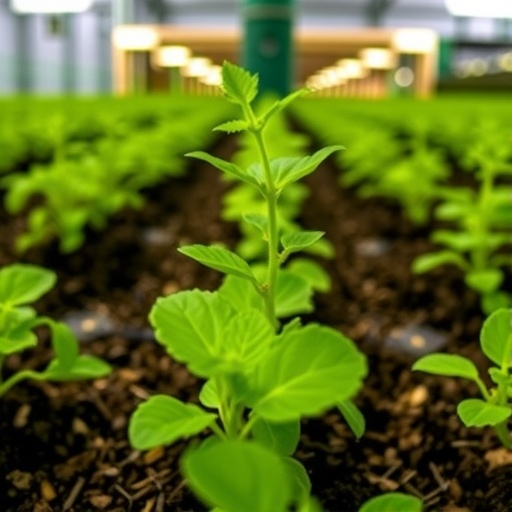
As the world grapples with a soaring population and escalating climate crises, the urgency for a robust, sustainable agricultural framework has never been more pressing. Agriculture, while fundamentally vital for human sustenance, is simultaneously a major driver of greenhouse gas emissions and a sector that suffers significantly from environmental degradation. In light of these challenges, emerging bioelectronic technologies promise not just a transformational approach but also the potential for realignment of agricultural practices towards sustainability. Bioelectronics holds immense promise for revolutionizing both fundamental plant research and precision agriculture through innovative monitoring and modulation of plant and environmental interactions.
At the forefront of bioelectronic applications in agriculture is their capacity to facilitate real-time monitoring of plant physiological processes and their surrounding environments. This technology integrates electronic sensing and signaling with biological systems to revolutionize how scientists and farmers approach crop management. By employing bioelectronic tools, researchers can obtain unprecedented insights into plant health, enabling them to make informed decisions that could lead to higher yields and reduced environmental impact. The potential for bioelectronics to address agricultural inefficiencies is enormous, opening up pathways to more sustainable practices that align with the principles of ecological health.
In the arena of fundamental plant sciences, bioelectronics complements traditional research methodologies, helping to navigate around their constraints. For instance, existing tools often struggle with spatiotemporal limitations when attempting to study intricate processes such as plant responses to biotic and abiotic stressors. Bioelectronic devices can provide high-resolution data on plant behavior over time, thus accelerating research endeavors aimed at engineering stress-resistant varieties. The real-time data garnered through bioelectronic systems equips scientists with the tools they need to innovate faster and more effectively in the pursuit of climate-resilient crops that can sustain yields in the face of environmental challenges.
Furthermore, another key area where bioelectronics show promise is within precision agriculture, which seeks to optimize resource use while maximizing yield outputs. Effective resource management is pivotal to sustainable agricultural practices. Bioelectronic devices can help monitor soil moisture levels, nutrient uptake, and even pest populations, thereby allowing farmers to make data-driven decisions about irrigation and fertilization. Such targeted interventions not only improve economic viability but also lessen the ecological footprint of farming activities. The ability to align agricultural practices with real-time data ensures that inputs are used judiciously, translating to both environmental and economic benefits.
The advent of bioelectronics also heralds a new era for early disease detection in crops. Using advanced sensing technologies, farmers can monitor indicators that precede visible symptoms of crop distress, allowing for interventions before the situation deteriorates. Early detection systems can drastically reduce the amount of pesticides used, benefiting both farmers and the surrounding ecosystems. This proactive approach to disease management leverages bioelectronic feedback loops that integrate environmental data with plant health metrics, making it a formidable tool in the fight against crop losses due to pests and diseases.
Despite the tremendous potential bioelectronics brings to sustainable agriculture, the pathway to widespread adoption is not without its hurdles. Interdisciplinary challenges exist, ranging from the intricate design of bioelectronic devices to their deployment in field conditions. Ensuring that these devices can withstand environmental factors such as temperature fluctuations, moisture levels, and soil composition variations is paramount. Moreover, the fabrication of bioelectronic components needs to prioritize materials that are not only high-performing but also eco-friendly to avoid adding new layers of complexity to the sustainability equation. Bridging the gap between laboratory research and practical applications in the field is a daunting task that requires collaboration among plant scientists, engineers, and agricultural practitioners.
The environmental implications of deploying bioelectronics in agriculture also warrant thoughtful consideration. The applications of this technology must be examined through a lens of environmental stewardship to ensure that they foster biodiversity rather than compromise it. The integration of bioelectronic systems should ideally enhance the natural ecosystem, promoting not just yield maximization but also ecological balance. By emphasizing the importance of developing technologies that are symbiotic with nature, stakeholders can create a future of agriculture that respects and rejuvenates our planet.
While some of the most innovative bioelectronic technologies are still in their infancy, prospects for commercialization in mainstream agriculture are bright. The ongoing research into the synergies between plant biology and electronics shows significant promise for creating devices capable of transforming agricultural practices fundamentally. Innovators and researchers are actively collaborating to refine prototypes, aiming to enhance functionality and affordability, which will ultimately dictate the consensus of farmers towards adopting these pioneering technologies.
Additionally, the potential of bioelectronics transcends traditional crops, as researchers are exploring applications in horticulture and aquaponics, among other areas. The principles of bioelectronics can be extended to optimize food production across various domains, catering to diverse agricultural practices. Whether for indoor farming setups or large-scale outdoor operations, the versatility of bioelectronic systems ensures their relevance across the agricultural spectrum, allowing them to support food security initiatives regardless of the chosen methodology.
Moreover, as the world faces increased scrutiny over agricultural practices and their environmental repercussions, embracing technology like bioelectronics may provide the necessary means to bridge the gap between productivity and sustainability. By reducing reliance on conventional inputs and maximizing efficiencies, bioelectronics could become a cornerstone in the transition to an agricultural paradigm that prioritizes our planet’s health while meeting the nutritional needs of the billions inhabiting it.
In conclusion, as the agricultural sector stands at the intersection of climate change, population growth, and sustainability, the integration of bioelectronics presents a comprehensive approach to a multifaceted crisis. Not only do these technologies offer tools for enhanced plant physiology understanding, but they also provide practical solutions for precision agriculture practices, exemplifying the intersection of science, technology, and nature. As researchers strive to overcome existing challenges and fully realize the potential of bioelectronics in agriculture, the comprehensive transformation of food production systems may indeed be attainable. The imperative lies in fostering collaboration across disciplines to navigate these challenges and propel agriculture into a sustainable future where technology and nature coexist harmoniously.
Subject of Research: Bioelectronics in Plant Science and Precision Agriculture
Article Title: Bioelectronics for basic plant science and precision agriculture
Article References:
Sandéhn, A., Vijayarouthu, S.S.V.P., Costa, A. et al. Bioelectronics for basic plant science and precision agriculture.
Nat Rev Electr Eng (2026). https://doi.org/10.1038/s44287-025-00258-3
Image Credits: AI Generated
DOI: 10.1038/s44287-025-00258-3
Keywords: Bioelectronics, sustainable agriculture, precision agriculture, environmental monitoring, plant physiology, climate resilience, disease detection, resource optimization.
Tags: advancements in plant physiological researchagricultural technology for climate resiliencebioelectronic applications for crop managementbioelectronics in agricultureecological health and agricultureenhancing crop yields with technologyenvironmental impact reduction in farmingfuture of sustainable farming practicesintegration of biology and electronics in farmingprecision agriculture innovationsreal-time plant monitoring technologiessustainable agricultural practices