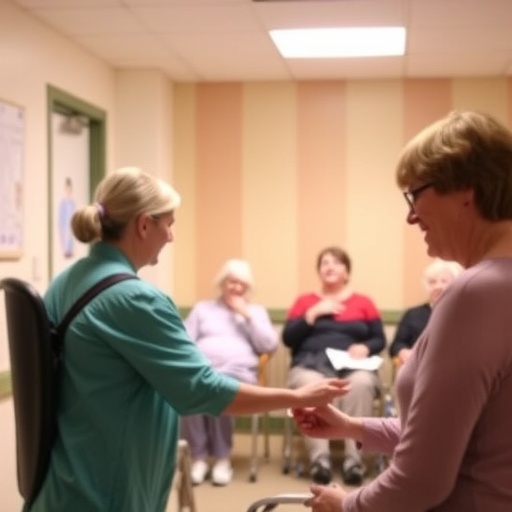
In a rapidly evolving healthcare landscape, the intricate relationship between nursing homes and emergency departments is drawing increased attention from researchers and practitioners alike. A recent qualitative study, conducted by esteemed researchers Høyvik, Doupe, and Jacobsen, sheds light on the pressing need to improve transitions between these critical healthcare settings. This comprehensive investigation aims to bridge the gaps often encountered during the movement of patients, particularly the elderly, from nursing homes to emergency care, a crucial juncture that frequently influences patient outcomes.
One of the central themes highlighted in this study is the communication challenges that arise during these transitions. Often, vital patient information fails to be effectively communicated between nursing home staff and emergency department personnel, which can lead to misdiagnoses, inappropriate treatments, and ultimately, poor patient outcomes. The researchers explored these communication barriers in depth, uncovering a myriad of factors that complicate the exchange of information. Additionally, they examined how these challenges could be ameliorated through structured protocols and consistent follow-up procedures that ensure continuity of care.
Another critical aspect of the qualitative study is the emotional and psychological impact of transitioning between care facilities on patients and their families. The researchers found that the stress associated with these transitions can exacerbate existing health issues and create feelings of vulnerability among elderly patients. Family members also experience significant anxiety during these transitions, often feeling powerless and unprepared to advocate for their loved ones. This emotional toll underscores the need for comprehensive support systems that not only streamline logistics but also address the psychological well-being of patients and families involved in these difficult transitions.
The study also delves into the role of nursing home staff in facilitating successful transitions. The researchers discovered that staff members often lack adequate training on how to manage these situations effectively. A significant number of frontline caregivers expressed the need for more robust training programs that focus on transition protocols, communication skills, and patient advocacy. By equipping nursing home staff with better training resources, the quality of care during transitions could improve significantly, leading to enhanced patient outcomes and satisfaction.
Furthermore, the research explores the potential for technological interventions to ease the transition process. The advent of electronic health records and other digital tools presents an opportunity for healthcare providers to share essential patient information rapidly. However, the study emphasizes that technology must be implemented thoughtfully to avoid over-reliance on systems that can fail during critical moments. Integrating technology effectively requires not only the systems themselves but also thorough training for providers on their use in high-pressure environments like emergency departments.
In addressing the systemic factors at play, the study highlights the need for policy changes to ensure better coordination between nursing homes and emergency departments. The researchers advocate for a reevaluation of existing healthcare policies that often overlook the unique needs of older patients. Recommendations include creating formalized agreements between facilities that clarify roles, responsibilities, and procedures during transitions. Such agreements could minimize confusion and ensure that patients receive timely, appropriate care regardless of their location.
As part of their findings, the researchers emphasize the importance of patient-centered care in improving transitions. This approach involves placing the patient’s comfort and preferences at the forefront of decision-making processes. The study suggests that by engaging patients and family members in discussions about their transition plans, healthcare providers can better align services with the specific needs of those involved. Active participation gives patients a sense of agency and could even contribute to better health outcomes, as studies have shown that emotionally engaged patients often recover more successfully.
Moreover, the qualitative nature of the study allows for the exploration of real-world experiences, providing invaluable context to the challenges faced during transitions. In-depth interviews with healthcare professionals and families of patients offered insights that quantitative studies might overlook. This emphasis on personal narratives adds depth to the research, creating a more comprehensive understanding of the factors influencing transition experiences.
The timing of this research is particularly significant, as the population of older adults continues to grow worldwide, leading to increased challenges in managing healthcare transitions. As policymakers and healthcare providers grapple with the complexities presented by this demographic shift, studies like this one serve as critical resources for informing best practices and improving service delivery.
While the study offers a multifaceted view of the issues at hand, it also emphasizes that there is no one-size-fits-all solution to the challenges presented by transitions between nursing homes and emergency departments. Each situation may require tailored approaches that consider the unique circumstances of individual patients and their families. Continuous research and dialogue among healthcare professionals, administrators, and policymakers will be essential in developing innovative solutions that enhance the quality of care provided during such transitions.
In conclusion, Høyvik, Doupe, and Jacobsen’s qualitative study shines a necessary spotlight on the complex landscape of healthcare transitions. By addressing communication barriers, emotional impacts, and systemic flaws, this research lays foundational groundwork for improving collaborations between nursing homes and emergency departments. As healthcare continues to evolve, the insights gained from this research could pave the way for more coordinated, compassionate, and effective patient care for some of society’s most vulnerable individuals.
With the aging population in mind, the findings not only aim to enhance the experiences of patients and families but also serve as a clarion call for ongoing discussion and investigation in this critical area of healthcare. Stakeholders across the board are prompted to reflect on how best to respond to these challenges in ways that uphold the dignity and health of every patient in need of care transitions.
Subject of Research: Transitions between nursing homes and emergency departments
Article Title: Improving transitions between nursing homes and emergency departments: a qualitative study
Article References:
Høyvik, E., Doupe, M.B. & Jacobsen, F.F. Improving transitions between nursing homes and emergency departments: a qualitative study.
BMC Nurs 24, 1492 (2025). https://doi.org/10.1186/s12912-025-04121-6
Image Credits: AI Generated
DOI: https://doi.org/10.1186/s12912-025-04121-6
Keywords: transitions, nursing homes, emergency departments, qualitative study, patient care, communication, healthcare policy, patient-centered care, elderly care
Tags: barriers to effective communication in healthcarecommunication challenges in healthcare settingselderly patient care transitionsemotional impact of healthcare transitionsenhancing healthcare collaboration and communicationfamily involvement in healthcare transitionshealthcare continuity of careimproving patient outcomes in healthcarenursing home emergency department transitionsnursing home to emergency room processesqualitative research in healthcarestructured protocols in patient care