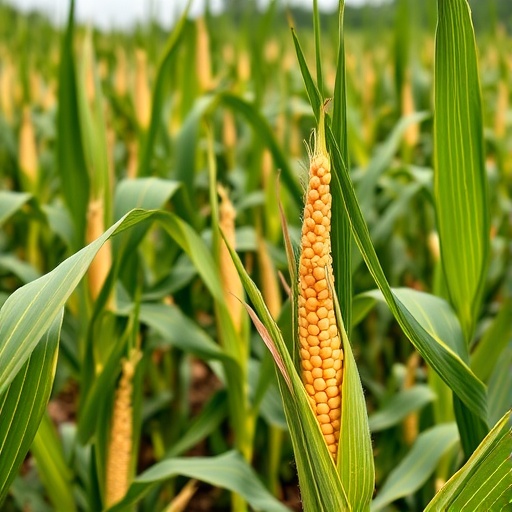
In a groundbreaking study that melds technological prowess with agricultural science, researchers from Uganda have unveiled a pioneering framework for predicting maize yield using advanced machine learning techniques. This innovative approach, which integrates CNN (Convolutional Neural Networks) and LSTM (Long Short-Term Memory) architectures, promises to revolutionize the way farmers and agricultural stakeholders forecast crop performance, ultimately enhancing food security in a nation that heavily relies on maize as a staple food.
As the world grapples with the impact of climate change and shifting environmental conditions, the agricultural sector faces unprecedented challenges. In Uganda, where maize serves as a critical component of the diet, accurate yield predictions are essential for planning and resource allocation. The researchers targeted this issue by leveraging vast datasets that encompass both climate variables and satellite remote sensing information. This multifaceted data approach is integral to making precise predictions about maize production, which could help mitigate the adverse effects of climate variability.
At the heart of this research lies the CNN-LSTM architecture, a sophisticated deep learning model that combines the strengths of both neural network systems. CNNs are particularly adept at processing spatial data, such as images, making them ideal for analyzing remote sensing imagery that captures the characteristics of land use, vegetation cover, and climatic conditions. On the other hand, LSTMs are designed to handle sequential data, enabling the model to retain information over long periods, which is crucial for understanding temporal patterns in climate and agricultural yield data.
The researchers employed an extensive multimodal dataset that included temperature, precipitation, humidity, and various other climatic factors, alongside satellite imagery reflecting the land’s physical attributes. By processing this data through the CNN-LSTM model, the team was able to capture complex interactions between climatic conditions and crop yield dynamics. This integrative approach greatly enhances the predictive capability of the model compared to traditional methods that rely on singular data sources.
Initial results from this study have been promising, indicating that the CNN-LSTM model can significantly outperform conventional statistical methods in predicting maize yields. With accuracy metrics soaring above existing benchmarks, the model not only provides actionable insights for farmers but also serves as a valuable tool for policymakers seeking to reinforce national food security initiatives. As urban populations swell and the demand for food rises, these predictive capabilities become increasingly critical.
One of the most significant advantages of this research is its scalability. While the study focused on maize in Uganda, the underlying methodologies and technological frameworks can be adapted for application in other regions and for other crops, thereby broadening its impact. By optimizing yield predictions in various agricultural contexts, this research has the potential to transform agricultural practices widely, promoting sustainability and resilience in the face of climatic changes.
Moreover, the findings underscore the role of artificial intelligence in agriculture, demonstrating how machine learning can contribute to smarter farming practices. As farmers gain access to predictive analytics, they can make informed decisions about planting times, resource allocation, and risk management. This shift towards data-driven farming not only enhances efficiency but also helps ensure that agricultural practices are sustainable and responsive to changing environmental conditions.
The implications of this research extend beyond just technological advancement; they touch on social and economic issues as well. Improved yield predictions can lead to better food distribution systems, reduced waste, and increased farmer income. Policymakers can utilize this information to develop targeted interventions that address specific vulnerabilities within the agricultural sector. This holistic approach to food security may pave the way for strengthening community resilience against economic and climatic shocks.
As technology continues to evolve, it is essential for agricultural researchers and practitioners to embrace innovative solutions like those presented in this study. By leveraging modern machine learning techniques, they can address some of the most pressing challenges facing the agricultural sector today. The call to action is clear: investing in research and technology is paramount for the future of food security, particularly in developing countries that are disproportionately affected by climate change.
The landmark contribution of Taremwa and his colleagues not only bolsters the scientific discourse around precision agriculture but also emphasizes the importance of interdisciplinary collaboration. By bringing together experts in climatology, remote sensing, and artificial intelligence, they have set a precedent for future research endeavors. This study is a testament to the power of collaboration in solving complex global issues, showcasing how science can pave the way for sustainable agricultural practices.
In summary, this groundbreaking research highlights the transformative potential of machine learning techniques in predicting maize yields and enhancing agricultural resilience in Uganda. The innovative CNN-LSTM framework offers an advanced tool for farmers and policymakers, equipping them to make informed decisions in an increasingly unpredictable climate. As the research community continues to explore the intersections of technology and agriculture, we’re likely to see emerging models that can further enrich our understanding of food systems worldwide.
Finally, as we look toward the future, it is clear that the integration of machine learning in agriculture is not merely a trend but a critical necessity. By harnessing the power of AI and data analytics, we can revolutionize how we approach food production, preparing for the challenges ahead with innovative, evidence-based strategies that ensure food security for generations to come.
Subject of Research: Prediction of maize yield using CNN-LSTM architecture on climate and remote sensing data.
Article Title: Prediction of maize yield in Uganda using CNN-LSTM architecture on a multimodal climate and remote sensing dataset.
Article References: Taremwa, D., Ahishakiye, E., Obbo, A. et al. Prediction of maize yield in Uganda using CNN-LSTM architecture on a multimodal climate and remote sensing dataset. Discov Artif Intell (2026). https://doi.org/10.1007/s44163-026-00855-7
Image Credits: AI Generated
DOI: 10.1007/s44163-026-00855-7
Keywords: CNN, LSTM, maize yield, agriculture, climate change, machine learning, food security, Uganda.
Tags: advanced agricultural data analyticsagricultural technology innovationsclimate change impact on agricultureclimate variability and crop performanceCNN LSTM machine learning techniquesdata-driven agriculture solutionsdeep learning in agriculturefood security in Ugandamaize production forecasting methodsmaize yield prediction Ugandaneural networks for yield predictionremote sensing for crop analysis