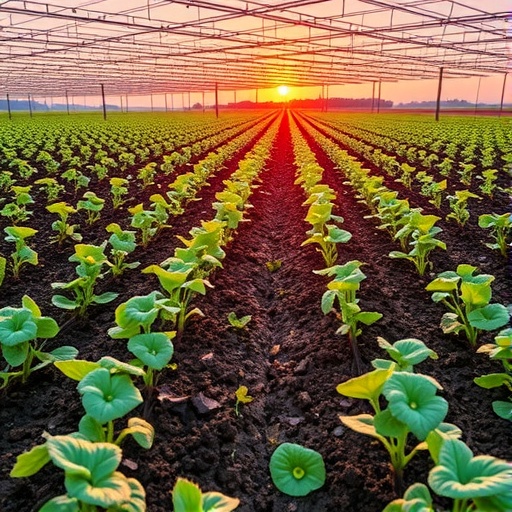
In the ever-evolving world of agricultural science, researchers are relentlessly searching for innovative methods to enhance crop resilience against the onslaught of environmental stressors. Recent breakthroughs in gene editing have opened new avenues for scientists aiming to bolster the defenses of crop varieties against factors such as drought, salinity, and pest infestations. Among these advancements, the CRISPR-Cas9 gene editing technology stands out for its precision and effectiveness, promising to revolutionize how we approach crop management in the face of climate constraints.
The distinctive CRISPR-Cas9 system takes advantage of the natural mechanisms that bacteria use to defend themselves against viral infections. By harnessing this mechanism, life scientists can create targeted modifications in the DNA of plants, enabling them to develop improved traits that enhance resilience. This technology enables researchers to delete, insert, or alter specific genes with a level of specificity that was previously unattainable. As a result, crops can be engineered to withstand environmental challenges more effectively than ever before.
A recent publication by Albalawi et al. (2025) showcases the potential of CRISPR-Cas9 in enhancing crop resilience. The authors delve into the complex interactions between plants and their environments, emphasizing the need for crops that can adapt to fluctuating conditions. As climate change accelerates the severity of droughts, floods, and other unpredictable weather patterns, there exists a dire need for agricultural solutions that can mitigate the impact of these stressors. The research team employed the CRISPR-Cas9 technology to target specific genes responsible for stress responses in various crop species.
The results of their research are promising. Through precise gene editing, the scientists were able to identify genetic targets that bolster the plants’ resilience mechanisms. In their trials, crops that underwent CRISPR editing demonstrated enhanced tolerance to both abiotic and biotic stress factors, resulting in higher survival rates and improved yields compared to their non-modified counterparts. This signifies not just a potential increase in productivity but also a step forward in securing food supply chains in an era marked by environmental uncertainty.
The implications of such research extend far beyond the field of agriculture. By developing crops that can thrive under less-than-ideal circumstances, we can address food security concerns that are projected to escalate in the coming decades. As population growth continues to place pressure on farmland and water resources, the ability to cultivate resilient crops becomes increasingly essential. The innovative techniques emerging from this research might form the backbone of sustainable agricultural practices, ensuring that future generations have access to sufficient food resources.
One cannot overlook the socio-economic considerations that accompany advancements in genetic engineering. As nations grapple with the challenges of climate change, the role of biotech-enhanced crops may become a cornerstone of national strategies for food security. Policymakers and agricultural stakeholders are urged to recognize the need for supportive regulatory frameworks that facilitate the adoption of gene-edited crops, ensuring that their benefits are accessible to farmers across the globe.
Moreover, public perception plays a crucial role in the trajectory of gene editing technologies. Widespread acceptance hinges on transparent communication regarding the science behind CRISPR and its potential benefits. Educational initiatives that focus on demystifying genetic modifications can foster a deeper understanding among consumers, ultimately leading to greater acceptance of genetically modified organisms (GMOs) that enhance agricultural resilience.
Critically, the ethical aspects of gene editing must also be a focal point of discussion. While introducing gene-edited crops can have monumental benefits, it necessitates debate around biodiversity and ecological balance. Researchers must engage with ecologists and ethicists to ensure that interventions do not inadvertently disrupt local ecosystems or lead to unintended consequences. Responsible research practices involving rigorous testing and monitoring will be essential in mitigating risks while still pushing the boundaries of agricultural innovation.
In conclusion, Albalawi et al.’s work shines a spotlight on the transformative potential of CRISPR-Cas9 technology in agriculture. Through targeted gene editing, scientists can usher in a new era of crop resilience, enabling plants to withstand the environmental challenges posed by a rapidly changing climate. The outcomes not only promise enhanced agricultural productivity but also a sustainable future wherein food security can be maintained despite external pressures.
As the dialogue surrounding gene editing continues to unfold, researchers, policymakers, and society must work collaboratively to navigate the complexities of biotechnology in agriculture. By doing so, we can secure a more resilient agricultural landscape, ensuring that future generations can thrive in harmony with the environment.
In sum, the integration of CRISPR-Cas9 gene editing into agricultural practices paves the way for innovative solutions to pressing global challenges. The journey toward sustainable crop resilience has begun, and with it comes the promise of a world where food security is no longer a distant hope but an attainable reality.
Subject of Research: The use of CRISPR-Cas9 gene editing to enhance crop resilience against environmental stressors.
Article Title: Unlocking crop resilience through CRISPR Cas9 mediated gene editing against environmental stressors.
Article References:
Albalawi, T., Faizan, M., Karabulut, F. et al. Unlocking crop resilience through CRISPR Cas9 mediated gene editing against environmental stressors.
Discov. Plants 2, 324 (2025). https://doi.org/10.1007/s44372-025-00408-9
Image Credits: AI Generated
DOI: https://doi.org/10.1007/s44372-025-00408-9
Keywords: CRISPR-Cas9, gene editing, crop resilience, environmental stressors, sustainable agriculture, food security.
Tags: advancements in plant biotechnology.agricultural science innovationsCRISPR gene-editing technologyCRISPR-Cas9 advancements in agriculturecrop management and climate constraintsenhancing crop resilience against droughtenvironmental stressors in agriculturegenetic engineering for sustainable agricultureimproving plant traits for climate adaptationprecision gene editing in plantssalinity and pest infestationstargeted DNA modifications in crops