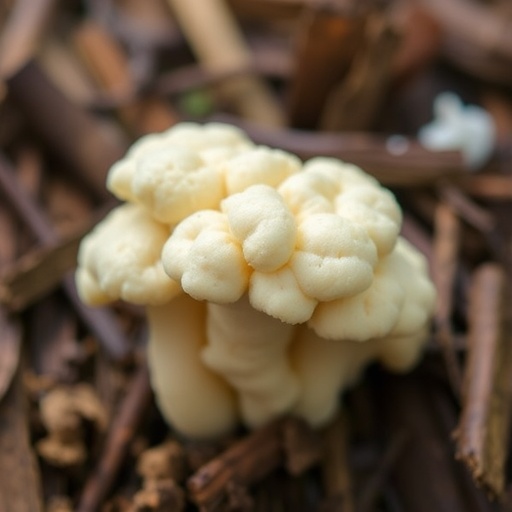
In the quest to tackle the formidable issue of waste management, particularly concerning agricultural residues, a recent study has emerged, shedding light on an innovative approach that blends biological and chemical methods. Coconut wood waste, often overlooked in the biomass hierarchy, has become the focus of this research. The team, led by Unnikrishnan B.V. and his colleagues, has demonstrated that utilizing the fungal strain Aspergillus Terreus Dw1 can significantly enhance the degradation process of coconut-derived wood waste. Their findings mark a pivotal step in the sustainable management of biomass resources, providing a dual benefit of waste reduction and valuable by-product generation.
The concept of waste-to-energy conversion is gaining traction in modern waste management strategies. Traditionally, biomass like coconut wood waste has been viewed as a problematic by-product, filled with fibrous material that does not easily break down. However, this study posits that with the right combination of pretreatment and microbial inoculation, coconut wood waste can be transformed into a resource rather than a burden. The incorporation of Aspergillus Terreus Dw1 acts as a catalyst, accelerating the decomposition process and ultimately enhancing the biomass’s energy yield.
Aspergillus species, particularly Aspergillus Terreus, have long been renowned for their ability to produce enzymes that degrade complex organic materials. The research scrutinizes the specific enzymatic activities of Aspergillus Terreus Dw1, showcasing how these enzymes break down lignin, cellulose, and hemicellulose in coconut wood waste. The lignocellulosic structure, notorious for its resilience, is effectively dismantled, paving the way for the easier extraction of fermentable sugars which can subsequently be converted to biofuels or other valuable products.
Through a series of meticulous experiments, the researchers applied various pretreatment methods prior to fungal inoculation to establish an effective protocol. These treatments, ranging from physical methods like grinding and steaming to chemical treatments involving alkaline solutions, primed the coconut wood for enhanced colonization by Aspergillus Terreus Dw1. The results highlighted not only a significant improvement in degradation rates but also the importance of optimizing pretreatment processes to synergize with microbial activity. This synergy could be key to realizing the potential of coconut-derived wastes as renewable energy sources.
The ecological implications of this study cannot be overstated. With the global challenge of accumulating agricultural waste posing threats to environmental sustainability, the innovative approach outlined by Unnikrishnan and his colleagues introduces a feasible solution. By converting coconut waste into bioenergy, it not only addresses the waste issue but also reduces reliance on fossil fuels, aligning with broader environmental goals. Cultivating Aspergillus Terreus Dw1 in biomass conversion provides a dual advantage of waste recycling and greenhouse gas emission reduction.
Another noteworthy facet of this research is the economic viability of the proposed method. The study indicates that utilizing locally available coconut waste, combined with the cost-effective cultivation of Aspergillus Terreus Dw1, can lead to sustainable and scalable applications in rural economies, especially in coconut-producing regions. Such innovation could empower local farmers by providing them with new avenues for income generation while simultaneously mitigating the environmental impacts of waste disposal.
The research also delves into the biochemical pathways activated during the degradation process. The enzymes produced by Aspergillus Terreus Dw1 are integral to hydrolyzing complex carbohydrates into simpler sugars. This revelation not only underscores the fungal strain’s importance in lignocellulosic biomass digestion but also opens avenues for genetic engineering of enzyme production, potentially creating more efficient strains for industrial applications.
As the authors detail their methodical exploration, they emphasize the need for further investigation into the optimization of fermentation conditions post-degradation. The conditions under which the sugars are subsequently fermented into biofuels can significantly influence the overall yield. Understanding the interactions between various fermentation organisms and the hydrolyzed sugars will be crucial in advancing this bioconversion approach.
Moreover, the implications for global energy needs are profound. As countries grapple with transitioning towards renewable energy sources, this research highlights that sustainable waste management strategies incorporating biotechnological advancements can play a critical role. The ongoing reliance on fossil fuels needs to be downgraded, and innovative methods like those proposed in this study offer tangible alternatives that align with energy sufficiency goals.
Community adoption of such beneficial approaches is essential for maximum impact. Local governments and organizations can champion these biotechnological innovations, promoting education and awareness within agricultural sectors. By showcasing the feasibility of using coconut waste as a bioresource, communities can shift perspectives and practices, fostering collective participation in waste reduction efforts.
In conclusion, the pioneering work by Unnikrishnan and his team’s exploration of using Aspergillus Terreus Dw1 for coconut wood waste degradation represents a significant advancement in waste management and biomass valorization. Through the development of effective pretreatment strategies, the combination of traditional knowledge with modern biotechnological approaches can revolutionize how we view agricultural waste. The promise of not only converting waste into energy but also contributing to sustainable agricultural practices paints a hopeful picture for the future.
Research studies like these emphasize the crucial intersection where environmental sustainability meets scientific innovation. By leveraging biological methodologies, we can redefine waste as a valuable resource, inspiring a new generation of environmentally conscious practices that resonate across the globe. Ultimately, understanding and implementing these findings could enable us to move towards a more sustainable and energy-efficient future, with waste no longer seen as an end but rather as a pathway to new opportunities.
Subject of Research: Waste management of coconut wood using Aspergillus Terreus Dw1
Article Title: Pretreatment Coupled with Inoculation of Aspergillus Terreus Dw1 for Degradation of Coconut Derived Wood Wastes
Article References:
Unnikrishnan, B.V., Binitha, N.K., Sujatha, R. et al. Pretreatment Coupled with Inoculation of Aspergillus Terreus Dw1 for Degradation of Coconut Derived Wood Wastes.
Waste Biomass Valor (2025). https://doi.org/10.1007/s12649-025-03368-z
Image Credits: AI Generated
DOI: 10.1007/s12649-025-03368-z
Keywords: Coconut wood waste, Aspergillus Terreus, waste management, biomass valorization, enzymatic degradation, renewable energy, sustainable practices, biofuels.
Tags: agricultural residue treatmentAspergillus Terreus in waste managementbiomass resource managementcoconut wood waste degradationcoconut-derived biomass utilizationeco-friendly waste solutionsenhancing biomass energy yieldenzyme production by Aspergillusfungal bioremediation techniquesinnovative waste reduction strategiesmicrobial inoculation for biomasssustainable waste-to-energy conversion