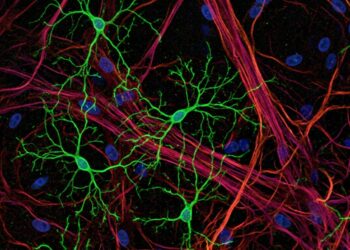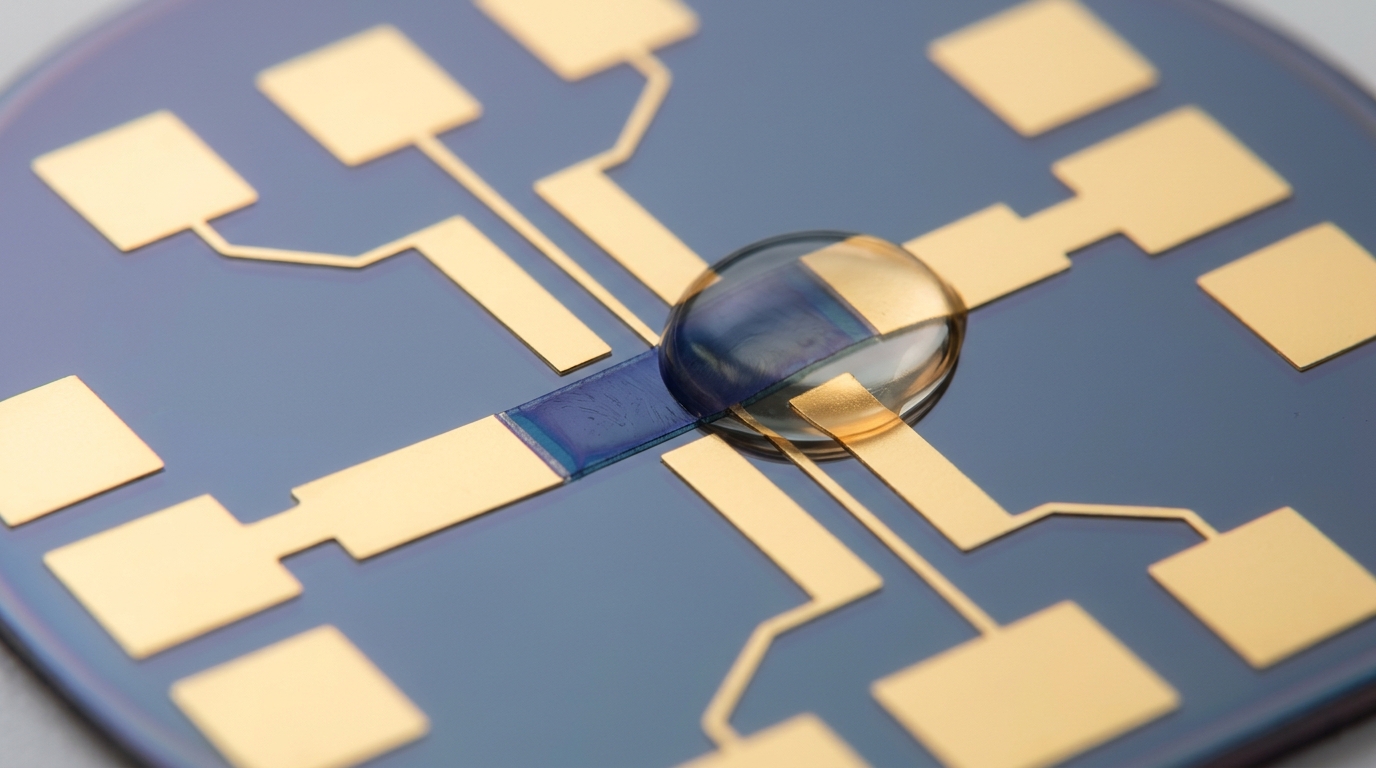
Modern computational hardware increasingly struggles against the architectural separation between physical processing units and data storage, an operational boundary recognized as the von Neumann bottleneck. As deep neural networks expand, the frequent shuffling of heavy parameter matrices across interconnects imposes substantial energy and latency penalties, often consuming far more power than the core arithmetic operations themselves. In contrast, the human biological brain coordinates information across approximately one hundred billion neurons interconnected by up to one quadrillion synapses while operating at a remarkably modest power budget of roughly twenty watts. This superior biological efficiency stems directly from co-locating memory storage and computational logic within identical physical nodes through dynamic synaptic plasticity. Neuromorphic engineering seeks to replicate these natural organizational principles within electronic hardware by deploying crossbar arrays that map numerical weights directly to device conductance states. By utilizing Ohm’s and Kirchhoff’s circuit laws to perform vector-matrix multiplication directly within memory arrays, analog architectures bypass traditional bus limits, positioning organic electrochemical synaptic transistors as uniquely capable candidates for biological-grade processing.
Organic electrochemical synaptic transistors operate using channels composed of organic mixed ionic-electronic conductors that undergo volumetric electrochemical doping and dedoping via mobile electrolyte ions under applied gate voltages. Unlike organic field-effect transistors that restrict charge modulation to an interfacial two-dimensional boundary layer, organic electrochemical transistors distribute ionic and electronic coupling throughout the entire bulk thickness of the active channel. This volumetric operation facilitates exceptionally high signal transconductance at drive voltages operating comfortably below one volt, which significantly lowers overall programming switching energies. Under the classic Bernards-Malliaras operational model for saturation regimes, transconductance scales proportionally with device geometry, electronic carrier mobility, and volumetric capacitance, where channel thickness multiplied by volumetric capacitance acts as an amplified effective areal capacitance. Because gate-induced current modulation evolves progressively alongside the physical entry and departure of solvated ions, the transient response provides an intrinsic physical framework for emulating both temporary and persistent biological synaptic plasticity.
The fundamental synaptic behaviors of these devices are governed by presynaptic voltage pulses applied across the gate electrode, generating postsynaptic current modulations through the conducting channel. When successive electrical pulses are delivered rapidly before previously injected ions can completely evacuate the channel matrix, newly admitted dopants accumulate upon residual charges, mirroring biological short-term plasticity mechanisms such as paired-pulse facilitation. When stimulus intensity, pulse width, or continuous repetition increases, ions are driven deeper into stabilized crystalline domains or polymer trapping sites, inducing a transition toward long-term plasticity characterized by prolonged memory retention. Evaluating the decay of excitatory postsynaptic currents requires systematic mathematical descriptors, primarily multi-exponential formulations that isolate rapid surface relaxation components from persistent bulk-stabilized currents, or Kohlrausch stretched-exponential decay functions that track distributed relaxation times. Comprehensive performance reporting protocols require standardizing observation windows, pulse profiles, residual saturation currents, and model-independent fractional current measurements at fixed post-stimulation intervals.
Deploying organic electrochemical synaptic transistors in artificial neural network crossbars demands analog weight updates that demonstrate extensive dynamic range, abundant distinguishable conductance states, and symmetric response profiles between potentiation and depression. Achieving a broad conductance ratio between maximum and minimum operational states expands available quantization levels while dampening parasitic current leakage, though baseline conductances must remain controlled to avoid catastrophic interconnect voltage drops. Symmetrical and linear conductance modulation is exceptionally vital for hardware training because non-identical energetic barriers governing ion penetration versus extraction cause asymmetric updates, which progressively distort stored weights away from ideal optimization trajectories during repeated backpropagation. Furthermore, channel write speeds and update energy budgets remain constrained by gate circuit time constants and intrinsic ionic diffusion dynamics within the polymer film. Although downscaling active channel dimensions reduces programming energy below ten picojoules and permits megahertz operation, circuit-level leakage pathways establish an unavoidable operational trade-off against long-term nonvolatile memory retention.
To suppress spontaneous ion back-diffusion and maintain stable conductance states following gate bias removal, researchers focus on tuning thermodynamic and kinetic energy barriers through structural channel engineering. The thermodynamic barrier reflects the chemical and electrostatic free-energy difference between channel-bound ions and electrolyte-solvated ions, while the kinetic barrier represents the activation energy necessary for ions to physically migrate across the polymer matrix. Demonstrating backbone polarity engineering, investigators synthesized donor-acceptor copolymers combining diketopyrrolopyrrole with varying ratios of polar cyano-substituted thienylene-vinylene-thienylene and nonpolar selenophene donor units. Elevating the cyano-substituted fraction strengthened chemical binding against bistriflimide anions, extending current decay time constants from two hundred seventy-nine milliseconds to nine hundred ninety-one milliseconds and lifting simulated digit recognition accuracy from approximately fifty percent to over ninety-three percent. Similarly, substituting a single carbon-hydrogen group with a nitrogen atom in benzothiadiazole units produced denser interchain packing and reduced lamellar stacking intervals, expanding post-stimulation memory retention beyond three thousand seconds.
Modifying flexible polymer side chains provides an equally capable design axis for balancing anion binding energy against solid-state interchain molecular packing. In systematic comparisons of diketopyrrolopyrrole-terthiophene polymers featuring branched alkyl chains of varying length, longer side chains enhanced computed anion adsorption energies but simultaneously dilated lamellar spacing and prompted structural reorientation. Consequently, intermediate 2-octyldodecyl chain lengths struck an optimal balance between thermodynamic stabilization and kinetic diffusion barriers, achieving retention times around one hundred seconds without degrading conductance modulation ranges. In complementary work, replacing branched alkyl side chains with linear hydrophilic ethylene glycol chains improved structural film crystallinity while allowing deep volumetric ion penetration, effectively establishing high kinetic and thermodynamic barriers simultaneously. Furthermore, introducing ionic pendant functionalities into conjugated polyelectrolyte backbones directly alters charge-compensation mechanics, where cationic side chains force electrolyte anions deep into the bulk film, yielding extended decay time constants exceeding three hundred twenty seconds.
Beyond synthesizing novel macromolecular structures, physical channel morphology can be engineered to reconcile the historic performance trade-off between fast ion infiltration and slow back-diffusion. Blending hydrophobic alkyl-functionalized polymers with hydrophilic glycolated polymers suppressed excessive structural swelling during electrochemical cycling while preserving high volumetric doping efficiencies, thereby extending retention lifetimes without altering molecular crystallinity. In another morphological approach, incorporating azodicarbonamide blowing agents into polymer precursor solutions formed porous nanoweb architectures, where high accessible surface areas facilitated rapid gate-induced ion entry, while foaming-induced stretching packed crystalline polymer domains densely enough to block ion retreat. Similarly, fabricating directional polythiophene nanowire arrays and elevated fin architectures through soft solution nanomolding enabled efficient multidirectional electrolyte infiltration while preserving high internal molecular order, allowing patterned devices to retain over forty-six percent of their peak excitatory postsynaptic current after one thousand seconds of continuous observation.
Electrolyte engineering establishes an independent thermodynamic pathway for controlling retention by adjusting ion-pairing interactions within the transport medium or neutralizing the electrostatic forces that pull dopants out of the channel. Examining piperidinium-based ionic liquids paired with bistriflimide anions revealed that weakening cation-anion electrostatic attraction facilitated complete ionic dissociation, enabling detached anions to penetrate deeply into crystalline polymer domains and producing prolonged retention constants surpassing forty-four seconds. In parallel work, altering anion identity across ionic liquids demonstrated that asymmetric ethyl sulfate species formed dense hydrogen bonds directly with polythiophene channels, transitioning ion relaxation into an interaction-stabilized regime that maintained highly linear updates. Researchers also deployed ferroelectric ion gels where persistent remanent electrical polarization countered back-diffusion forces. Alternatively, introducing auxiliary molecular dopants such as fluorinated tetracyanoquinodimethane created sacrificial charge-buffering anions that rapidly restored interfacial charge equilibrium upon bias removal, leaving primary bistriflimide dopants securely trapped within the bulk channel.
Refining weight-update linearity and symmetry requires coordinating channel composition, stable electrolyte interfaces, and geometric device dimensions to ensure uniform conductance updates during iterative cycling. Widening the conjugated backbone spacing between glycol side chains in polythiophene derivatives formed protective molecular pockets that stabilized bistriflimide dopants, reducing update nonlinearity and boosting complex image classification accuracy to nearly ninety percent. Introducing crosslinkers featuring zwitterionic sulfonate and quaternary ammonium groups formed an electrostatic barrier of approximately two electron-volts that captured incoming anions, transforming abrupt depression into gradual, symmetric conductance decrements. At the device level, vertical three-terminal configurations where channel thickness governs the ion migration path confirmed that intermediate channel thicknesses near fifty-five nanometers and footprint areas of fifty by fifty micrometers balanced volumetric penetration against update saturation. Concurrently, ternary electrolyte blends combining solid and liquid ionic liquids stabilized interfacial surface energy, yielding linear synaptic trajectories capable of achieving simulated neural network recognition accuracies approaching ninety-eight percent.
Ensuring operational reliability across thousands of repeated switching cycles requires mitigating microstructural destruction caused by cyclical swelling and eliminating destructive electrochemical side reactions. Channel swelling is categorized as passive solvent absorption or active swelling driven by solvated ion insertion, which can progressively rupture interchain packing, promote irreversible structural collapse, and diminish redox reversibility under aqueous operating conditions. Balancing hydrophobic alkyl fractions against hydrophilic glycol chains or utilizing supramolecular crown-ether artificial ion channels dramatically lowered water transport per ion, preserving over ninety-six percent of initial device currents across extensive cycling. To suppress chemical degradation, investigators raised polymer ionization potentials above 4.9 electron-volts, rendering parasitic oxygen reduction reactions thermodynamically unfavorable and halting harmful hydrogen peroxide generation. Complementary methods, including degassing casting solvents to substitute ambient oxygen with controlled chemical dopants and replacing catalytically active gold electrodes with passivated contacts, substantially enhanced structural stability during continuous electrical stress.
These coordinated engineering strategies have catalyzed rapid progress across diverse neuromorphic computing architectures and integrated artificial sensory platforms. Dual-mode vertical transistors utilizing glycolated conjugated polymers can dynamically toggle between volatile short-term states for signal filtering and nonvolatile memory for weight storage by modulating applied voltage thresholds. Harnessing natural volatile relaxation dynamics, interconnected networks of electropolymerized polythiophene fibers implement physical reservoir computing, transforming complex biosignals to accurately classify electrocardiogram heartbeats into diagnostic categories. Furthermore, integrating organic synaptic transistors directly with sensing interfaces has produced optoelectronic artificial retinas capable of single-layer facial pattern memorization, biomimetic afferent nerves actuating bioelectronic robotic reflex arcs, and artificial olfactory systems coupling functionalized human receptor nanodiscs to discriminate chemically similar fatty acid vapors. Translating these versatile organic electrochemical synaptic transistors into commercial production will ultimately require establishing standardized testing protocols, scalable low-variation polymer synthesis, high-resolution cleanroom lithography, and robust monolithic integration alongside conventional silicon control circuitry.
Subject of Research: Ion dynamics and device engineering strategies for organic electrochemical synaptic transistors in neuromorphic computing
Article Title: Enhancing synaptic performance in organic electrochemical synaptic transistors: from fundamental mechanisms to device engineering and applications
Article References: Lee, J., Woo, S., Kim, H., Kwon, B., & Oh, J. H. (2026). Enhancing synaptic performance in organic electrochemical synaptic transistors: from fundamental mechanisms to device engineering and applications. Advances in Industrial and Engineering Chemistry, 2(1), Article 20. https://doi.org/10.1007/s44405-026-00064-x
Image Credits: AI Generated
DOI: 10.1007/s44405-026-00064-x
Keywords: organic electrochemical synaptic transistors, neuromorphic engineering, synaptic plasticity, organic mixed ionic electronic conductors, memory retention, analog weight updates, operational stability, in memory computing, reservoir computing, artificial sensory systems, channel engineering, electrolyte engineering, electrochemical doping, conjugated polymers, transconductance, ion pairing, artificial neural networks, paired pulse facilitation
News Source: Denise Maddox. (November 27, 2026). Engineering Ion Movement Enhances Memory and Weight Precision in Organic Synaptic Transistors. Scienmag.