
• HOME
  • NEWS
  • EXPLORE
    • CAREER
      • Companies
      • Jobs
    • EVENTS
    • iGEM
      • News
      • Team
    • PHOTOS
    • VIDEO
    • WIKI
  • BLOG
  • COMMUNITY
    • FACEBOOK
    • INSTAGRAM
    • TWITTER
Saturday, November 14, 2026
BIOENGINEER.ORG
No Result
View All Result
  • Login
  • HOME
  • NEWS
  • EXPLORE
    • CAREER
      • Companies
      • Jobs
        • Lecturer
        • PhD Studentship
        • Postdoc
        • Research Assistant
    • EVENTS
    • iGEM
      • News
      • Team
    • PHOTOS
    • VIDEO
    • WIKI
  • BLOG
  • COMMUNITY
    • FACEBOOK
    • INSTAGRAM
    • TWITTER
No Result
View All Result
Bioengineer.org
No Result
View All Result
Home NEWS Science News Biology

Engineered Multivalent FGF1 Probe Targets HSPGs With Potential Antiviral Activity

by
November 11, 2026
in Biology
Reading Time: 2 mins read
0
Engineered Multivalent FGF1 Probe Targets HSPGs With Potential Antiviral Activity

Engineered Multivalent FGF1 Probe Targets HSPGs With Potential Antiviral Activity

Share on FacebookShare on TwitterShare on LinkedinShare on RedditShare on Telegram

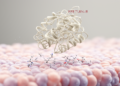
Researchers have engineered a multivalent, self-assembling molecular probe based on fibroblast growth factor-1 that demonstrates a defined architecture, preserved structural stability, and markedly improved interaction with targets containing heparan sulfate proteoglycans. Developed as a tetrameric biosensor complex, the construct utilizes an engineered protein scaffold to assemble an FGF1 mutant deficient in native receptor binding.

Data reported from the study suggest that this multivalent biosensor derived from fibroblast growth factor-1 has the capacity to block the binding of endogenous growth factors and viral proteins to cell-surface heparan sulfate proteoglycans. The multivalent assembly presents potential antiviral activity alongside its diagnostic utility.

To produce the probe, the investigators harnessed the natural heparan sulfate recognition properties of fibroblast growth factor-1 through controlled oligomerization. The team utilized an engineered streptavidin platform to assemble a tetrameric complex incorporating a specific fibroblast growth factor-1 mutant designed with enhanced heparan sulfate affinity and a deficiency in binding fibroblast growth factor receptors.

Heparan sulfate proteoglycans are sulfated glycoconjugates that are broadly distributed across the plasma membrane and throughout the surrounding extracellular matrix. Through physical interactions mediated by their heparan sulfate chains, these molecules participate directly in multiple cellular mechanisms, including the internalization of extracellular ligands and the regulation of key cellular signaling pathways.

Pathological remodeling and aberrant abundance of heparan sulfate proteoglycans have been established in several disease states, most notably during malignant transformation. Because these alterations are closely linked with disease progression, cell-surface proteoglycans represent attractive molecular targets for both diagnostic biosensing and targeted therapeutic intervention.

Under normal physiological conditions, endogenous fibroblast growth factors associate simultaneously with heparan sulfate proteoglycans and fibroblast growth factor receptors to initiate downstream cellular signaling cascades. By uncoupling heparan sulfate binding from receptor activation within a stable tetrameric structure, the brief report documented in Cell Communication and Signaling demonstrates an engineered approach to selectively probe and intercept proteoglycan-mediated interactions.

Subject of Research: Engineered multivalent protein probes targeting heparan sulfate proteoglycans

Article Title: Multivalent self-assembling fibroblast growth factor-1-based molecular probe with high affinity for HSPGs and potential antiviral activity

Article References: Chorążewska, A., Ciura, K., Pomorski, A., Porębska, N., & Opaliński, Ł. (2026). Multivalent self-assembling fibroblast growth factor-1-based molecular probe with high affinity for HSPGs and potential antiviral activity. Cell Communication and Signaling. https://doi.org/10.1186/s12964-026-03307-y

Image Credits: AI Generated

DOI: 10.1186/s12964-026-03307-y

Keywords: Fibroblast Growth Factor 1, Heparan Sulfate Proteoglycans, Molecular Probes, Streptavidin Platform, Antiviral Research, Biosensors, Glycoconjugates, Cell Signaling, Multivalent, self-assembling, fibroblast, growth

News Source: Drew Townsend. (November 11, 2026). Engineered Multivalent FGF1 Probe Targets HSPGs With Potential Antiviral Activity. Scienmag.

Tags: antiviral researchbiosensorscell signalingFibroblastFibroblast Growth Factor 1Glycoconjugatesgrowthheparan sulfate proteoglycansmolecular probesmultivalentself-assemblingStreptavidin Platform
Share12Tweet7Share2ShareShareShare1

Related Posts

Study Links Cytomegalovirus gN4 Genotype to Central Nervous System Damage in Infants

Study Links Cytomegalovirus gN4 Genotype to Central Nervous System Damage in Infants

November 14, 2026
Liver Glycoprotein FETUB Suppresses Cholangiocarcinoma and Enhances Cisplatin Sensitivity

Liver Glycoprotein FETUB Suppresses Cholangiocarcinoma and Enhances Cisplatin Sensitivity

November 14, 2026

Serial Egg Passage Completely Attenuates Egyptian Duck Hepatitis A Virus Isolate

November 14, 2026

RNA-Binding Protein HSPD1 Promotes Lung Adenocarcinoma Invasion and Predicts Patient Survival

November 14, 2026

POPULAR NEWS

  • Neonatal Brain Network Growth Predicts Childhood Cognitive and Motor Skills

    Neonatal Brain Network Growth Predicts Childhood Cognitive and Motor Skills

    29 shares
    Share 12 Tweet 7
  • Serial Egg Passage Completely Attenuates Egyptian Duck Hepatitis A Virus Isolate

    29 shares
    Share 12 Tweet 7
  • Melting Curve PCR Detects Pulmonary Tuberculosis Resistance but Falters in Extrapulmonary Cases

    29 shares
    Share 12 Tweet 7
  • African Pediatric Palliative Care Focuses on Provider Training Over Patient Outcomes

    29 shares
    Share 12 Tweet 7

About

We bring you the latest biotechnology news from best research centers and universities around the world. Check our website.

Follow us

Recent News

First-Trimester Insulin Resistance Surrogate Indices Linked to Gestational Diabetes

Novel NECAB1 Autoantibodies Identified in Patients with Neurological Syndromes and Cancer

Study Links Cytomegalovirus gN4 Genotype to Central Nervous System Damage in Infants

Subscribe to Blog via Email

Enter your email address to subscribe to this blog and receive notifications of new posts by email.

Join 87 other subscribers
  • Contact Us

Bioengineer.org © Copyright 2023 All Rights Reserved.

Welcome Back!

Login to your account below

Forgotten Password?

Retrieve your password

Please enter your username or email address to reset your password.

Log In
No Result
View All Result
  • Homepages
    • Home Page 1
    • Home Page 2
  • News
  • National
  • Business
  • Health
  • Lifestyle
  • Science

Bioengineer.org © Copyright 2023 All Rights Reserved.