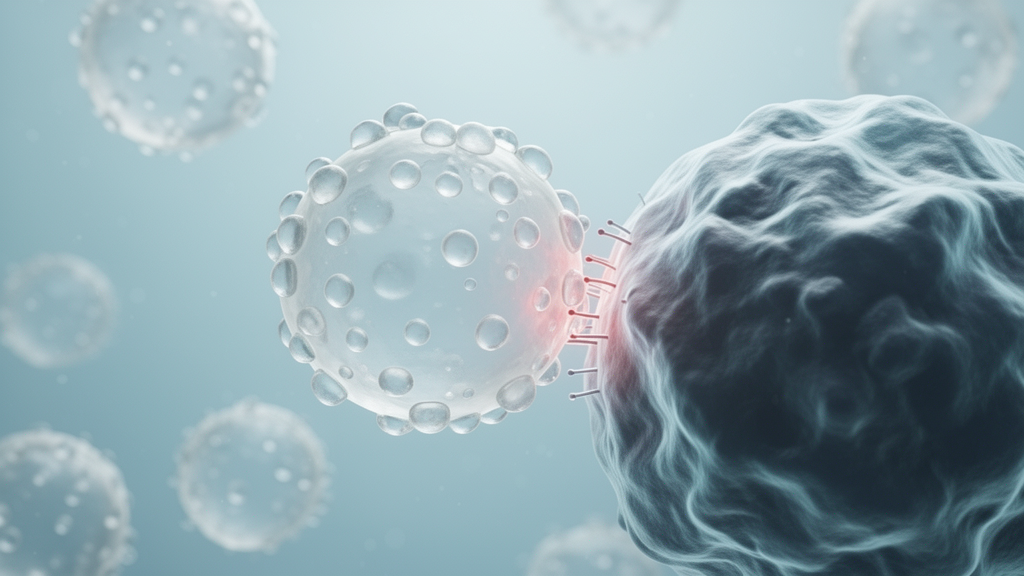
A review published in Discover Pharmaceutical Sciences examines the latest developments in engineering exosomes for site-specific drug delivery in breast cancer. The study, authored by Bikram Dawn, Api Talom, Taba Jirpu, and Arnab Ghosh, highlights how modifying these naturally secreted extracellular vesicles can overcome the limitations of conventional chemotherapy. By altering exosome functionalities, researchers aim to create carriers that deliver therapeutic agents directly to tumor cells while minimizing damage to healthy tissue. This approach addresses the critical issue of non-specific drug targeting, a major drawback of current neoadjuvant therapies for breast cancer, which remains the second most common cancer worldwide.
Exosomes are nano-sized vesicles originating from the endosomal system, typically measuring less than 200 nanometers in diameter. They are formed when the plasma membrane invaginates to create early sorting endosomes, which mature into late sorting endosomes containing intraluminal vesicles. Upon fusion with the plasma membrane, these vesicles are released into the extracellular space. Their small size and lipid bilayer structure allow them to cross biological barriers and deliver cargo, including proteins, DNA, and RNA, to recipient cells through mechanisms such as receptor-mediated endocytosis and micropinocytosis. This natural ability to transport molecules makes them promising candidates for targeted drug delivery platforms.
The review categorizes exosome modification strategies into four primary types: biological, chemical, nucleotide, and immunological. Biological modifications involve introducing targeting motifs like peptides or proteins via genetic fusion. For instance, exosomes can be engineered to display the iRGD peptide, which binds to integrins on cancer cells, enhancing drug uptake. In one example, exosomes modified with a c-Met targeting aptamer were used to target triple-negative breast cancer cells that overexpress this factor. These surface modifications allow exosomes to recognize specific markers on tumor cells, thereby increasing the concentration of therapeutic agents at the tumor site.
Chemical modifications utilize reactions to attach ligands or drugs to the exosome membrane. This includes the use of click chemistry to covalently bond molecules to the surface, improving targeting capabilities. Researchers have also developed pH-sensitive exosomes using i-motif conjugation, which release doxorubicin in the acidic environment of the tumor microenvironment. Additionally, chemical modifications can involve loading drugs like paclitaxel or doxorubicin into the exosome interior, altering their chemical characteristics to enhance stability and release profiles. These methods offer flexibility in how drugs are packaged and delivered, allowing for controlled release mechanisms that respond to specific physiological conditions.
Nucleotide modification focuses on delivering genetic material such as mRNA, siRNA, and miRNA to cancer cells. Exosomes can carry mRNA that is translated directly in the cytosol, leading to efficient gene expression. In HER2-positive breast cancer cells, exosomes delivering HChrR6-encoding mRNA resulted in significant growth inhibition. Small interfering RNA (siRNA) is also used to silence specific genes involved in tumor progression and drug resistance. For example, exosomes loaded with siRNA against MTA1 or MEK1 have been shown to suppress tumor invasion and enhance drug sensitivity. MicroRNAs, such as miR-379 and miR-381, can be delivered to restore tumor-suppressive functions and inhibit cancer cell migration and proliferation.
Immunological modifications aim to enhance the immune response against tumors by modifying the exosome surface with antibodies or immune checkpoint proteins. Engineered exosomes displaying CD47 can evade phagocytosis, allowing them to circulate longer and accumulate in the tumor microenvironment. Exosomes modified with anti-CD3 and anti-HER2 antibodies can simultaneously target T cells and HER2-expressing cancer cells, promoting immune-mediated killing. Furthermore, exosomes derived from CAR-T cells can deliver perforin and granzyme-B to eliminate mesothelin-positive triple-negative breast cancer cells. These immunological strategies leverage the body’s immune system to fight cancer, offering a complementary approach to direct chemotherapy.
Despite the promising preclinical results, the translation of exosome-based therapies to the clinical setting faces significant hurdles. The review notes that while numerous studies have demonstrated efficacy in cell cultures and animal models, few have progressed to human clinical trials. The heterogeneity of exosomes, which vary in composition based on their source cell type and culture conditions, complicates standardization and reproducibility. Isolation methods, such as ultracentrifugation, size-exclusion chromatography, and immunoaffinity capture, each have distinct advantages and limitations regarding yield, purity, and scalability. The lack of a universally accepted assay to measure the functional activity of exosomes further hinders the development of consistent therapeutic protocols.
Current clinical trials involving exosomes in breast cancer are primarily focused on their use as biomarkers rather than therapeutic agents. Trials are investigating exosomes from blood, cerebrospinal fluid, and tumor-derived sources to predict prognosis and response to neoadjuvant therapy. For example, ongoing studies are examining exosome-based prognostic markers in patients receiving chemotherapy. However, the review highlights that engineering exosomes for drug delivery has not yet undergone extensive clinical validation in breast cancer. The only mentioned phase one clinical trial for engineered exosome-based drug delivery is for pancreatic cancer, using mesenchymal stromal cell-derived exosomes loaded with KrasG12D siRNA. This gap between preclinical promise and clinical application underscores the need for rigorous validation and standardization.
Manufacturing challenges also pose a barrier to widespread clinical adoption. Producing large quantities of homogeneous, clinical-grade exosomes is difficult due to the complex isolation and purification processes required. While advanced techniques like microfluidic devices and tangential flow filtration have shown potential to improve yield and purity, scaling these methods to meet clinical demands remains a bottleneck. The review suggests that combining 3D culture systems with tangential flow filtration can increase exosome yield significantly, but further optimization is needed to ensure cost-effective and reproducible production. Additionally, the stability of exosomes during storage and transport is a critical consideration for their use in therapeutic applications.
The review concludes that while exosome engineering offers a robust framework for targeted breast cancer therapy, substantial clinical trials are warranted to confirm its safety and efficacy. The ability to modulate exosome functionalities through biological, chemical, nucleotide, and immunological modifications provides versatile tools for overcoming resistance and enhancing drug delivery. However, the field must address issues related to standardization, scalability, and long-term safety before these therapies can become standard clinical practice. Continued research into the metabolic kinetics of exosomes in vivo and the selection of optimal exosome sources will be essential for advancing this technology from the laboratory to the bedside.
Isolation and characterization remain foundational steps in developing exosome-based therapies, as the physicochemical properties of these vesicles directly influence their biological activity. Ultracentrifugation is widely regarded as the gold standard for separating exosomes from other extracellular vesicles and cell debris, utilizing high-speed centrifugation to exploit pelleting characteristics. However, this method is time-consuming and may damage exosomes due to strong shear stress. Alternative techniques, such as size-exclusion chromatography, offer non-destructive and reliable separation but require careful optimization to prevent contamination from microvesicles. Immunoaffinity capture provides high specificity by targeting surface proteins like CD63 and CD9, yet it is not suitable for large-scale isolation. Precipitation methods using polymers like polyethylene glycol are quick and easy but risk contamination from non-exosomal particles. The choice of isolation method involves trade-offs between yield, purity, and cost, with no single approach currently ideal for all clinical applications.
Standardizing exosome preparations is complicated by the inherent heterogeneity of these vesicles, which vary in composition based on their parent cell source, physiological conditions, and culture environment. This variability leads to batch-to-batch inconsistencies that affect reproducibility and therapeutic outcomes. Exosome identity is typically confirmed using specific markers: tetraspanins such as CD81, CD63, and CD9 serve as external markers, while internal markers include ESCRT complex components like TSG101 and ALIX, as well as heat shock proteins Hsp70 and Hsp90. Despite these markers, there is no universally accepted assay to measure the functional activity of exosomes beyond nanoparticle tracking analysis and protein content validation. The overlapping size ranges of exosomes (30–100 nm) and microvesicles (100–1000 nm) further complicate differentiation, making it challenging to develop reliable isolation techniques that ensure a homogeneous population for clinical use.
Advancements in production technologies are addressing the bottleneck of generating sufficient quantities of clinical-grade exosomes. Conventional two-dimensional cell cultures yield limited exosomes, but transitioning to three-dimensional microcarrier-based culture systems can increase production by up to 20 times. Combining these 3D cultures with tangential flow filtration, an advanced filtration technique, has been shown to boost exosome yield by 140 times compared to standard methods. Additionally, cellular nanoporation techniques can enhance exosome generation by 50-fold over basal secretion levels. Environmental factors such as hypoxia, endoplasmic reticulum stress, and acidic conditions have also been observed to significantly increase exosome secretion by donor cells. These production enhancements are critical for overcoming the scalability challenges that currently limit the widespread adoption of exosome-based therapies in clinical settings.
The clinical landscape for exosomes in breast cancer is currently dominated by their use as diagnostic biomarkers rather than therapeutic agents. Several ongoing clinical trials are investigating exosomes derived from blood, cerebrospinal fluid, and tumor tissues to predict prognosis and response to neoadjuvant therapy. For instance, trials are examining tumor-derived exosome prognostic markers in patients receiving chemotherapy. In contrast, engineered exosomes for drug delivery have not yet undergone extensive clinical validation in breast cancer. The only phase one clinical trial mentioned for engineered exosome-based drug delivery targets pancreatic cancer, utilizing mesenchymal stromal cell-derived exosomes loaded with KrasG12D siRNA. This disparity highlights the significant gap between the promising preclinical results in breast cancer research and the current state of clinical application, underscoring the need for rigorous validation before these therapies can be widely implemented.
Subject of Research: Latest developments in advanced exosome engineering for optimized site-specific drug delivery by modulating exosome functionalities in breast cancer
Article Title: Latest developments in advanced exosome engineering for optimized site-specific drug delivery by modulating exosome functionalities in breast cancer
Article References: Dawn, B., Talom, A., Jirpu, T., & Ghosh, A. (2025). Latest developments in advanced exosome engineering for optimized site-specific drug delivery by modulating exosome functionalities in breast cancer. Discover Pharmaceutical Sciences, 1(1), Article 20. https://doi.org/10.1007/s44395-025-00023-3
Image Credits: AI Generated
DOI: 10.1007/s44395-025-00023-3
Keywords: Latest, developments, advanced, exosome, engineering, optimized, site-specific, drug, delivery, modulating, functionalities, breast
News Source: Nathaniel Bowman. (November 8, 2026). Engineered Exosomes Target Breast Cancer with Precision. Scienmag.