In a groundbreaking study set to reshape our understanding of tumor vascularization, researchers have unveiled the pivotal role of the endothelial protein PDLIM5 in driving the formation of tip cell filopodia during angiogenesis, particularly within the tumor microenvironment. This remarkable discovery, published in Nature Communications, illuminates the mechanistic underpinnings by which PDLIM5 orchestrates actin cytoskeleton dynamics through its regulation of ACTN1 and ACTN4, two critical actin-binding proteins. The findings herald potential new therapeutic avenues targeting angiogenesis, a fundamental process in tumor growth and metastasis.
Tumor angiogenesis, the sprouting of new blood vessels from pre-existing vasculature, is a hallmark of cancer progression that facilitates nutrient delivery and metastatic dissemination. Central to this process are endothelial tip cells, specialized migratory cells leading nascent vascular sprouts with dynamic, finger-like protrusions called filopodia. These filopodia detect extracellular cues, navigating new vessel growth amidst the complex stromal landscape. Despite their recognized importance, the molecular regulators governing tip cell filopodia formation have long remained enigmatic.
Enter PDLIM5, a protein classically appreciated for its scaffolding functions in cytoskeletal arrangement, now identified as a vital promoter of tip cell filopodia in endothelial cells. The research team employed a meticulous blend of in vitro and in vivo experiments, combined with advanced imaging and molecular biology techniques, to trace the influence of PDLIM5 on endothelial behavior within the tumor microenvironment. Their data compellingly demonstrate that PDLIM5 modulates the bundling and organization of actin filaments—a cytoskeletal component foundational for filopodia morphology and dynamics.
At the heart of this regulation lie ACTN1 and ACTN4, alpha-actinin isoforms that crosslink filamentous actin, stabilizing actin networks. PDLIM5 appears to fine-tune the activity and localization of these actin-bundling proteins, effectively sculpting the tip cell’s cytoskeletal architecture. By binding to ACTN1 and ACTN4, PDLIM5 enhances actin filament bundling efficiency, which in turn promotes robust filopodia extension and persistence. This molecular interplay provides the mechanical basis for the exploratory protrusions that tip cells deploy to probe and remodel their surroundings.
The implications for tumor angiogenesis are profound. Enhanced filopodia formation facilitates the invasive migration of endothelial cells, enabling the sprouting and patency of new microvessels that feed the growing tumor mass. In mouse models genetically engineered to lack endothelial PDLIM5, vascular sprouting was notably impaired, resulting in less developed tumor vasculature and diminished tumor growth rates. This strongly suggests that PDLIM5 could serve as a potential biomarker or even a therapeutic target aimed at stymying tumor vascularization.
Mechanistically, the study illuminates how PDLIM5 orchestrates a scaffold for cytoskeletal remodeling beyond simple actin bundling. By recruiting and stabilizing ACTN1 and ACTN4 along nascent actin structures at the filopodial tips, PDLIM5 integrates upstream signaling pathways responsive to extracellular matrix stiffness and angiogenic growth factors. This suggests that PDLIM5 acts as a nexus point where biomechanical cues converge to regulate endothelial behavior, providing a nuanced means by which cells adapt their migratory machinery during vessel formation.
Moreover, the study delves into the biophysical aspects of filopodia extension modulated by PDLIM5. Filopodia must balance rigidity and flexibility—too stiff and they cannot probe effectively, too soft and they collapse prematurely. Through precise modulation of actin crosslinking, PDLIM5 endows tip cell filopodia with optimal mechanical properties, enabling persistent exploratory protrusions. This mechanistic clarity represents a major advance in our understanding of how endothelial cells sculpt their cytoskeleton to achieve functional angiogenesis.
Intriguingly, the research also hints at a wider role for PDLIM5 in pathological angiogenesis beyond tumors. Aberrant angiogenesis is implicated in a variety of diseases, including diabetic retinopathy and rheumatoid arthritis. The molecular insights gained here could thus inform therapeutic strategies across multiple vascular disorders, emphasizing the universal relevance of PDLIM5-dependent actin dynamics in endothelial cell biology.
Importantly, the study also highlights potential redundancies and compensatory mechanisms within the cytoskeletal regulatory network. While PDLIM5 emerges as a key driver, its function intersects with other actin-binding proteins and signaling pathways. The balance and crosstalk among these factors likely fine-tune angiogenic responses in a context-dependent manner, suggesting a complex regulatory landscape that future research must dissect in finer detail.
From a therapeutic perspective, targeting PDLIM5 directly or its interaction with ACTN1/ACTN4 offers an enticing approach. Small molecules or biologics that disrupt this axis could selectively impair tumor angiogenesis with potentially fewer systemic side effects than broad-spectrum anti-angiogenic agents currently in use. By preventing proper actin bundling and filopodia formation, such therapies could starve tumors of oxygen and nutrients, limiting progression and metastasis.
Beyond oncology, the study’s implications reverberate within tissue engineering and regenerative medicine. Understanding how PDLIM5 modulates endothelial tip cell morphology could inform the design of biomimetic scaffolds and growth factor regimes that promote physiological angiogenesis for wound healing and organ regeneration. Modulating PDLIM5 activity may become a strategy to fine-tune vascularization in engineered tissues.
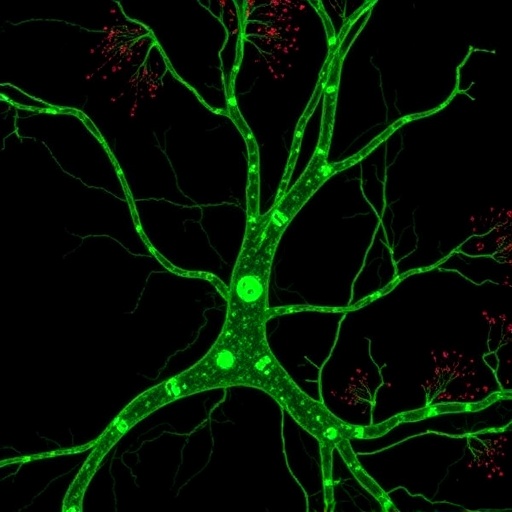
Technically, the researchers utilized super-resolution microscopy and live-cell imaging to capture real-time filopodial dynamics modulated by PDLIM5. Coupling these visual data with quantitative assays of actin bundling and molecular interaction studies enabled a comprehensive molecular narrative. Such integrative approaches underscore the power of modern cell biology tools to unravel complex protein networks in situ.
In conclusion, this landmark study positions endothelial PDLIM5 as a master regulator of tip cell filopodia and tumor angiogenesis through its orchestration of ACTN1 and ACTN4-dependent actin bundling. The findings not only deepen fundamental insights into endothelial cytoskeletal biology but also open promising therapeutic and biomedical avenues. As the scientific community advances toward targeted vascular modulation, PDLIM5 stands out as a compelling focal point in angiogenesis research and its clinical translation.
Subject of Research: The regulation of endothelial tip cell filopodia formation and tumor angiogenesis by the protein PDLIM5 through modulation of ACTN1/ACTN4-dependent actin bundling.
Article Title: Endothelial PDLIM5 promotes tip cell filopodia formation and tumor angiogenesis by regulating ACTN1/ACTN4-dependent actin bundling.
Article References:
Xu, Z., Shi, Y., Yang, Y. et al. Endothelial PDLIM5 promotes tip cell filopodia formation and tumor angiogenesis by regulating ACTN1/ACTN4-dependent actin bundling. Nat Commun (2026). https://doi.org/10.1038/s41467-026-68765-x
Image Credits: AI Generated
Tags: actin cytoskeleton dynamicsACTN1 and ACTN4 actin-binding proteinscancer progression and blood supplyendothelial tip cells in blood vessel formationfilopodia formation in endothelial cellsmechanisms of tumor growth and metastasismolecular regulators of angiogenesisPDLIM5 endothelial protein functionscaffolding proteins in cytoskeletal arrangementtherapeutic targets for angiogenesistumor angiogenesis regulationtumor microenvironment and vascularization