Credit: Margareta Mattsson
In a new study, researchers from Sweden and Britain have investigated how the endocrine-disrupting substance linuron affects reproduction in the West African clawed frog, Xenopus tropicalis. The scientists found that linuron, which is used as a pesticicide, impaired the males' fertility, and that tadpoles developed ovaries instead of testicles to a greater extent, which caused a female?biased sex ratio. The results are published in the journal Scientific Reports.
Worldwide, animal and plant diversity is decreasing, and amphibians are among the animals disappearing most rapidly. It is estimated that nearly 40 per cent of all known amphibian species are endangered. The main cause is changes in their habitat, but pollution, diseases and climate change are also contributing to the extinction.
In agriculture, a huge variety of pesticides are used, for example against weeds and insects. These chemicals then leach into nearby ponds where frogs lay their eggs. Some of these substances have hormone-disrupting effects and are known as 'endocrine-disrupting chemicals' or EDCs. Known EDCs include Bisphenol A, DDT and PCBs (polychlorinated biphenyls).
With scientists from Scotland, England and Umeå, researchers at Uppsala University's Department of Environmental Toxicology have studied how one of these endocrine-disrupting pesticides, linuron, affects the life cycle of the West African clawed frog, Xenopus tropicalis. After exposing tadpoles to a concentration similar to that measured in the natural environment, and through comparison with control groups and a control substance, researchers found that the tadpoles developed ovaries to a greater extent than testicles. The researchers were also able to show the shift in the male-female sex ratio towards an increased proportion of females by analysing gene expression in tadpoles.
Once the frogs reached adulthood, the researchers showed that the males' fertility had been impaired and that certain gender-specific features had become more like females'. The researchers believe that the likely explanation for these observations is that the pesticide inhibits the functioning of testosterone in the body.
"The results show that pesticides with this mechanism of action can cause permanent damage, such as reduced fertility in frogs exposed at the tadpole stage. This supports previous research showing that endocrine-disrupting substances in the environment may negatively impact amphibians. The substance linuron isn't approved for use in Sweden, but it's used in other parts of the EU and in North America," says Cecilia Berg, ecotoxicologist and project leader.
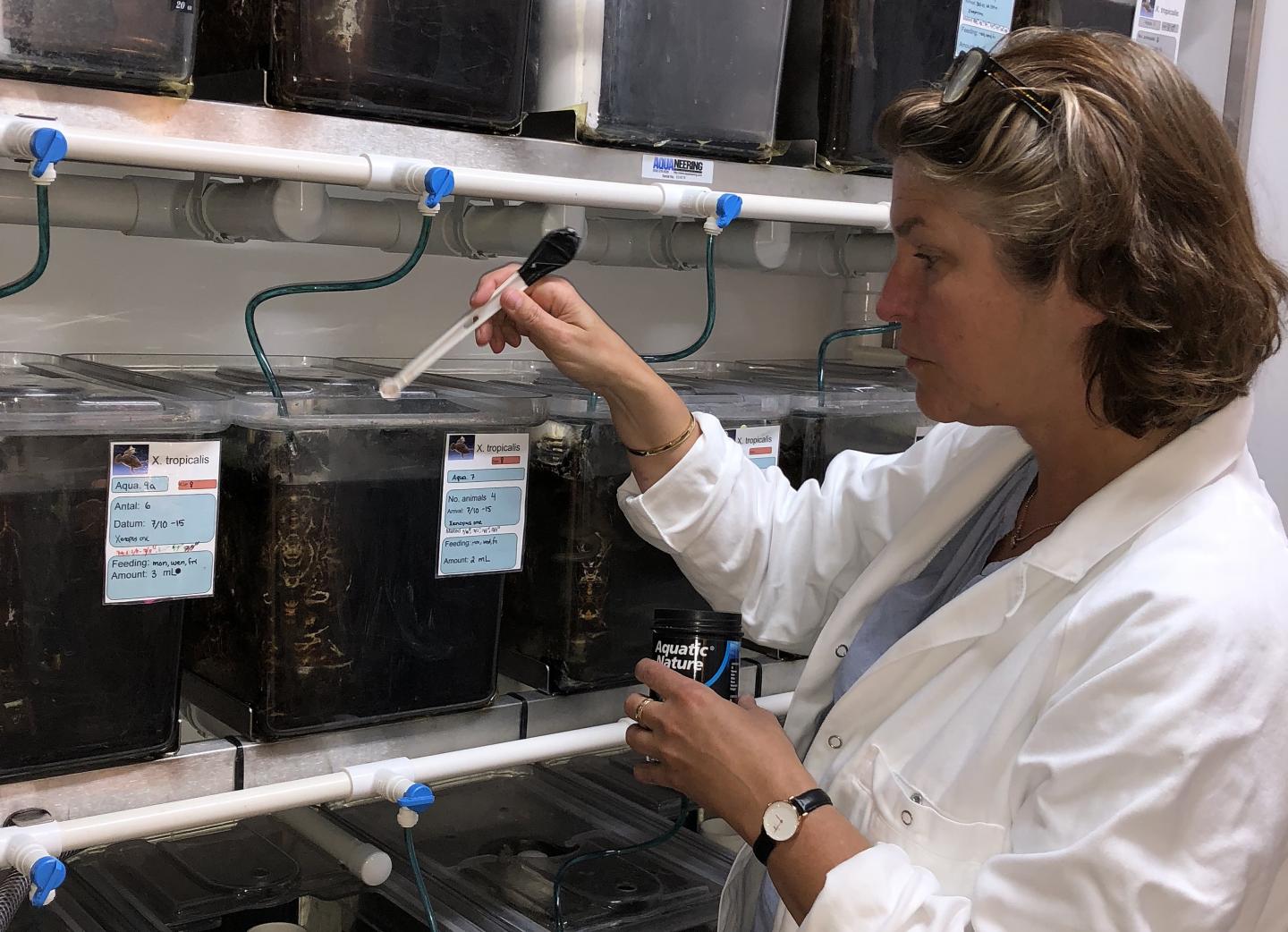
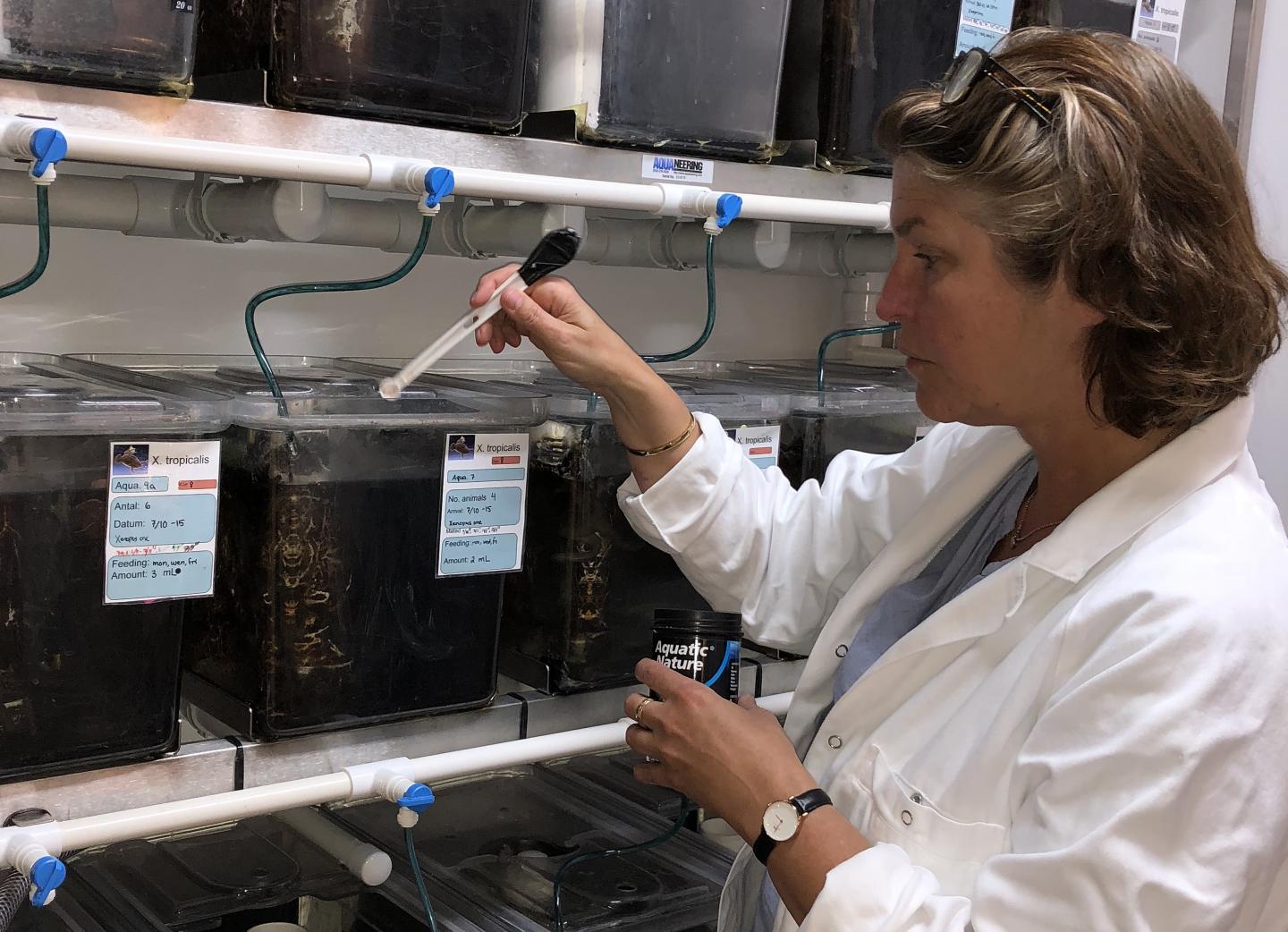
The study was conducted at Uppsala University's Department of Environmental Toxicology, in one of the few laboratories worldwide that performs life-cycle testing of chemicals on frogs. By using the West African clawed frog as a model organism, Berg's research group has developed a test system to study how chemicals affect the reproductive system of amphibians and other animals. The results emphasise the importance of studying the entire life cycle to investigate how pesticides and other environmental pollutants affect the amphibians' reproductive capacity.
"The results of the study are important, since they contribute knowledge that risk assessment authorities in the EU can use as a basis for assessing the health and environmental risks of pesticides. The European Commission is currently taking several measures to improve pesticide risk assessment. A new report from the European Food Safety Authority (EFSA), for instance, points to the need to assess the risks of pesticide use to amphibians – something that isn't being done today," Berg says.
###
Media Contact
Cecilia Berg
[email protected]
46-184-712-621
@UU_University
http://www.uu.se
Related Journal Article
http://dx.doi.org/10.1038/s41598-018-27161-2