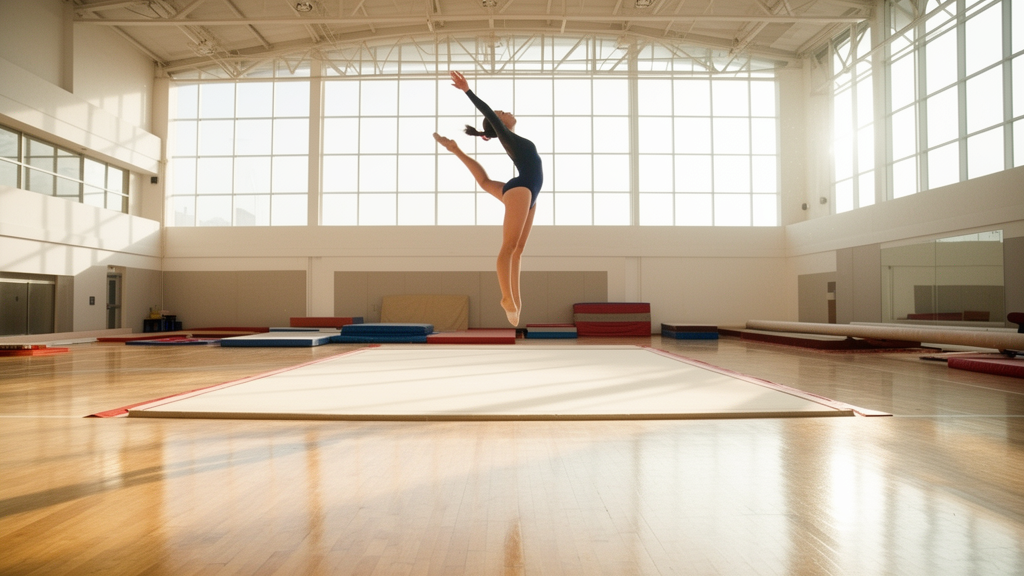
Young elite artistic gymnasts who habitually perform long-duration static stretching did not experience a reduction in vertical jump height after completing a high-volume stretching protocol, according to a new study published in BMC Sports Science, Medicine and Rehabilitation. The study found that while a shorter stretching duration caused measurable declines in jump performance, a longer duration produced no significant negative effects on any measured variables in this specific cohort.
The study was motivated by two decades of research suggesting that static stretching performed for more than 45 to 60 seconds per muscle group can negatively impact sports performance. The behavior of the muscle-tendon unit in highly flexible individuals remained untested, creating a gap in understanding how habitual stretching practices influence acute performance metrics. This study aimed to fill that gap by investigating the effects of habitual stretching, performed by young elite artistic gymnastics athletes for over one minute, on subsequent performance.
To address this question, the researchers recruited 48 Gold-level athletes affiliated with the Italian Gymnastics Federation. The study design involved a pre-post comparison where performance was measured before and after the application of two distinct lower-limb stretching protocols. The protocols differed in the duration of static holds per muscle group, with one protocol requiring 90-second holds and the other requiring 60-second holds.
Performance was assessed using a 5-repetition continuous Countermovement Jump test, known as CMJ5, performed on a contact platform. The variables analyzed included jump height, power, reactive strength index (RSI), leg stiffness, and contact time.
The results revealed a distinct pattern based on the duration of the stretching protocol. When the athletes completed the 90-second static hold protocol, Wilcoxon signed-rank tests showed no significant pre-post differences for any of the analyzed variables. This indicates that the high-volume stretching did not impair jump height, power, reactive strength, stiffness, or contact time in this group. In contrast, after the 60-second protocol, significant reductions were observed in jump height, reactive strength index, and power. Specifically, jump height decreased significantly with a p-value of less than .001, while both RSI and power showed significant reductions with p-values of .001. However, leg stiffness did not show a significant change after the 60-second protocol, with a p-value of .214.
When the data were stratified by sex, females followed the same pattern as the overall sample for both stretching durations. They experienced the significant declines in jump height, RSI, and power after the 60-second protocol, while showing no significant changes after the 90-second protocol. Males, however, displayed a different response. They showed no worsening of performance metrics after either duration. Notably, the reactive strength index in male participants significantly improved after the 90-second stretching protocol, with a p-value of .039.
The study also examined the relationship between the decline in jump height and other biomechanical variables. The reduction in jump height observed after the 60-second protocol was not accompanied by decreases in contact time or leg stiffness. This finding indicates that the capacity for elastic energy absorption and release remained unchanged despite the drop in vertical displacement.
The authors concluded that the lack of impairment after the 90-second protocol in this population highlights the importance of considering individual flexibility history when interpreting the effects of static stretching. The findings mandate the implementation of future research targeting populations with chronic flexibility adaptations to better contextualize the impact of stretching on performance.
Subject of Research: Acute effects of static stretching on vertical jump performance in elite gymnasts
Article Title: Population-specific responses to static stretching: lack of acute effects on vertical jump height following high stretching volumes
Article References: Alessandria, M., Manavella, A., Ortuso, S., Angilletta, S., & De Giorgio, A. (2026). Population-specific responses to static stretching: lack of acute effects on vertical jump height following high stretching volumes. BMC Sports Science, Medicine and Rehabilitation, 18(1), Article 531. https://doi.org/10.1186/s13102-026-01871-x
Image Credits: AI Generated
DOI: 10.1186/s13102-026-01871-x
Keywords: static stretching, vertical jump, elite gymnasts, sports performance, muscle-tendon unit, flexibility, biomechanics, athletic training, Population-specific, responses, static, stretching
News Source: Ophelia Keating. (November 10, 2026). Elite Gymnasts Show No Jump Decline After Long Static Stretching. Scienmag.