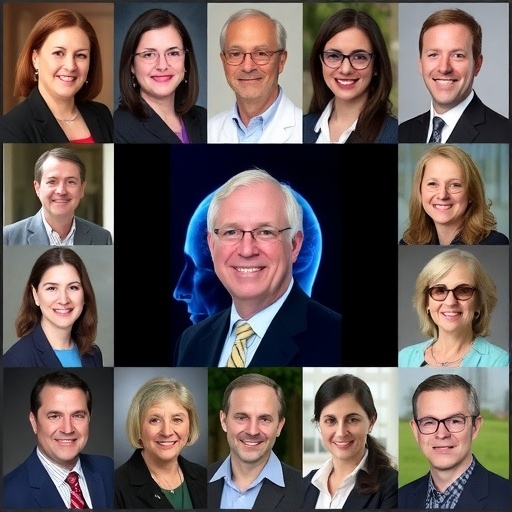
In a groundbreaking assembly of the world’s foremost stroke and brain health experts, the American Stroke Association convened its prestigious International Stroke Conference 2026 in New Orleans from February 3 to 6. This gathering is widely regarded as a global epicenter for pioneering stroke research and clinical advancements, driving forward the collective understanding and therapeutic strategies for cerebrovascular diseases and cognitive impairments linked to vascular issues. Amidst a rich program of scientific exchange, eleven distinguished researchers were honored for their exceptional contributions, marking a milestone in stroke science and medical innovation.
One of the conference’s most esteemed awards, the Edgar J. Kenton III Lecture Award, was bestowed upon Dr. Bruce Ovbiagele from the University of California, San Francisco. Dr. Ovbiagele’s multifaceted expertise, spanning clinical epidemiology and global health, is concentrated on mitigating the disproportionate impact of stroke among racial and ethnic minorities. In his keynote, “Stroke Disparities Research Workforce: Wherefore Art Thou,” he articulated the urgent need to build a diverse scientific workforce to address these disparities comprehensively. This lecture aligns with the award’s dedication to lifetime achievements in research, management, mentorship, and community engagement surrounding stroke disparities, honoring the legacy of Edgar J. Kenton III.
Another luminary, Dr. Pooja Khatri of Yale University, was recognized with the William M. Feinberg Award for Excellence in Clinical Stroke. Dr. Khatri’s clinical acumen and research innovations have redefined current paradigms in stroke care worldwide. Her lecture, titled “Clinical Trial Innovations: The Future is Now,” provided a visionary outlook on novel trial designs and adaptive methodologies enhancing therapeutic developments. This award commemorates significant progress in clinical investigation and practice, reflecting Feinberg’s monumental influence as a pioneer in stroke research.
Fundamental neuroscientific inquiry was spotlighted through the Thomas Willis Lecture Award, granted to Dr. Raghu Vemuganti from the University of Wisconsin – Madison. Dr. Vemuganti’s research delves into molecular cascades triggered by ischemic stroke and traumatic brain injury, unveiling RNA-mediated mechanisms that could revolutionize neuroprotective strategies. His presentation, “Role of RNAs in Ischemic Brain Damage,” elucidated emerging paradigms in post-stroke cellular response, paving avenues for translational therapies targeting gene expression modulation. This award exemplifies profound contributions to basic science that underpin clinical innovations.
Mentorship and academic leadership were epitomized by Dr. Kazunori Toyoda of Japan’s National Cerebral and Cardiovascular Center, recipient of the Ralph L. Sacco Outstanding Stroke Research Mentor Award. Dr. Toyoda’s impressive career encompasses trailblazing work in stroke diagnosis, treatment, and research, as well as mentorship fostering the careers of future stroke investigators. His lecture, “One Only Half Dies,” reflected on the critical significance of survival versus functionality in stroke outcomes, underscoring nuanced clinical decision-making. The Sacco Award celebrates dedication to nurturing the next generation of stroke researchers, securing the field’s continued evolution.
The David G. Sherman Lecture Award recognized Dr. Seemant Chaturvedi from the University of Maryland School of Medicine. A foremost expert in stroke prevention, Dr. Chaturvedi shared insights in his lecture “The Eternal Quest for Optimal Stroke Prevention,” highlighting recent breakthroughs in risk stratification and personalized therapeutic approaches. The award pays tribute to Dr. Sherman’s legacy as a leader committed to advancing stroke management through research and community service, emphasizing the translational continuum from bench to bedside.
A spotlight on rehabilitation was cast via the Stroke Rehabilitation Award, awarded to Dr. Amar Dhand of Harvard Medical School and Mass General Brigham. Dr. Dhand’s innovative research merges clinical neurology with machine learning to quantify social interactions in stroke survivors, thereby opening new dimensions in post-stroke recovery metrics. His study, “SocialBit: Validation of a Lightweight Machine Learning Algorithm for Measuring Social Interactions in Real-Time in Stroke Survivors with Diverse Neurological Abilities,” presents transformative potential in personalizing rehabilitation strategies and maximizing functional outcomes.
At the basic science frontier, Dr. Soomin Jeong from the University of Pennsylvania received acclaim for her work on blood-brain barrier restoration post-stroke. Her research employing VCAM-targeted MFSD2A mRNA nanoparticle therapy demonstrated not only structural recovery but also functional improvement, a significant leap toward molecularly targeted therapies for cerebrovascular integrity preservation. This Stroke Basic Science Award underscores the critical interplay between fundamental research and therapeutic innovation.
Emerging investigators were prominently featured, with the Robert G. Siekert New Investigator Award in Stroke honoring Dr. Zhe Cheng of Beijing Luhe Hospital. Dr. Cheng’s novel adjuvant neuroprotection strategy using vertebrobasilar artery cooling infusion offers promising adjunctive therapy alongside endovascular interventions for acute posterior circulation stroke. Such innovative interventions signal a bold expansion of acute stroke management paradigms, promising improved neuroprotection and patient prognoses.
The Mordecai Y.T. Globus New Investigator Award was granted to Dr. Daniela Renedo from Yale School of Medicine. Her multidisciplinary approach integrating genomics, proteomics, and single-cell transcriptomics seeks to decode the etiological complexity of embolic ischemic stroke. This cutting-edge work facilitates precision medicine approaches in classifying and targeting stroke subtypes, initiating a new era of personalized cerebrovascular care grounded in molecular pathology.
Highlighting the intersection of cognitive impairment and vascular pathology, the Vascular Cognitive Impairment Award was presented to Zhiyu (Roman) Yan, a doctoral candidate at Harvard T.H. Chan School of Public Health. His proteomic analyses revealing plasma biomarkers common among cerebrovascular diseases and cognitive decline have significant implications for early diagnosis and intervention, potentially altering the natural history of vascular cognitive impairment and dementia.
Lastly, the Stroke Care in Emergency Medicine Award was attributed to Dr. Sheng Zhang of Zhejiang Provincial People’s Hospital for his pivotal research on prehospital interventions in intracerebral hemorrhage. His cost-effectiveness model for blood pressure lowering treatments in acute phases could inform global emergency care protocols, highlighting important cross-cultural and health system considerations in acute stroke management.
The American Stroke Association’s International Stroke Conference 2026 not only celebrates these individuals’ scientific achievements but also exemplifies the convergence of clinical excellence, translational research, and mentorship. This platform fuels continuous innovation aimed at interrupting the devastating course of stroke and enhancing brain health globally. As stroke continues to be a leading cause of death and disability worldwide, such synergistic efforts offer hope for more effective prevention, treatment, and rehabilitation strategies, ultimately shaping a future with fewer strokes and better outcomes.
Subject of Research: Stroke and Brain Health; Cerebrovascular Disease; Stroke Disparities; Neuroprotection; Stroke Rehabilitation; Vascular Cognitive Impairment; Acute Stroke Care Innovations
Article Title: Eleven Leading Stroke Researchers Honored at the 2026 International Stroke Conference for Pioneering Contributions to Brain Health
News Publication Date: February 3, 2026
Web References:
– American Stroke Association International Stroke Conference 2026: https://professional.heart.org/en/meetings/international-stroke-conference
– Stroke Statistics: http://www.heart.org/statistics
– General Stroke Information: http://www.stroke.org
Keywords: Stroke Research, Brain Health, Stroke Disparities, Clinical Stroke Trials, Molecular Neuroprotection, Stroke Rehabilitation, Vascular Cognitive Impairment, Emergency Stroke Care, Translational Neuroscience
Tags: American Stroke Association conference 2026brain health research recognitioncerebrovascular disease innovationsclinical epidemiology in strokecognitive impairments and vascular healthdiverse scientific workforce in healthcareEdgar J. Kenton III Lecture Awardglobal health and strokehonoring contributions to stroke sciencemedical innovation in stroke treatmentstroke disparities in minoritiesstroke research advancements