In a groundbreaking study, researchers have unveiled a potentially transformative approach to treating opioid use disorder (OUD) through targeted deep brain stimulation (DBS) of the nucleus accumbens. The investigation, spearheaded by Qiu et al., documents the intricate relationship between electrographic cue-reactivity and the precise localization of stimulation sites within the accumbens, underscoring the neural underpinnings of addiction and opening new avenues for neuromodulatory therapy.
Opioid use disorder remains a public health crisis globally, with escalating rates of addiction and overdose deaths despite the availability of pharmacological treatments such as methadone and buprenorphine. These conventional interventions, albeit effective for many, are often plagued by high relapse rates, side effects, and limited long-term efficacy. As addiction neuroscience progresses, attention has shifted toward neuromodulation strategies that can directly influence dysfunctional brain circuits implicated in addictive behaviors.
The nucleus accumbens, nestled deep within the ventral striatum, plays a pivotal role in reward processing, motivation, and reinforcement learning. It is a critical node in the mesolimbic dopamine pathway, frequently altered by chronic opioid exposure. Prior preclinical studies have shown that abnormal neural activity within this region correlates with drug craving and relapse susceptibility, yet translating these findings into human application has remained challenging due to the complexity of brain circuitry and individual variability in neural signatures.
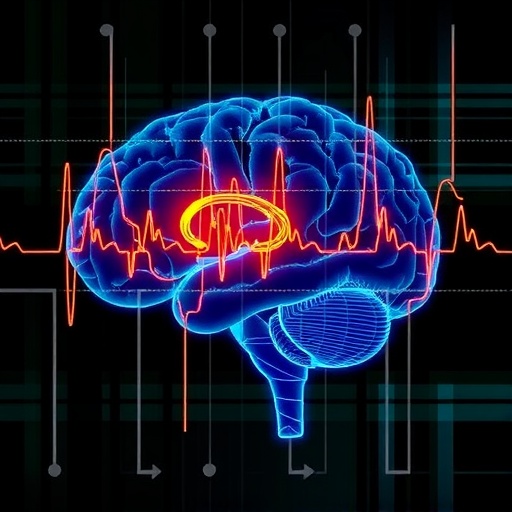
Qiu and colleagues approached this complexity by deploying intracranial recording electrodes alongside deep brain stimulation probes in a patient with treatment-refractory opioid use disorder. This dual-modality framework enabled high-resolution electrophysiological mapping of the accumbens region during exposure to drug-associated cues, simulating real-world triggers for craving and relapse. The study reveals that distinct patterns of electrographic activity—termed cue-reactivity signals—emerge consistently in response to opioid-related stimuli.
Crucially, these electrophysiological markers localized to regions of the accumbens that overlapped precisely with the therapeutic stimulation sites used in DBS treatment. Such co-localization suggests that effective DBS may exert its clinical benefits by modulating neural circuits that encode cue-induced craving states. By targeting these electrophysiologically defined hotspots, DBS can disrupt pathological neural dynamics, potentially reducing the intensity of craving and preventing relapse episodes.
This methodology diverges from traditional DBS targeting, which often relies on anatomical landmarks or empirical coordinates derived from movement disorder treatments. Instead, Qiu et al. champion an approach hinging on real-time brain signal signatures, heralding a new era of personalized and precision neuromodulation. The concept of closed-loop or adaptive DBS systems, which adjust stimulation parameters based on ongoing neural activity, aligns closely with these findings and could dramatically enhance treatment efficacy.
Furthermore, the study employed advanced computational techniques to analyze neural oscillations and cross-frequency coupling within the accumbens during cue exposure. These electrophysiological phenomena illuminate how neural ensembles synchronize and communicate in real time to facilitate craving and reward-seeking behavior. The ability to detect specific spectral features linked to pathological states aids in refining stimulation targets and unveiling the mechanistic basis of addiction.
Beyond the single-patient case reported, the implications extend to broader clinical neuroscience and psychiatry. If validated in larger cohorts, this technology-driven paradigm could revolutionize management for substance use disorders and other neuropsychiatric conditions characterized by maladaptive circuit activity. The integration of neurophysiology, neurosurgery, and computational neuroscience exemplifies the multidisciplinary innovation needed to tackle complex brain disorders.
Ethical considerations accompany this powerful intervention strategy, notably regarding invasiveness, patient selection, and long-term safety of chronic brain stimulation. Nonetheless, the favorable clinical outcome observed in this case, including reductions in self-reported craving and improved functional status, reflects the promise of targeting pathophysiological neural circuits directly. Continued longitudinal monitoring will be essential to evaluate durability, potential neuroplastic changes, and cognitive effects.
Emerging evidence increasingly supports the heterogeneous nature of addiction neurobiology, highlighting the importance of individualized biomarker identification. The co-localization of cue-reactive electrophysiological signals with DBS sites underscores the necessity of tailored interventions that address each patient’s unique neural signature rather than applying uniform stimulation schemas. This approach aligns with precision medicine trends gaining traction across various medical disciplines.
Mechanistically, the nucleus accumbens integrates glutamatergic and dopaminergic inputs to mediate reward salience. Dysfunction in synaptic plasticity and neuronal excitability within this region likely underlies the persistent vulnerability to drug cues driving relapse. By modulating these electrophysiological aberrations, DBS may restore circuit homeostasis and diminish maladaptive learning processes that perpetuate addiction cycles.
The technological advances enabling simultaneous electrophysiological recording and stimulation in deep brain structures mark a significant leap. Innovations in electrode design, signal processing algorithms, and imaging-guided navigation have converged to permit this level of spatial and temporal precision. Such capabilities empower clinicians to observe the brain’s real-time response to environmental challenges and intervene optimally.
Moreover, the study’s open-science approach, with detailed sharing of data analytic pipelines and imaging protocols, facilitates replication and extension by other research groups. Collaborative efforts to refine biomarkers of cue-reactivity and optimize stimulation parameters will be critical for translating these preliminary findings into standardized clinical practice. This model may spur analogous investigations into other compulsive behaviors and psychiatric disorders.
In conclusion, Qiu et al.’s pioneering work elucidates a direct electrophysiological substrate for cue-induced craving within the nucleus accumbens and demonstrates how targeted deep brain stimulation can leverage this knowledge to yield therapeutic benefit in opioid addiction. This fusion of neuroscience, engineering, and clinical intervention opens promising horizons for combating one of the most intractable medical challenges of our time. Future research will determine how broadly this strategy can be applied, the optimal stimulation paradigms, and integration with behavioral and pharmacological therapies.
As the opioid crisis continues to afflict millions worldwide, such innovative neuromodulatory solutions bring hope for transforming care delivery and improving patient outcomes. The ability to harness the brain’s own electrical language to guide treatment signals a transformative chapter in neuropsychiatric therapeutics. Precision-targeted DBS informed by electrographic cue-reactivity exemplifies the next frontier in individualized medicine for addiction.
Subject of Research: Neural basis of cue-reactivity and therapeutic effects of nucleus accumbens deep brain stimulation in opioid use disorder
Article Title: Electrographic cue-reactivity co-localizes with accumbens deep brain stimulation in a case of opioid use disorder
Article References:
Qiu, L., Nho, YH., Seilheimer, R.L. et al. Electrographic cue-reactivity co-localizes with accumbens deep brain stimulation in a case of opioid use disorder.
Nat Commun (2026). https://doi.org/10.1038/s41467-026-68758-w
Image Credits: AI Generated
Tags: addiction neuroscience advancementschronic opioid exposure effectsdeep brain stimulation for opioid addictionelectrographic cue reactivitymesolimbic dopamine pathway researchneuromodulation strategies for OUDnucleus accumbens and addictionopioid use disorder treatment innovationsovercoming addiction relapse ratesreward processing in addictiontargeted stimulation in addiction therapytherapeutic approaches for substance use disorders