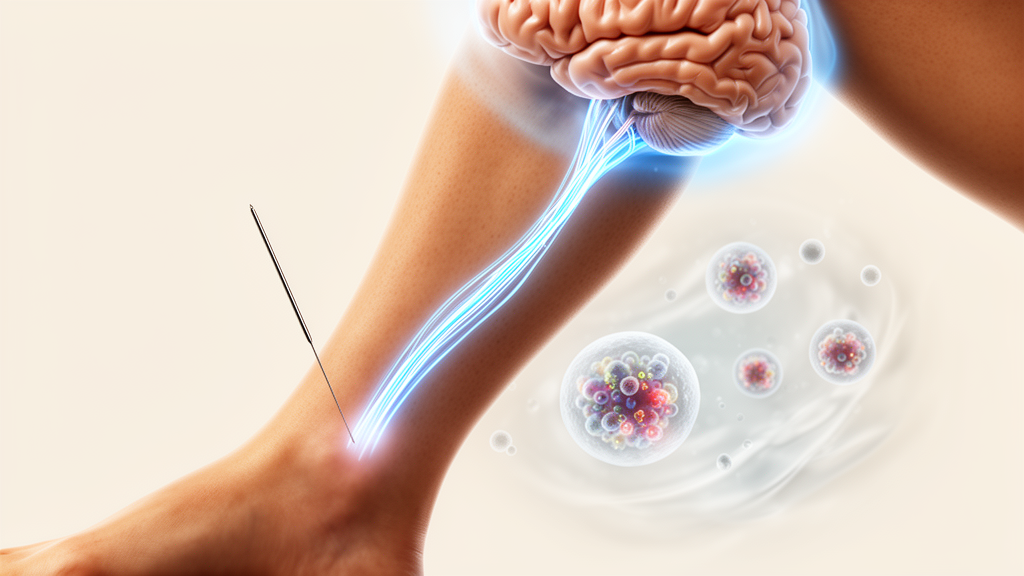
When a blood clot chokes off flow to part of the brain, the danger is only beginning. Restoring circulation, the very act that saves brain tissue, unleashes a second wave of destruction known as ischemia/reperfusion (I/R) injury. As oxygen rushes back into oxygen-starved cells, the immune system reacts as if an invader has breached the walls, flooding the damaged region with inflammatory molecules that can kill neurons the clot itself spared. Now a team of Chinese researchers reports that a modernized version of an ancient practice, electroacupuncture, can dial down this inflammatory storm, and they have traced exactly which molecular switch it flips.
The study, published in Neurocritical Care by Ye-Ting Chen, Yi-Si Shan, Shen-Nan Zhao, Wen-Ping Cao, and Jian-Feng Pu of Zhangjiagang Second People’s Hospital and Zhangjiagang Traditional Chinese Medicine Hospital Affiliated to Nanjing University of Chinese Medicine, focused on the TLR/TRAF6/NF-κB pathway, a signaling cascade long implicated in stroke-related neuroinflammation. Toll-like receptors (TLRs), particularly TLR4 and TLR9, act as sentinels of the innate immune system. When they detect danger signals released by dying cells during reperfusion, they recruit the adaptor protein TRAF6, which in turn activates NF-κB, a transcription factor that commands the production of proinflammatory cytokines. In the brain, this cascade can transform a survivable insult into a devastating one.
To test whether electroacupuncture could interrupt this pathway, the researchers used male Sprague-Dawley rats subjected to middle cerebral artery occlusion/reperfusion (MCAO/R), a widely used rodent model of ischemic stroke. The animals were randomly assigned to four groups: a sham group that underwent surgery without vessel occlusion, an MCAO/R group that experienced 60 minutes of ischemia followed by reperfusion, a sham electroacupuncture (SEA) group, and an electroacupuncture (EA) group. The SEA and EA groups received 30 minutes of treatment after the ischemic period, allowing the team to evaluate whether real stimulation at defined acupoints offered benefits beyond the mere act of needle placement.
Twenty-four hours after the procedure, the differences between groups were striking. Rats treated with electroacupuncture showed significantly improved neurological function and reduced infarct volume compared with untreated MCAO/R animals. Body weight, measured before and after the procedure, provided an additional indicator of overall recovery. The results suggest that a single post-ischemia session of electroacupuncture was enough to produce measurable neuroprotection within a day, a timeframe relevant to the acute phase of human stroke care.
At the molecular level, the team used western blot and reverse-transcription polymerase chain reaction (RT-PCR) to quantify protein and messenger RNA expression of TLR4, TLR9, TRAF6, and NF-κB in brain tissue. In electroacupuncture-treated rats, expression of all four components was down-regulated compared with the MCAO/R group. This finding places the pathway squarely in the crosshairs of the treatment: rather than acting downstream on individual cytokines, electroacupuncture appears to suppress the upstream signaling machinery that drives their production.
The downstream consequences were equally telling. Using RT-PCR and enzyme-linked immunosorbent assay (ELISA), the researchers measured inflammatory markers in the injured cortex. Electroacupuncture reduced both mRNA and protein levels of the proinflammatory cytokines TNF-α, IL-6, and IL-1β, molecules that promote neuronal death, edema, and further immune cell recruitment when overproduced after reperfusion. At the same time, expression of the anti-inflammatory cytokine IL-10 increased, suggesting the treatment did not simply blunt the immune response but actively shifted it toward a resolution phenotype. This rebalancing of the cytokine profile may explain the improved neurological outcomes observed in the treated animals.
The study builds on a growing body of evidence that electroacupuncture, which combines traditional needle placement with controlled electrical stimulation, engages well-defined neuroimmune mechanisms rather than vague energetic effects. Previous work from the same field has shown that electroacupuncture pretreatment can inhibit the TLR4/NF-κB/TXNIP/NLRP3 signaling pathway and modulate microglial polarization to alleviate cerebral I/R injury in rats. Other studies have implicated the alpha7 nicotinic acetylcholine receptor, the delta-opioid receptor-BDNF/TrkB axis, vagus nerve activation, and even gut microbiota in electroacupuncture’s neuroprotective repertoire. The new findings add the TLR/TRAF6/NF-κB cascade to this mechanistic map and clarify how a single pathway connects needle stimulation to cytokine output.
What makes the results particularly compelling is the specificity of the pathway involved. TRAF6, the ubiquitin E3 ligase at the center of the cascade, has been shown in independent research to exacerbate ischemic stroke by ubiquitinating and activating Rac1, and to drive NLRP3-related pyroptosis, a form of inflammatory cell death, after cerebral I/R. NF-κB, the transcription factor at the pathway’s end, commands a broad inflammatory program in neurological tissue. By suppressing TLR4, TLR9, TRAF6, and NF-κB simultaneously, electroacupuncture appears to act at multiple nodes of the same axis, a strategy that may prove more robust than targeting any single molecule with a drug.
The clinical implications are significant. Stroke remains a leading cause of death and disability worldwide, and while thrombolysis and thrombectomy can restore blood flow, no approved therapy directly addresses the reperfusion injury that follows. Electroacupuncture is already used in some stroke rehabilitation settings, and randomized controlled trials have examined its effects on post-stroke recovery. If the TLR/TRAF6/NF-κB pathway proves to be a conserved target in humans, electroacupuncture could offer a low-cost, mechanistically grounded adjunct to acute stroke care, potentially narrowing the gap between reperfusion and inflammation control.
Important caveats remain. The findings come from a rodent model, and the treatment window, stimulation parameters, and acupoint selection in rats may not translate directly to human patients. The study measured outcomes at a single 24-hour timepoint, leaving longer-term effects on tissue repair and functional recovery unexplored. Still, by identifying a specific molecular pathway through which electroacupuncture ameliorates cerebral I/R-induced inflammation, the researchers have transformed what might seem like an esoteric complementary therapy into a testable neuroprotective strategy. The next step will be to determine whether the same pathway can be engaged safely and effectively in the human brain, where the stakes of every hour after reperfusion could not be higher.
Subject of Research: Neuroscience
Article Title: Electroacupuncture Ameliorating Cerebral I/R-Induced Inflammatory Response through the TLR/TRAF6/NF-κB Pathway
Article References: Chen, Y.-T., Shan, Y.-S., Zhao, S.-N., Cao, W.-P., & Pu, J.-F. (2026). Electroacupuncture Ameliorating Cerebral I/R-Induced Inflammatory Response through the TLR/TRAF6/NF-κB Pathway. Neurocritical Care. https://doi.org/10.1007/s12028-026-02680-3
Image Credits: AI Generated
DOI: 10.1007/s12028-026-02680-3
Keywords: Electroacupuncture, Ameliorating, Cerebral, R-Induced, Inflammatory, Response, TRAF6, Pathway, scientific research
News Source: Cassandra Pierce. (October 17, 2026). Electroacupuncture Calms Stroke Inflammation by Silencing the TLR/TRAF6/NF-κB Pathway. Scienmag.