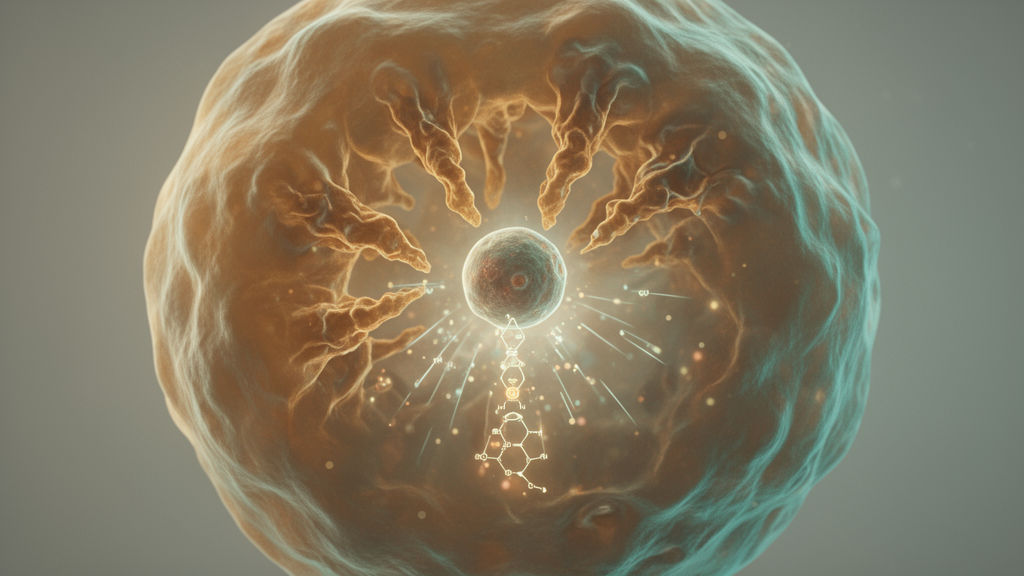
When macrophages engulf dying cells — a process called efferocytosis — they do more than clear debris. According to a study published in Nature Communications, this engulfment step rapidly and transiently activates an IKKβ–NFκB/p38 signaling pathway inside the macrophage, and that brief pulse appears to act as a unifying upstream switch for multiple pro-resolving programs. The work, led by David Ngai, Saheli Chowdhury and colleagues in the laboratories of Alan Tall and Ira Tabas, was carried out in mice.
The researchers found that activation of the receptor MerTK by apoptotic cells drives this transient IKKβ signal. Once triggered, the pathway promotes production of the anti-inflammatory cytokine interleukin-10, sustains continued efferocytosis, and supports the expansion of regulatory T cells, which help restrain inflammation. In other words, the act of clearing dead cells appears to switch macrophages into a state that actively pushes tissue toward resolution rather than chronic inflammation.
Downstream of IKKβ, the team identified a chain of mediators linking the signaling event to these resolution outputs: the transcription factor Myc, the epigenetic modifier ten-eleven translocation-2 (TET2), and the immune checkpoint protein programmed cell death ligand 1 (PD-L1). Through this Myc–TET2–PD-L1 axis, the transient signal is translated into longer-lasting changes in macrophage behavior, including the immune-regulatory features associated with resolution.
To test whether the pathway matters for actual tissue repair, the authors deleted IKKβ specifically in macrophages. In male mice, this deletion blocked the resolution pathways described above and compromised efferocytosis-mediated tissue repair in two settings: a model of thymic injury and a model of atherosclerosis regression. The thymus experiments show that the pathway contributes to structural repair after injury, while the atherosclerosis experiments connect it to the shrinking of inflammatory plaques when cholesterol levels are lowered — a process that depends heavily on macrophages clearing dead cells within the plaque.
The authors frame the finding as evidence for a common upstream regulator of efferocytosis-induced resolution, a question that had remained open because efferocytosis is known to activate many separate pro-resolving pathways without a clear coordinating signal. Identifying IKKβ as that node suggests that a single early event inside the engulfing macrophage organizes several downstream arms of the resolution response.
The results also carry a caution for drug development. IKKβ and the NFκB and p38 pathways are often treated as pro-inflammatory targets, and inhibitors against them are widely pursued for inflammatory disease. This study suggests that blocking IKKβ–NFκB/p38 signaling in macrophages could simultaneously interfere with resolution programs, potentially undermining tissue repair even as inflammation is suppressed. The authors note that their findings could inform strategies to enhance multiple resolution pathways at once and to optimize anti-inflammatory therapies by avoiding disruption of this resolution signal.
Several limitations should be kept in view. The evidence comes from mouse models, with the macrophage-specific deletion experiments performed in male animals, and the study addresses thymic injury and atherosclerosis regression rather than a broad range of diseases. The published version is an accepted manuscript shared early for faster access, and the authors describe it as subject to further editorial refinement before the final version of record. Even so, the work offers a mechanistic account of how the physical act of clearing dying cells is converted, through a defined signaling and epigenetic cascade, into instructions that steer tissue away from inflammation and toward repair.
Subject of Research: Efferocytosis-induced IKKβ signaling in macrophage reprogramming and tissue resolution
Article Title: Transient efferocytosis-induced activation of IKKβ reprograms macrophages to promote tissue resolution in mice
Article References: Ngai, D., Chowdhury, S., Sukka, S. R., Kuriakose, G., Havens, B., Yalcinkaya, M., Frey, J. M., Doviak, H., Bradford, J. W., Dorweiler, B., Winter, H., Maegdefessel, L., Walsh, K., Thaler, J. P., Tall, A. R., & Tabas, I. (2026). Transient efferocytosis-induced activation of IKKβ reprograms macrophages to promote tissue resolution in mice. Nature Communications. https://doi.org/10.1038/s41467-026-78229-x
Image Credits: AI Generated
DOI: 10.1038/s41467-026-78229-x
Keywords: Transient, efferocytosis-induced, activation, reprograms, macrophages, promote, tissue, resolution, mice, scientific research
News Source: Ophelia Keating. (October 26, 2026). Efferocytosis triggers a transient IKKβ signal that reprograms mouse macrophages toward tissue resolution. Scienmag.