


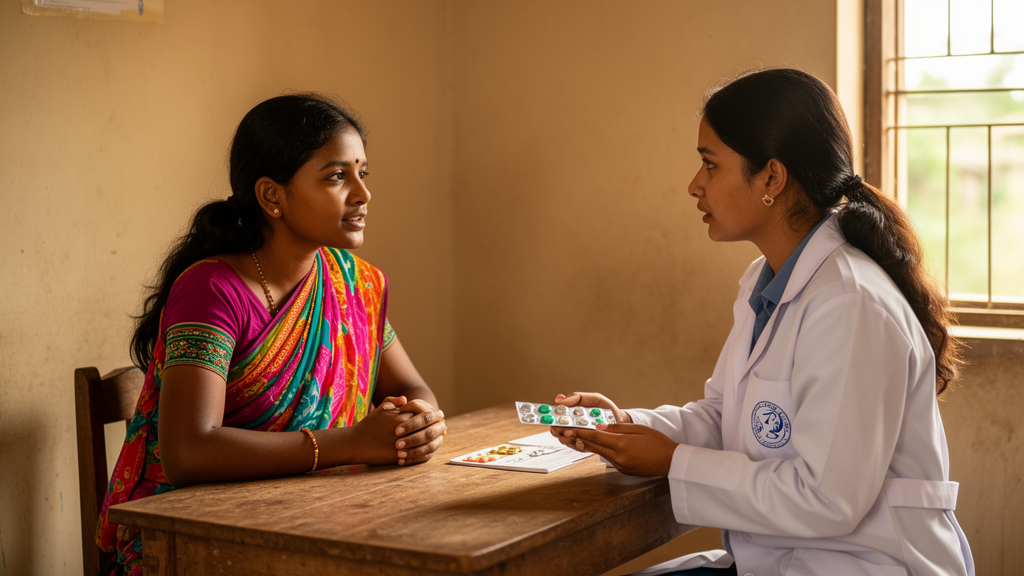
Women in Bangladesh do not simply decide whether to use contraception — they also choose between very different kinds of methods, and a new analysis of national survey data suggests that age, education, recent births and fertility preferences all help steer that choice. Using data from the 2022 Bangladesh Demographic and Health Survey (BDHS), researchers applied a multinomial logistic regression framework to distinguish among three outcomes that most studies collapse into two: using no method, using a traditional method, or using a modern method. The study, published in Contraception and Reproductive Medicine, included 18,904 ever-married women aged 15 to 49 years, a figure that corresponds to 18,977 after survey weighting.
The headline numbers frame the puzzle the researchers set out to unpack. Overall, 54.8 percent of the women surveyed reported using a modern contraceptive method, 9.3 percent relied on traditional methods, and 35.9 percent used no contraception at all. Rather than treating the roughly two-thirds who used some form of contraception as a single group, the analysis modelled traditional and modern method use separately, each relative to non-use, which served as the reference category. Descriptive statistics and chi-square tests were used to explore distributions and associations, multicollinearity among the explanatory variables was assessed with the generalized variance inflation factor, and the regression model was survey-weighted to account for the complex sampling design of the nationally representative survey. The model produced adjusted relative risk ratios (RRRs) with 95 percent confidence intervals.
Age emerged as a dividing line between method types, but in opposite directions depending on which comparison was made. Women aged 35 to 49 years, by contrast, were markedly more likely to use traditional methods, with an adjusted RRR of 2.20 (95 percent CI: 1.74–2.79). Education showed a consistent pattern on the modern side of the ledger. Husbands’ schooling mattered as well: women whose husbands had higher education were more likely to use modern methods (aRRR = 1.17, 95 percent CI: 1.00–1.36).
Fertility history and fertility intentions also separated the groups. Women who had one birth in the past five years were substantially more likely to use modern methods, with an adjusted RRR of 2.66 (95 percent CI: 2.42–2.92). Beyond these individual characteristics, the analysis found that rural residence and regional disparities were also significantly associated with contraceptive method choice, indicating that where a woman lives in Bangladesh relates to which category — none, traditional, or modern — she falls into.
The authors argue that the multinomial approach provides more nuanced insight than a simple use-versus-non-use dichotomy, because the factors that push women toward traditional methods are not simply the mirror image of those that promote modern method use. The findings, they conclude, underscore the need for targeted interventions to promote informed decision-making and ensure equitable access to contraceptive services. As with any cross-sectional survey analysis, the results describe associations measured at a single point in time rather than causal effects, and the study population was limited to ever-married women of reproductive age. Still, with more than a third of the women in the survey reporting no contraceptive use and nearly one in ten users relying on traditional methods, the analysis offers a detailed statistical map of who falls into which group — and a reminder that in Bangladesh, the story of contraception is not only about use and non-use, but about which method, and why.
Subject of Research: Determinants of contraceptive method choice among ever-married women in Bangladesh using BDHS 2022 data and multinomial logistic regression
Article Title: Beyond use and non-use: determinants of contraceptive method choice in Bangladesh: evidence from BDHS 2022 using multinomial logistic regression
Article References: Akib, M. M. H., Tamanna, T., Sultana, N., Nahar, M. T., & Miah, M. S. (2026). Beyond use and non-use: determinants of contraceptive method choice in Bangladesh: evidence from BDHS 2022 using multinomial logistic regression. Contraception and Reproductive Medicine. https://doi.org/10.1186/s40834-026-00466-8
Image Credits: AI Generated
DOI: 10.1186/s40834-026-00466-8
Keywords: contraception, Bangladesh, BDHS 2022, multinomial logistic regression, modern contraceptive methods, traditional methods, reproductive health, survey analysis, education, fertility preferences, women's health, demographic and health survey
News Source: Courtney Benton. (October 28, 2026). Education, Age and Fertility Wishes Shape Contraceptive Method Choice in Bangladesh. Scienmag.



