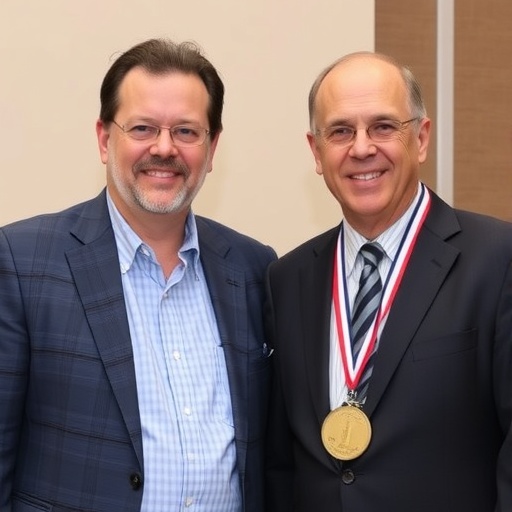
In a significant recognition within the fields of seismology and earthquake engineering, Eduardo Miranda, a distinguished professor at Stanford University, has been honored with the prestigious Bruce Bolt Medal for 2026. This accolade, presented jointly by the Earthquake Engineering Research Institute (EERI), the Consortium of Organizations for Strong Motion Observation Systems (COSMOS), and the Seismological Society of America (SSA), acknowledges an individual’s exceptional contributions at the intersection of these critical disciplines. Miranda’s achievements are notable for their emphasis on the practical application of seismic data and methods that have profound implications for public safety and building resilience in the face of seismic threats.
Miranda’s research has significantly advanced the understanding of ground motion models, paving the way for improved seismic demand analysis to enhance the safety of structures in earthquake-prone regions. His pioneering work in developing new intensity measures and refining damping modification factors has provided the engineering community with tools that more accurately reflect the realities of seismic activity. By integrating strong-motion data into his research, Miranda has not only contributed to academic discourse but has also influenced practical standards for earthquake-resistant design, making him a vital figure in the field.
The Bruce Bolt Medal honors an esteemed figure in earthquake science, Bruce Alan Bolt, who made indelible contributions before his passing in 2005. Bolt was recognized for his pivotal role in bridging gaps between seismology and earthquake engineering, promoting a systematic understanding of seismic risks. He was instrumental in founding organizations such as COSMOS, and his legacy continues to inspire researchers dedicated to enhancing seismic safety across the globe. In recognizing Miranda, the award underscores an ongoing commitment to fostering innovation and leadership in earthquake safety.
Miranda’s scholarly work spans nearly four decades, during which he has immersed himself in the analysis and interpretation of strong-motion records. His research endeavors address a variety of topics related to earthquake performance, including the estimation of seismic demands faced by structures that are built on soft soils and the development of parameters that gauge nonlinear responses in structures subjected to seismic forces. Through such groundbreaking research, Miranda has sought to inform and refine the methodologies used in civil engineering practices, ensuring their robustness against seismic events.
One of Miranda’s notable contributions has been the enhancement of parameters that assist in estimating seismic demands on structures. This includes improvements in the understanding of strength reduction factors and inelastic displacement ratios, which have significant implications for the design and retrofitting of buildings. By providing engineers with a more nuanced understanding of how buildings behave under seismic loads, Miranda’s work has equipped the architecture and engineering communities with the information they need to develop safer, more resilient structures.
Another area where Miranda’s influence can be felt is in the area of ground motion modeling. He has been involved in developing models that estimate peak inelastic displacements and new intensity measures that are closely aligned with the potential for structural collapse. Such advances are crucial for anticipating the impacts of seismic activity and for designing structures that can withstand such pressures without failing. His research contributes to a deeper understanding of intra-event variability and spatial correlation, which are essential for accurately predicting the effects of earthquakes in various contexts.
Miranda’s dedication to the field is reflected not only in his research but also in his commitment to education. He emphasizes the importance of transferring scientific and engineering knowledge into practice, particularly in the classroom. By incorporating real-world strong-motion data into his teaching, Miranda inspires future engineers and scientists to appreciate the nuances of seismic demands and instills a sense of responsibility towards public safety.
Throughout his distinguished career, Miranda has received numerous accolades acknowledging his exceptional contributions to civil engineering and earthquake research. Among these honors is the Moisseiff Award from the American Society of Civil Engineers, further solidifying his reputation as a leading expert in seismic performance assessments. He has also been recognized as a “Top 25 Newsmaker” by Engineering News Record, showcasing his influence and recognition within the engineering community.
In addition to his personal accolades, Miranda’s academic and professional involvement extends to various organizations that aim to advance understanding and practice within the realm of earthquake safety. As a corresponding member of the Mexican Academy of Engineering, he has been active in fostering collaborations and sharing knowledge across borders to enhance seismic resilience. His role as co-chair of the Learning From Earthquakes program at EERI highlights his commitment to not only understanding the science behind earthquakes but also applying that knowledge to mitigate risks and improve community safety.
Miranda’s educational background has laid a strong foundation for his illustrious career. He obtained his civil engineering degree from the National Autonomous University of Mexico (UNAM) in 1986, followed by an MSc and Ph.D. in structural engineering from the University of California, Berkeley. This rigorous academic training has equipped him with both the theoretical knowledge and practical skills necessary to tackle complex issues related to seismic performance and building safety.
As the upcoming Bruce Bolt Medal presentation approaches, anticipation grows for the recognition of Miranda’s remarkable dedication to the fields of seismology and earthquake engineering. The presentation will take place at the 2026 U.S. National Conference on Earthquake Engineering and EERI Annual Meeting in Portland, Oregon, where Miranda will join esteemed colleagues and peers committed to advancing the scientific understanding of seismic hazards and their implications for engineering practice.
The contributions of professionals like Miranda are invaluable as society grapples with the impacts of natural disasters. His recognition through the Bruce Bolt Medal serves not only as a testament to his achievements but also inspires future generations of engineers and scientists to engage with the pressing issues of seismic safety and resilience. Through continued research and a dedication to knowledge transfer, the legacy of his work is sure to influence practices and policies aimed at improving safety and reducing vulnerabilities in the built environment.
Strong leadership and innovation in earthquake engineering and seismology, exemplified by Eduardo Miranda’s work, pave the way for safer communities. The commitment of organizations such as EERI, COSMOS, and SSA to acknowledge and celebrate these contributions fortifies the belief that through collective efforts, strides can be made toward enhanced seismic safety. As research continues to evolve and adapt to the challenges posed by seismic activity, individuals like Miranda remain at the forefront, driving progress and fostering a culture of safety and resilience.
Finally, it is evident that recognizing such outstanding contributions helps reinforce the crucial link between research, practical application, and public safety. Eduardo Miranda’s receipt of the Bruce Bolt Medal is not only a personal achievement but a milestone that highlights the importance of ongoing research and innovation in the fields of earthquake engineering and seismology.
Subject of Research: Development of ground motion models and seismic demand assessments
Article Title: Eduardo Miranda Receives the 2026 Bruce Bolt Medal for Outstanding Contributions to Earthquake Engineering
News Publication Date: [Insert publication date]
Web References: [Insert relevant web links]
References: [Insert relevant scientific references]
Image Credits: Photo by Eduardo Miranda, Courtesy of EERI
Keywords
Seismology, Earthquake Engineering, Ground Motion, Seismic Safety, Structural Engineering, Disaster Preparedness, Engineering Education, Performance-Based Engineering.
Tags: Bruce Bolt Medal 2026contributions to seismologyearthquake engineering achievementsearthquake safety advancementsearthquake-resistant design standardsEduardo Mirandaground motion modeling researchpractical applications in engineeringpublic safety in seismic threatsseismic data applicationsseismic demand analysis improvementsstrong motion observation systems