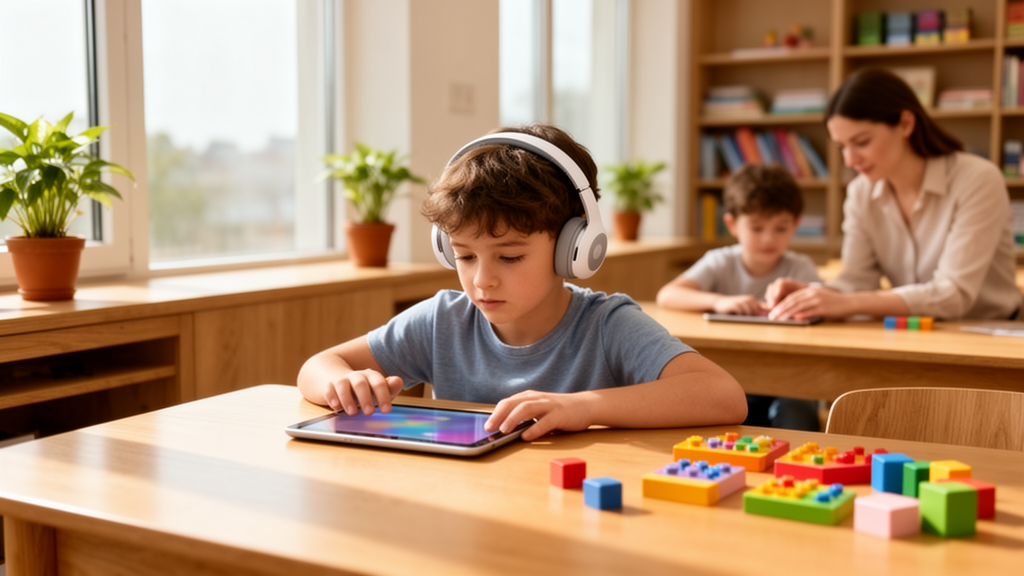
In a launch editorial published in the open-access journal AI, Brain and Child, co-editors-in-chief Philip Hui Li and John Chi-Kin Lee establish an interdisciplinary platform to investigate the convergence of artificial intelligence, cognitive neuroscience, and child development. The authors outline how rapid advancements in computational tools and brain research present transformative possibilities alongside substantial developmental and ethical risks across educational environments. They report that nearly fifty percent of educators have begun integrating artificial intelligence technologies into their classrooms, reflecting an accelerating transition toward automated and individualized instruction. The editorial emphasizes that understanding this evolving technological landscape requires rigorous collaboration connecting educators, neuroscientists, clinicians, and policymakers. Rather than treating artificial intelligence purely as a technical tool, the publication frames the digital transition as an urgent neurodevelopmental inquiry into how automated systems shape cognitive, social, and emotional maturation. By establishing an open-access medium, the editors aim to democratize scientific findings, bridge theoretical research with classroom applications, and ensure that emergent educational technologies support diverse learners across all developmental stages.
To contextualize the influence of technology on developing minds, the editorial reviews established neuroscientific research regarding early childhood brain architecture. The authors cite findings from the Center on the Developing Child at Harvard University demonstrating that early experiences exert a profound influence on neural trajectories through rapid synaptic formation and subsequent pruning. Within enriched environments characterized by sensitive caregiving, these biological processes cultivate essential executive function abilities, specifically working memory and cognitive flexibility. In contrast, the editorial notes findings from Shonkoff and colleagues indicating that adverse early childhood experiences can disrupt brain architecture and function, thereby elevating long-term vulnerability to mental health challenges. Building upon these neurobiological foundations, the authors highlight the necessity of examining neuroplasticity, long-term intervention outcomes, and the specific influences of digital tools and cultural contexts on child development. Integrating neuroscientific evidence into educational frameworks allows researchers to evaluate how technological environments alter the physiological mechanisms governing childhood learning and behavioral adaptation.
The editorial identifies generative artificial intelligence and intelligent tutoring systems as primary mechanisms reshaping individualized classroom instruction. Powered by adaptive algorithms, intelligent tutoring platforms evaluate student performance metrics in real time to customize instructional content, quizzes, and assignments to individual learning styles and paces, as documented by Luo and colleagues as well as Gligorea and collaborators. This continuous adaptability prevents learners from becoming overwhelmed by overly complex material or under-challenged by repetitive exercises, thereby maintaining an optimal learning environment that fosters cognitive engagement. The editorial notes that tailoring instructional difficulty to individual skill levels stimulates student motivation and encourages learners to confront academic challenges directly. Furthermore, artificial intelligence methods assist teachers by identifying specific knowledge gaps within student cohorts and constructing structured curricular pathways to address those deficiencies. By establishing responsive learning conditions that align with individual neurocognitive profiles, automated instructional systems aim to enhance knowledge retention and promote sustained academic progress across diverse student populations.
Beyond adaptive pacing, the editorial examines how artificial intelligence alters cognitive engagement through immediate feedback mechanisms. Traditional pedagogical frameworks frequently suffer from delayed evaluation, which can permit students to repeat conceptual mistakes without comprehending the underlying principles. In contrast, generative artificial intelligence technologies provide real-time assessment feedback, allowing learners to identify, analyze, and correct errors at the exact moment they occur. Citing recent literature, the authors observe that timely feedback strengthens self-reflection, which represents a vital cognitive capacity for effective self-regulated learning and deeper conceptual understanding. This immediate responsiveness increases emotional investment in educational tasks, transforming passive material consumption into active cognitive problem-solving. Furthermore, customized educational interfaces cater to unique student preferences, supporting sustained attention and reinforcing memory consolidation during academic exercises. The editorial argues that optimizing this interactive feedback loop provides an empirical basis for improving instructional design and elevating cognitive performance throughout formative educational years.
While artificial intelligence is frequently associated with individualized learning, the authors emphasize its emerging role in facilitating collaborative learning and social skill development. Citing work by Gkintoni and colleagues, the editorial describes how artificial intelligence platforms can coordinate group projects by automatically assembling student teams based on complementary skills, interests, and developmental needs. This structured collaboration provides structured opportunities for children to cultivate fundamental interpersonal competencies, including effective communication, cooperative problem-solving, and teamwork. Additionally, artificial intelligence technologies can generate immersive learning environments and simulate complex real-world scenarios, linking abstract theoretical concepts to practical, interactive applications. These simulated environments encourage students to engage in active exploration, collaborative debate, and critical inquiry when addressing multifaceted problems. The authors stress that integrating artificial intelligence into shared classroom activities helps create developmental niches where children can build analytical thinking and cooperative skills necessary for navigating modern academic and professional settings.
Alongside the documented advantages, the editorial underscores critical neurodevelopmental concerns regarding prolonged interaction with artificial intelligence systems. Drawing upon neurodevelopmental principles articulated by Rose and Meyer, the authors note that children possess high neuroplasticity, reorganizing synaptic connections directly in response to external learning experiences. While personalized algorithms can stimulate new neural pathways associated with specific academic competencies, over-reliance on digital automation introduces significant cognitive vulnerabilities. Citing a scoping review by Wu and colleagues, the editorial highlights risks of cognitive overload, diminished attention spans, and attentional deficits resulting from continuous information bombardment. Such continuous stimulation can impede deep, reflective learning and hinder comprehensive cognitive processing. Stewart’s research is cited to emphasize that educational technologies must deliberately nurture higher-order cognitive capabilities, including critical thinking, creativity, and analytical reasoning. The authors argue that avoiding cognitive deficits requires educational systems to balance algorithmic personalization with traditional pedagogical practices that prioritize interpersonal debate, collaborative reasoning, and offline reflection.
The editorial devotes substantial attention to the ethical complexities surrounding artificial intelligence implementation in child education, aligning its discussion with the UNESCO AI Competency Frameworks for Teachers and Students. A prominent concern involves data privacy and security, as educational platforms collect vast quantities of sensitive student data to generate personalized learning profiles, a challenge examined by Ismail and Aloshi. The authors stress the necessity of establishing transparent data governance protocols to safeguard student confidentiality and prevent unauthorized data exploitation. Furthermore, algorithmic bias represents a major threat to educational equity, as unmonitored artificial intelligence systems may perpetuate or amplify historical prejudices and socioeconomic disparities, as detailed by Baracas and colleagues. If predictive models and automated assessments rely on biased training data, marginalized and underrepresented student cohorts face severe systemic disadvantages. Consequently, the editorial insists that educators, developers, and policymakers must enforce ethical foresight and rigorous auditing to ensure educational algorithms operate with fairness, transparency, and inclusivity.
Compounding algorithmic challenges, the editorial addresses the digital divide and its potential to exacerbate educational disparities. As artificial intelligence tools become standard components of contemporary schooling, unequal access to hardware, broadband, and specialized software threatens to widen existing achievement gaps between socioeconomic groups. Drawing on analysis by Roshanaei and colleagues, the authors call for targeted policy interventions that provide high-quality technological resources, digital infrastructure, and comprehensive teacher training in low-income and under-resourced schools. Ensuring equitable distribution prevents artificial intelligence from reinforcing existing societal divides. Looking toward the future of education, the authors note that rapid technological shifts require curricular evolution to prepare students for changing workforce landscapes. As routine tasks become automated, human skills such as creative problem-solving, analytical flexibility, and cooperative leadership will become increasingly valuable. Equipping educators with professional training, as advocated by Luo and colleagues, ensures that artificial intelligence serves as a lifelong learning catalyst that empowers all children rather than exacerbating social fragmentation.
Examining the reciprocal relationship between computational science and biology, the editorial explores how artificial intelligence accelerates neuroscientific research and clinical diagnostics. Advanced machine learning models analyze vast, intricate datasets obtained from neuroimaging modalities, including functional magnetic resonance imaging and electroencephalography. These computational tools detect subtle neurological patterns and complex correlations that exceed the capabilities of conventional analytical approaches. As highlighted by Zeb and colleagues, these capabilities facilitate earlier and more accurate diagnoses of neurodegenerative conditions, including Alzheimer’s disease and Parkinson’s disease, while predictive modeling supports personalized medicine tailored to individual neurobiological profiles. The authors also highlight brain-computer interfaces as a groundbreaking domain where artificial intelligence decodes neural activity patterns into actionable commands, allowing individuals with severe motor disabilities to manipulate digital interfaces and prosthetic limbs. However, the authors caution that brain-computer interfaces present complex challenges concerning user safety, comfort, accurate signal interpretation, and neuroethical questions regarding personal privacy and informed consent.
In its concluding synthesis, the editorial cautions that prolonged reliance on automated systems could impair memory retention and encourage passive cognitive outsourcing for information retrieval, citing findings by Loka and Sabila. To counter these dependencies, the authors recommend incorporating active pedagogical strategies such as gamification alongside strict neuroethical safeguards for sensitive brain data, as emphasized by Huang. To resolve these challenges, the journal AI, Brain and Child outlines five targeted research priorities: neurocognitively informed personalization, neuroscience-aligned assessment and feedback as explored by Halkiopoulos and Gkintoni, neuroethical implementation, neuroscience-backed cognitive development, and collaborative interdisciplinary frameworks. The co-editors-in-chief urge international scholars across computer science, neuroscience, psychology, education, and ethics to dismantle historical disciplinary silos. By fostering rigorous, open-access empirical investigation, the editorial seeks to establish evidence-based guidelines that safeguard young minds, optimize cognitive development, and ensure artificial intelligence integration serves the developmental well-being of all children.
Subject of Research: Interdisciplinary intersection of artificial intelligence, cognitive neuroscience, and child educational development
Article Title: AI, Brain, and Child: navigating the intersection of artificial intelligence, neuroscience, and child development
Article References: Li, P. H., & Lee, J. C.-K. (2025). AI, Brain, and Child: navigating the intersection of artificial intelligence, neuroscience, and child development. AI, Brain and Child, 1(1), Article 3. https://doi.org/10.1007/s44436-025-00004-4
Image Credits: AI Generated
DOI: 10.1007/s44436-025-00004-4
Keywords: artificial intelligence, cognitive neuroscience, child development, intelligent tutoring systems, personalized learning, neuroplasticity, executive function, working memory, cognitive flexibility, algorithmic bias, brain-computer interfaces, real-time feedback, collaborative learning, data privacy, digital divide, neuroethics, early childhood education, neuroimaging analysis
News Source: Courtney Benton. (November 14, 2026). Editorial Outlines How Artificial Intelligence and Neuroscience Transform Modern Child Education. Scienmag.