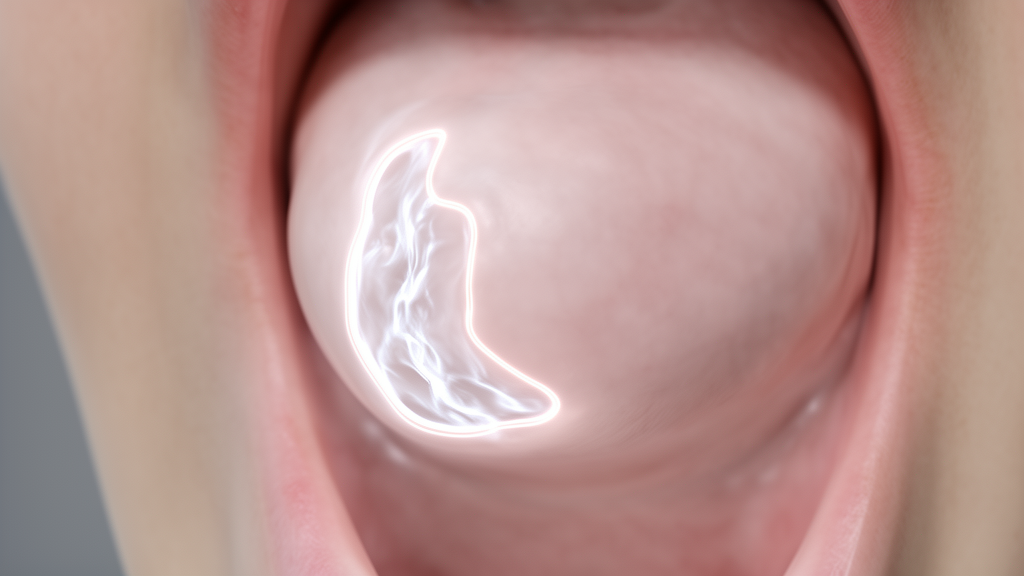
A deep learning model combining multi-scale edge awareness and transformer architecture achieved improved accuracy in delineating vocal fold lesions from laryngoscopic images, according to research published in the European Journal of Medical Research. Laryngoscopy serves as the primary clinical modality for evaluating vocal fold pathology; however, its diagnostic interpretation relies heavily on subjective physician experience, which can compromise consistency. To address boundary delineation challenges in automated segmentation, the researchers developed MEA-TransNet, a neural network designed to capture precise lesion borders while maintaining computational efficiency.
The evaluation framework formulated lesion detection as a binary pixel-level segmentation task spanning five distinct clinical categories. To provide a rigorous test of specificity and guard against false-positive segmentations, normal vocal fold images with empty reference masks were incorporated as negative controls. The model was trained and evaluated using a primary dataset comprising 4,216 laryngoscopic images from 862 patients. Diagnoses of leukoplakia and early glottic squamous cell carcinoma ranging from Tis to T2N0M0 were histopathologically confirmed, with image sets split at the patient level using category stratification to maintain clinical distribution across splits.
Architecturally, MEA-TransNet employs a ResNet-34 backbone coupled with a specialized multi-scale edge-aware module. This module extracts boundary features through the coordinated interaction of Sobel gradient priors and learnable depthwise separable convolutions configured with multiple dilation rates. To model global context across images without incurring excessive computational burden, the investigators integrated a lightweight windowed self-attention transformer encoder within the deeper layers of the network architecture.
Across the primary dataset of 4,216 laryngoscopic images covering normal vocal folds and four lesion types, MEA-TransNet achieved a Dice Similarity Coefficient of 89.14 percent with a 95 percent confidence interval spanning 88.03 to 90.22 percent. The model also attained an Intersection over Union of 81.93 percent. These values represented improvements of 2.21 and 3.19 percentage points, respectively, over the baseline nnU-Net, and gains of 3.02 and 4.07 percentage points over DA-TransUNet. Patient-level five-fold cross-validation demonstrated stable performance, yielding a mean Dice Similarity Coefficient of 88.98 percent with a standard deviation of 0.32 percentage points.
The architecture demonstrated pronounced performance advantages on lesion categories with ambiguous visual boundaries. On leukoplakia and early glottic carcinoma, MEA-TransNet outperformed nnU-Net by 3.12 and 3.17 percentage points in Dice Similarity Coefficient, with statistically significant differences confirmed by Holm-corrected p-values of 0.004 and 0.008.
To evaluate generalization, the authors conducted zero-shot evaluation on an independent external cohort consisting of 487 laryngoscopic images from 124 patients at a second tertiary hospital. These images were collected using equipment from a different laryngoscope manufacturer. MEA-TransNet retained strong segmentation performance, achieving an overall Dice Similarity Coefficient of 86.47 percent with a 95 percent confidence interval from 84.78 to 88.08 percent. Within the external early glottic carcinoma subgroup of 21 patients, the patient-level Dice Similarity Coefficient reached 82.4 percent with a 95 percent confidence interval of 78.1 to 86.5 percent.
While the findings demonstrate that MEA-TransNet offers a promising assistive tool for clinical lesion delineation, the authors noted several key limitations. The current evaluation relied on static images, meaning that prospective reader studies, validation using dynamic video recordings, and larger multicenter cohorts remain necessary before the model can be incorporated into routine clinical practice.
Subject of Research: Laryngoscopic vocal fold lesion segmentation using an edge-aware transformer deep learning model
Article Title: Optimization research on a laryngoscopic vocal fold lesion segmentation model integrating multi-scale edge awareness and transformer
Article References: Yang, X. (2026). Optimization research on a laryngoscopic vocal fold lesion segmentation model integrating multi-scale edge awareness and transformer. European Journal of Medical Research. https://doi.org/10.1186/s40001-026-05487-2
Image Credits: AI Generated
DOI: 10.1186/s40001-026-05487-2
Keywords: laryngoscopy, vocal fold lesions, image segmentation, MEA-TransNet, deep learning, transformer encoder, Sobel gradient, ResNet-34, Dice similarity coefficient, Intersection over Union, leukoplakia, early glottic carcinoma, squamous cell carcinoma, computer-assisted diagnosis, medical imaging, cross-validation, zero-shot evaluation
News Source: Ophelia Keating. (November 20, 2026). Edge-Aware Deep Learning Model Improves Vocal Fold Lesion Segmentation Accuracy. Scienmag.