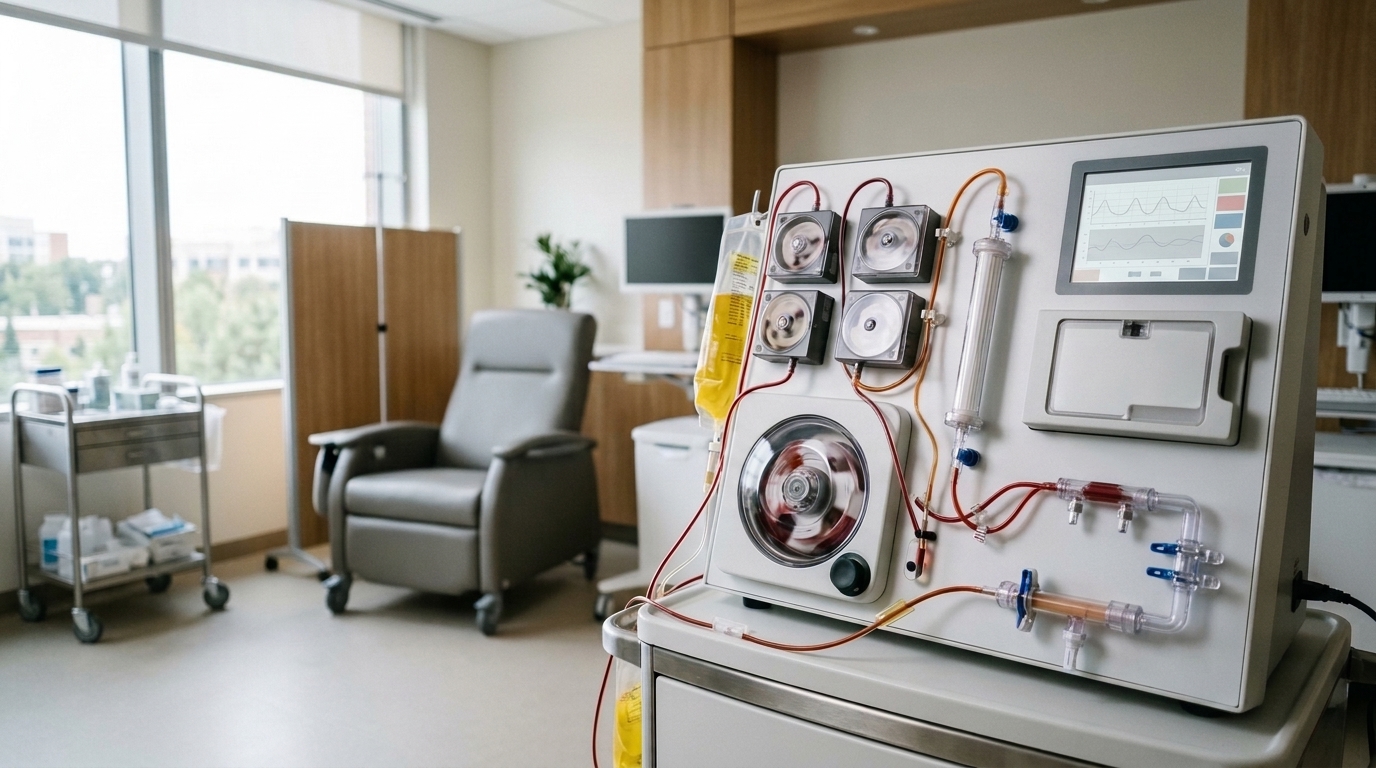
Severe immune-related adverse events in cancer patients receiving immune checkpoint inhibitors require treatment interruption and immunosuppression. The study, which enrolled 30 patients across multiple centers, demonstrated that ECP is a safe treatment option for steroid-refractory irAEs, meeting its pre-specified primary endpoint of fewer than 50% of patients developing ECP-related severe adverse events. No ECP-related severe adverse events were observed, and ECP-related adverse events were reported in 20% (6/30) of the participants, suggesting a favorable safety profile for this immunomodulatory therapy.
The trial, identified by EudraCT-No. 2021-002073-26, focused on patients whose irAEs did not respond to standard steroid treatment, a clinical scenario that often requires treatment interruption and significant immunosuppression. The primary endpoint was the evaluation of the safety of ECP treatment for these patients, while secondary endpoints included the assessment of response rates for irAEs and overall survival.
In this trial, the overall response rate for all irAEs was 96.3%, with a confidence interval ranging from 81.0% to 99.91%. The study reported specific response rates for different organ systems, demonstrating high efficacy across various manifestations of immune-related toxicity.
Specifically, the response rate for colitis was 100% (13/13 patients), for hepatitis it was 86.7% (13/15 patients), and for dermatitis it was 100% (3/3 patients).
The therapy was associated with reduced levels of granzyme-A/B/K, T-bet, interferon-γ, and TNF in peripheral T cells, as well as decreased pro-inflammatory gene expression in the intestinal tract. Response correlates with a decrease in inflammatory gene expression in the intestinal tract.
The long-term outcomes of the treatment were also assessed, with a 12-month overall survival rate of 84.3%, with a confidence interval of 63.4% to 93.8%.
The study’s design as a single-arm, non-randomized trial means that the results should be interpreted with caution, as there was no control group to compare against. However, the achievement of the primary safety endpoint and the high response rates provide compelling preliminary evidence for the use of ECP in this clinical context.
In conclusion, this phase-Ib/II trial provides evidence that extracorporeal photopheresis is a safe and potentially effective treatment for steroid-refractory immune-related adverse events in cancer patients receiving immune checkpoint inhibitors. The high response rates and favorable safety profile, along with the observed molecular changes in immune markers, support the further development of ECP as a therapeutic option for managing these challenging complications.
Subject of Research: Extracorporeal photopheresis for the treatment of steroid-refractory immune related adverse events from immune checkpoint inhibitor therapy: a multi-center phase Ib/II clinical trial
Article Title: Extracorporeal photopheresis for the treatment of steroid-refractory immune related adverse events from immune checkpoint inhibitor therapy: a multi-center phase Ib/II clinical trial
Article References: Riemer, R., Braun, L. M., Giesler, S., Rafei-Shamsabadi, D., Haferkamp, S., Hartmann, A., Melchinger, W., Weiss, M., Birth, S., Philipp, U., Gebhard, I., Schwänen, C., Hutchinson, J. A., Karantzelis, N., Wallrabenstein, T., Lowinus, T., Brehm, N., Rawluk, J., Pfeifer, D., … Zeiser, R. (2026). Extracorporeal photopheresis for the treatment of steroid-refractory immune related adverse events from immune checkpoint inhibitor therapy: a multi-center phase Ib/II clinical trial. Nature Communications, 17(1), Article 11078. https://doi.org/10.1038/s41467-026-78897-9
Image Credits: AI Generated
DOI: 10.1038/s41467-026-78897-9
Keywords: Extracorporeal, photopheresis, treatment, steroid-refractory, immune, related, adverse, events, checkpoint, inhibitor, therapy, multi-center
News Source: Ophelia Keating. (November 8, 2026). ECP Safe for Steroid-Refractory Immune Side Effects. Scienmag.