From airplanes to apartments, most spaces are now designed with sound-absorbing materials that help dampen the droning, echoing and murmuring sounds of everyday life. But most of the acoustic materials that can cancel out human voices, traffic and music are made from plastic foams that aren’t easily recycled or degraded. Now, researchers reporting in ACS Sustainable Chemistry & Engineering have created a biodegradable seaweed-derived film that effectively absorbs sounds in this range.
Credit: Adapted from ACS Sustainable Chemistry & Engineering 2022, DOI: 10.1021/acssuschemeng.2c00168
From airplanes to apartments, most spaces are now designed with sound-absorbing materials that help dampen the droning, echoing and murmuring sounds of everyday life. But most of the acoustic materials that can cancel out human voices, traffic and music are made from plastic foams that aren’t easily recycled or degraded. Now, researchers reporting in ACS Sustainable Chemistry & Engineering have created a biodegradable seaweed-derived film that effectively absorbs sounds in this range.
Controlling and optimizing the way sound moves throughout a room is key to creating functional spaces. Foam acoustic panels are a common solution, and they come in a variety of materials and thicknesses tailored to specific sound requirements. Most of these foams, however, are made from polyurethane and other polymers that are derived from crude oil or shale gas. To avoid petrochemicals, researchers have explored more renewably sourced and biodegradable sound-absorbing alternatives. But many current options are made from plant fibers that don’t effectively dampen noises in the most useful range of sound frequencies, or they are too thick or unwieldy to fabricate. So, Chindam Chandraprakash and colleagues wanted to develop a plant-derived, biodegradable material that would be simple to manufacture and that could absorb a range of sounds.
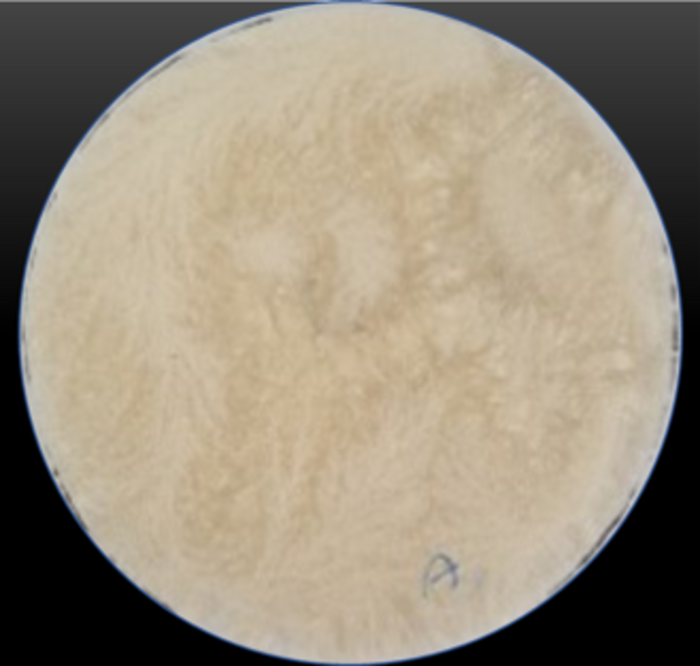
The team created thin films of agar, a jelly-like material that comes from seaweed, along with other plant-derived additives and varied both the thickness and porosity of the films. After running the materials through a battery of tests, the researchers measured how well the films dampened sound across a range of frequencies — from a bass hum to a shrill whine. To do this, the team created a sound tube in which a speaker is placed at one end, and the test film is fitted over the other end. Microphones in the middle of the tube measured the amount of sound emitted by the speaker and the amount of sound reflected off the film. These experiments showed that porous films made with the highest concentrations of agar had the greatest sound-absorbing qualities and performed similarly to traditional acoustic foams. The researchers plan to explore ways to modify the agar films to give them other desirable properties, such as flame resistance, and will explore other biologically derived film materials.
The authors acknowledge funding from the Science and Engineering Research Board, India, and the Indian Institute of Technology Kanpur, India.
For more of the latest research news, register for our upcoming meeting, ACS Fall 2022. Journalists and public information officers are encouraged to apply for complimentary press registration by completing this form.
The American Chemical Society (ACS) is a nonprofit organization chartered by the U.S. Congress. ACS’ mission is to advance the broader chemistry enterprise and its practitioners for the benefit of Earth and all its people. The Society is a global leader in promoting excellence in science education and providing access to chemistry-related information and research through its multiple research solutions, peer-reviewed journals, scientific conferences, eBooks and weekly news periodical Chemical & Engineering News. ACS journals are among the most cited, most trusted and most read within the scientific literature; however, ACS itself does not conduct chemical research. As a leader in scientific information solutions, its CAS division partners with global innovators to accelerate breakthroughs by curating, connecting and analyzing the world’s scientific knowledge. ACS’ main offices are in Washington, D.C., and Columbus, Ohio.
To automatically receive news releases from the American Chemical Society, contact [email protected].
Follow us: Twitter | Facebook | LinkedIn | Instagram
Journal
ACS Sustainable Chemistry & Engineering
DOI
10.1021/acssuschemeng.2c00168
Article Title
Agar-based composite films as effective biodegradable sound absorbers
Article Publication Date
23-Jun-2022