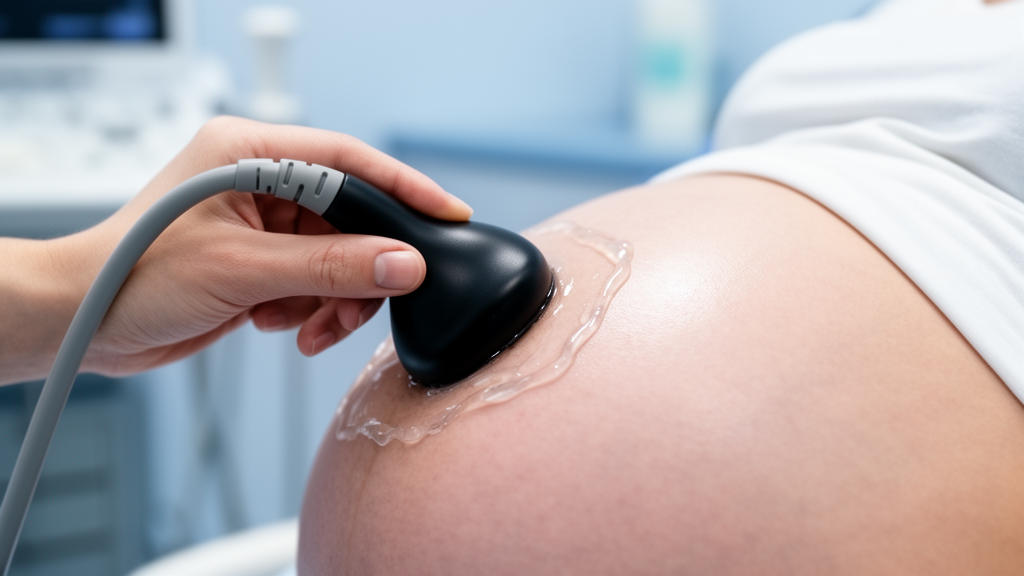
A retrospective paired cohort study published in the Archives of Gynecology and Obstetrics has found that earlier fetal ultrasound examinations performed between 13 and 17 weeks of gestation identify the same spectrum of craniofacial malformations as routine second-trimester anomaly scans conducted between 18 and 22 weeks. The research, conducted at a community-based fetal ultrasound center, utilized a cohort of confirmed cases to assess the concordance between these two distinct gestational windows. The primary objective was to determine whether earlier detection of craniofacial malformations, abbreviated as CFMs, would yield consistent findings when compared to the standard diagnostic timeline used in obstetric care.
The study design required that eligible cases have sonographic documentation from both the earlier 13-to-17-week window and the routine 18-to-22-week window. Furthermore, all included cases required postnatal confirmation or confirmation via fetopsy or autopsy. The primary outcome measured was whether the same craniofacial malformations were detected in both examinations, specifically looking for any anomalies that might have been missed in the earlier scan but found in the later routine scan.
From a total of 30,684 ultrasound examinations, 82 confirmed craniofacial malformations met the study’s inclusion criteria. This corresponds to an observed proportion of 2.7 CFMs per 1,000 examinations. The most frequent anomalies identified in this cohort were unilateral cleft lip and palate, which accounted for 24 cases, and isolated cleft palate, which accounted for 11 cases. The remaining cases involved several rarer anomalies, contributing to the total count of 82 confirmed malformations.
The central finding of the study is that in all included cases, the same craniofacial malformations identified in the earlier ultrasound were also diagnosed on the routine second-trimester scan. No additional anomalies were detected at the later 18-to-22-week examination that had not already been identified at the earlier 13-to-17-week stage. Statistical analysis using McNemar’s exact test confirmed that there were no discordant pairs, with a P-value of 1.00. This indicates a complete concordance in the detection of the specific craniofacial malformations between the two time points for the confirmed cases in this cohort.
Associated abnormalities were also evaluated as part of the study’s findings. Chromosomal abnormalities were present in 14.6% of the cases, which equates to 12 out of the 82 confirmed malformations. Additionally, associated systemic anomalies were found in 42.7% of the cases, or 35 out of 82.
The authors conclude that earlier fetal ultrasound at 13 to 17 weeks identified the same spectrum of craniofacial malformations later identified at the 18-to-22-week scan in this paired cohort of confirmed cases. These findings support the incorporation of the 13-to-17-week fetal anatomical assessment as a desired protocol for earlier prenatal recognition of CFMs before the routine scan. The study suggests that this earlier assessment has potential value for the assessment of associated abnormalities, pregnancy planning, maternal counseling, and informed decision-making.
It is important to note that this was a retrospective study conducted at a single community-based fetal ultrasound center.
Subject of Research: Concordance of craniofacial malformation detection between early and routine second-trimester ultrasounds
Article Title: Concordance between earlier 13–17-week and routine second-trimester ultrasound findings in prenatally detected craniofacial malformations
Article References: Barzilai, R., Gordin, A., Noy, R., Gover, A., Khatib, N., Beloosesky, R., & Bronshtein, M. (2026). Concordance between earlier 13–17-week and routine second-trimester ultrasound findings in prenatally detected craniofacial malformations. Archives of Gynecology and Obstetrics. https://doi.org/10.1007/s00404-026-08569-y
Image Credits: AI Generated
DOI: 10.1007/s00404-026-08569-y
Keywords: craniofacial malformations, prenatal ultrasound, fetal anomaly scan, cleft lip, cleft palate, obstetrics, retrospective study, second trimester, concordance, Archives of Gynecology and Obstetrics, between, earlier
News Source: Ophelia Keating. (November 8, 2026). Early Ultrasound Detects Same Craniofacial Malformations as Routine Scans. Scienmag.