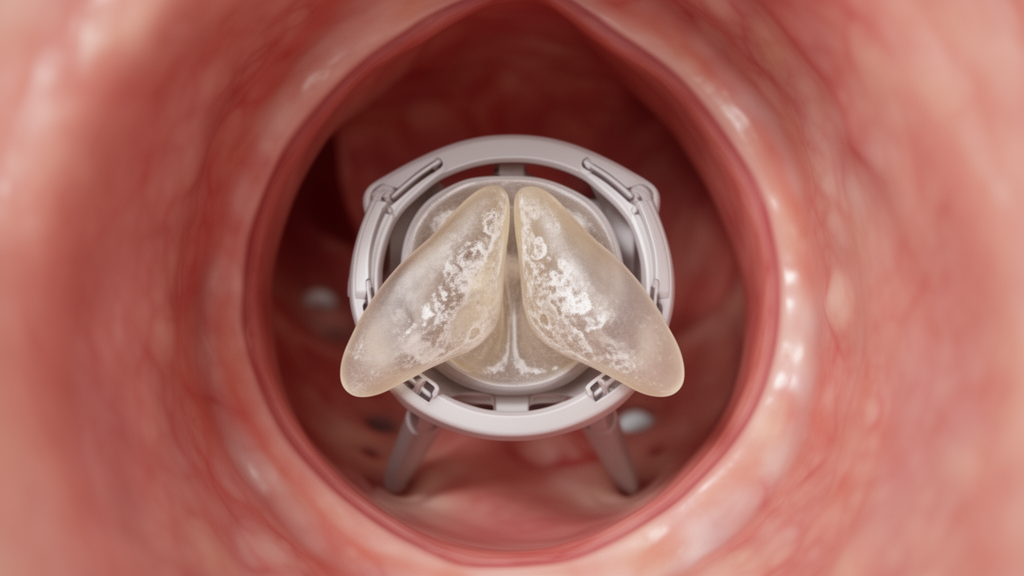
A retrospective cohort study involving 238 patients aged 70 years or younger has identified four early postoperative markers that significantly predict bioprosthetic mitral valve dysfunction following valve replacement surgery. Researchers identified that advanced New York Heart Association (NYHA) functional class, elevated pulmonary artery systolic pressure (PASP), higher mean transmitral gradient, and reduced effective orifice area (EOA) are independently associated with long-term dysfunction of the prosthetic valve. This study, published in the Journal of Cardiothoracic Surgery, highlights the critical need for refined risk stratification in this younger patient demographic, as the prevalence of bioprosthetic mitral valve replacement in individuals under 70 continues to increase despite traditional clinical recommendations favoring older patients for such procedures.
The study spanned a 13-year period from January 2009 to December 2022, tracking outcomes in a cohort that provided a median echocardiographic follow-up of 166.2 months, with an interquartile range of 77.8 to 175.5 months. Investigators defined mitral valve dysfunction as the emergence or progression of prosthetic morphological abnormalities accompanied by hemodynamic deterioration following the initial 1 to 3-month postoperative reference examination.
To isolate these predictive factors, the research team employed LASSO-selected variables within a multivariable cause-specific Cox model. The resulting hazard ratios provided clear evidence of the prognostic power of the identified clinical and echocardiographic variables. Patients presenting with an NYHA functional class of III or higher faced a hazard ratio of 1.89 for developing valve dysfunction compared to those with lower classifications.
The echocardiographic parameters similarly demonstrated strong predictive value. Every 1 mmHg increase in the mean transmitral gradient was associated with a 1.31 hazard ratio for developing dysfunction.
By incorporating these four independent markers, the researchers developed a nomogram designed to assist clinicians in postoperative risk stratification. Internal validation, conducted using 1,000 selection-aware bootstrap resamples, indicated that the model possesses good discrimination capabilities. The optimism-corrected C-index was reported as 0.791, with a 95% confidence interval ranging from 0.740 to 0.840. The model also demonstrated strong predictive accuracy over time, with corrected area under the curve values of 0.842 and 0.809 at 7 and 10 years, respectively, suggesting reliable utility for long-term patient monitoring.
The research emphasizes the clinical significance of distinguishing risk groups through these measurements. In comparisons performed using competing-risk analysis, the nomogram-based risk groups demonstrated significantly different cumulative incidences of valve dysfunction, with Gray’s P-value reported at less than 0.001.
Despite these findings, the authors explicitly state that while the nomogram provides a promising framework for postoperative management, external validation is a mandatory next step before it can be applied in routine clinical practice. As a retrospective study, the findings are subject to the inherent limitations of patient selection and non-randomized data, which could affect generalizability to different patient populations or surgical environments.
Ultimately, this research provides a data-driven foundation for addressing the specific challenges of managing younger patients after bioprosthetic mitral valve replacement.
Subject of Research: Prognostic factors for bioprosthetic mitral valve dysfunction in patients aged ≤ 70.
Article Title: Early postoperative prognostic markers of bioprosthetic mitral valve dysfunction in patients aged ≤ 70 years: a retrospective cohort study
Article References: Huang, H.-Q., Li, C.-L., Liu, X.-D., Fan, R., Ye, M., Liu, Y.-Q., Liu, D.-H., Lei, Y.-Y., Yao, F.-J., & Li, W. (2026). Early postoperative prognostic markers of bioprosthetic mitral valve dysfunction in patients aged ≤ 70 years: a retrospective cohort study. Journal of Cardiothoracic Surgery. https://doi.org/10.1186/s13019-026-04787-2
Image Credits: AI Generated
DOI: 10.1186/s13019-026-04787-2
Keywords: cardiology, mitral valve replacement, bioprosthetic valves, valve dysfunction, heart surgery, prognostic markers, echocardiography, cardiac hemodynamics, NYHA classification, pulmonary artery pressure, transmitral gradient, effective orifice area, retrospective study, risk stratification, bioprosthetics, cardiac outcomes
News Source: Ophelia Keating. (November 17, 2026). Early Prognostic Markers Predict Bioprosthetic Mitral Valve Dysfunction in Younger Patients. Scienmag.