In recent groundbreaking research published in the prestigious journal Environmental Science & Technology, scientists have unveiled alarming evidence that liquid crystal monomers (LCMs), the foundational chemical compounds powering everyday LCD screens, are not confined to our devices but are, in fact, infiltrating the tissues of endangered marine mammals, specifically dolphins and porpoises. This revelation casts a harrowing light on the broader ecological ramifications of electronic waste (e-waste), underscoring an overlooked dimension of pollution that may have profound implications for ocean health and biodiversity.
LCMs play an indispensable role in the electronics industry, regulating the transmission of light through displays found ubiquitously across laptops, televisions, and smartphones. Their molecular architecture allows these compounds to manipulate light efficiently, fostering the high-definition visuals that modern consumers have come to expect. Yet, these same chemical properties contribute to their persistence in aquatic environments once discarded, classifying them as persistent organic pollutants. The resilience of LCMs makes them prone to bioaccumulation, particularly as they transition through marine food webs, ultimately jeopardizing top predators in these ecosystems.
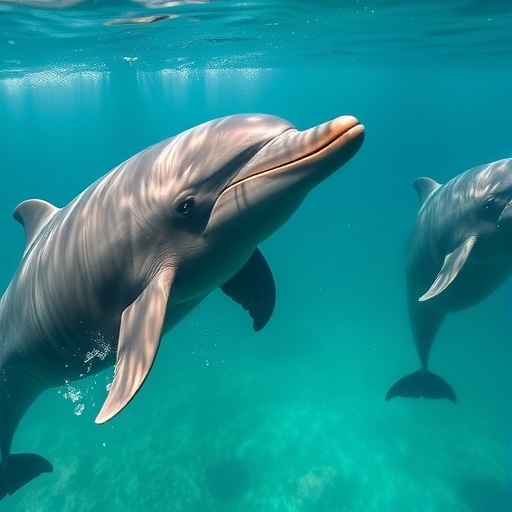
The latest study, led by Yuhe He of the City University of Hong Kong and colleagues, analyzed tissue samples from Indo-Pacific humpback dolphins and finless porpoises, collected over a span of fourteen years from the South China Sea. This region, home to these already vulnerable cetacean populations, represents a critical natural habitat where the contamination could have dire consequences. Employing sophisticated analytical chemistry techniques, the team quantified the presence of 62 individual LCM compounds across multiple tissue types—blubber, muscle, liver, kidney, and brain—offering a comprehensive perspective on tissue-specific accumulation patterns.
Of particular concern is the identification of LCM residues in the brain tissues of these marine mammals, a finding that challenges previous assumptions about the blood-brain barrier’s impermeability to industrial pollutants. Blubber, as a lipid-rich tissue, predictably exhibited the highest concentrations of these compounds; however, the presence of LCMs within the brain suggests potential neurotoxic effects, a prospect that raises critical questions about neurological health, behavior, and survival of affected marine species. This discovery lends urgency to understanding how such pollutants influence cognitive functions and reproductive capabilities in cetaceans.
Delving deeper, the study delineated that a handful of LCM compounds dominated the detected chemical profiles, aligning closely with those previously found in lower trophic organisms such as fish and invertebrates, which form the primary diet of dolphins and porpoises. This trophic linkage suggests that LCMs propagate primarily through dietary intake rather than direct waterborne exposure, unveiling the intricate pathways of chemical transfer within marine ecosystems. It highlights the cascading effects of e-waste, as contamination travels upward through feeding hierarchies, potentially accumulating in apex predators at toxic levels.
Moreover, the temporal aspects of LCM contamination reveal a dynamic relationship between technological evolution and environmental impact. The study observed rising concentrations of LCMs in porpoise blubber concurrent with the proliferation of liquid crystal display (LCD) technologies, which later declined correlatively with the industry’s transition toward LED displays. Such trends epitomize how shifts in manufacturing practices can modulate pollutant profiles in natural habitats, offering a glimmer of hope that sustainable design innovations could mitigate chemical footprints.
Laboratory experiments fortified the ecological findings by demonstrating that several prevalent LCMs modulate gene expression linked to DNA repair mechanisms and cell cycle regulation in cultured dolphin cells. These molecular disruptions elucidate potential pathways through which LCM exposure could compromise genetic integrity and cellular function in marine mammals, propelling an urgent call for mechanistic studies to unravel these toxicological impacts fully. The implication is stark: beyond environmental persistence, LCMs possess intrinsic biological activity that poses concrete threats to organismal health.
Equally pressing is the broader context of electronic waste management, as the study casts a critical eye on inadequate disposal systems that facilitate the leaching of such hazardous compounds into marine environments. The research thus highlights an intersection between consumer technology, waste policy, and environmental preservation. The international scientific community is prompted to advocate for stringent regulatory frameworks governing e-waste recycling and disposal practices to curtail the influx of LCMs into vulnerable ecosystems.
As industrial chemical pollutants like LCMs become increasingly pervasive, their subtle yet potent infiltration into top marine predators underscores significant gaps in current environmental monitoring strategies. The findings advocate for improved surveillance methodologies tailored to detect and quantify emerging contaminants in wildlife tissues, fostering a proactive stance in ecological risk assessments. Especially for endangered species, such monitoring is essential for informed conservation measures.
This research also taps into a growing societal concern regarding the hidden costs of technological advancement. While the benefits of LCD devices are indisputable, the environmental and health toll attached to their lifecycle—from production to disposal—calls for a balanced discourse emphasizing the adoption of cleaner, safer alternatives. In this light, the shift from LCD to LED technologies marks a critical juncture, albeit one that requires ongoing vigilance to prevent replacement pollutants from substituting one hazard for another.
Crucially, the interdisciplinary collaboration reflected in this study—spanning environmental chemistry, marine biology, and toxicology—exemplifies the integral role of multi-domain research in tackling complex global challenges. By bridging laboratory analysis with ecological sampling, the authors provide a robust evidentiary foundation that informs both science policy and public awareness campaigns.
Looking ahead, the research community is tasked with expanding inquiries into the long-term effects of LCMs and analogous compounds on marine mammal populations, delving into the sublethal and chronic manifestations of exposure. Investigations into behavioral changes, reproductive success, and lifespan variations could illuminate the population-level consequences of molecular pollution, guiding species recovery programs and habitat management.
In sum, the discovery of liquid crystal monomers accumulating in the brains and tissues of endangered cetaceans serves as a poignant reminder of humanity’s expansive environmental footprint. It compels stakeholders—from industry leaders to regulatory bodies—to reconcile technological progress with ecological stewardship, underscoring an imperative: safeguarding ocean health is inherently linked to protecting the delicate balance of life itself. The call to action is clear; stepping up e-waste governance and advancing green chemistry practices is not just beneficial but essential for ensuring that the digital devices of today do not become the environmental toxins of tomorrow.
Subject of Research: The accumulation and biological impacts of liquid crystal monomers (LCMs) released from LCD displays in endangered marine cetaceans.
Article Title: Liquid Crystal Monomers Released from LCD Displays Accumulate in Endangered Marine Cetaceans Triggering Health Concerns
News Publication Date: 25-Feb-2026
Web References: DOI: 10.1021/acs.est.5c17767
Keywords
Chemistry, Pollution, Environmental Sciences, Marine Pollution, Electronic Waste, Liquid Crystal Monomers, Marine Mammals, Toxicology, Persistent Organic Pollutants, Neurotoxicity, Ecotoxicology
Tags: bioaccumulation of persistent organic pollutantschemical contamination in porpoisese-waste pollution in marine mammalsendangered marine mammals and pollutionenvironmental effects of LCD screen chemicalsenvironmental science of electronic waste chemicalsimpact of electronics waste on dolphinsIndo-Pacific humpback dolphin chemical exposureliquid crystal monomers in ocean wildlifeocean biodiversity threats from e-wasteporpoise tissue contamination studytoxicology of e-waste chemicals in marine ecosystems