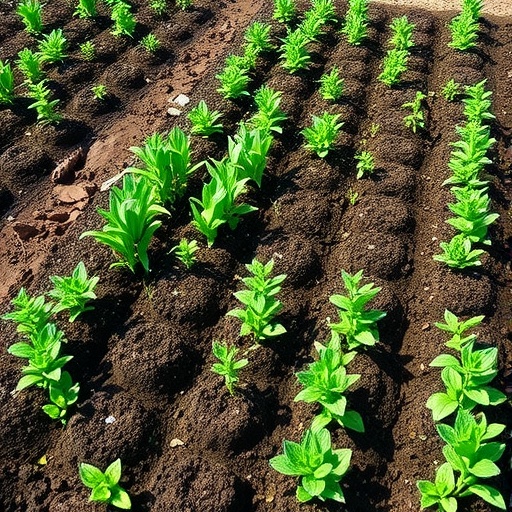
Nitrogen fertilizer has helped transform modern agriculture, but its success comes with a costly paradox: crops often receive more nitrogen than they can absorb. The excess can escape into waterways as nitrate, enter the atmosphere as nitrous oxide, or remain in soil in forms that are difficult for plants to use. A new study published in npj Sustainable Agriculture presents a dynamic fertilization strategy designed to match nitrogen applications more closely with the changing needs of crops and soils.
The approach, developed by Yekutiel, Gelfand, Baram and colleagues, is based on a simple but powerful principle: fertilizer decisions should be guided by the nitrogen already present in the soil. Instead of applying a predetermined amount at fixed times, farmers would repeatedly assess the soil’s available nitrogen and adjust future applications accordingly. The goal is to replace a calendar-based routine with a feedback system that responds to real field conditions.
Nitrogen in agricultural soil is constantly moving through a complex biological and chemical cycle. Organic matter is decomposed by microorganisms, releasing ammonium that can be converted into nitrate through nitrification. Plants absorb both forms, but nitrate is highly mobile and can be washed below the root zone by rainfall or irrigation. Under oxygen-poor conditions, microbes can also convert nitrate into gaseous compounds, including nitrous oxide, a greenhouse gas far more powerful than carbon dioxide over a century-long timescale.
Traditional fertilizer recommendations often rely on average crop requirements, historical yields, or a single soil test taken before planting. These methods can be useful, but they may miss rapid changes during the growing season. Soil nitrogen can rise after mineralization or fertilizer application and fall quickly after heavy crop uptake. A single recommendation may therefore lead to under-fertilization in one part of a season and unnecessary application in another. The dynamic method described in the study is intended to make nitrogen management more responsive to these fluctuations.
At the center of the proposed system is a soil-nitrogen balance. The amount of nitrogen available to the crop is considered alongside expected plant demand, nitrogen already supplied through fertilizer or organic amendments, and potential losses from leaching or gaseous emissions. When soil tests indicate that sufficient nitrogen remains in the root zone, the next application can be reduced or delayed. When measurements show that the crop is approaching a shortage, fertilizer can be supplied before growth and yield are seriously affected.
This approach could be especially important because nitrogen demand is not constant throughout a plant’s life. Young plants may require relatively modest amounts, while demand can accelerate during periods of rapid leaf, stem, fruit, or grain development. Later in the season, additional fertilizer may contribute little to yield if the crop’s ability to absorb nitrogen is declining. Applying nitrogen in smaller, better-timed doses could improve the synchronization between nutrient supply and plant uptake, a concept known as increasing nitrogen-use efficiency.
Improved efficiency has consequences beyond the farm. When crops absorb a larger share of applied nitrogen, less remains vulnerable to leaching into groundwater and rivers. Lower nitrate losses can reduce eutrophication, the excessive growth of algae that depletes oxygen in aquatic ecosystems. More precise applications may also reduce nitrous oxide emissions associated with microbial nitrogen transformations. At the same time, avoiding unnecessary fertilizer purchases could lower production costs, although the economic outcome would depend on testing, equipment, labor, crop value, and local fertilizer prices.
The proposed strategy also reflects a broader shift toward data-driven agriculture. Soil nitrogen measurements can be combined with crop observations, weather information, irrigation records, and yield expectations to create a more detailed picture of field conditions. In principle, this information could support variable-rate applications, allowing different parts of the same field to receive different amounts of fertilizer. Such precision would be particularly useful where soil texture, drainage, organic matter, or past management varies substantially across short distances.
However, dynamic nitrogen management is not a universal formula that eliminates uncertainty. Soil tests must be accurate, representative, and frequent enough to capture meaningful changes. Nitrogen availability also depends on temperature, moisture, microbial activity, root distribution, and the timing of irrigation. A result from one sampling location may not describe an entire field. Farmers and advisers would therefore need practical sampling protocols and decision thresholds that translate laboratory measurements into clear application recommendations.
The significance of the study lies in treating fertilization as an ongoing management process rather than a one-time prescription. By connecting fertilizer decisions to measured soil nitrogen and evolving crop demand, the framework seeks to protect yields while reducing the environmental cost of excess nitrogen. As agriculture faces pressure to produce more food with fewer resources, strategies that make nutrient use more precise could become an important part of climate-smart farming. The study offers a technically grounded pathway toward that goal: measure what the soil contains, estimate what the crop needs, and apply only what is justified by the balance.
Subject of Research: Dynamic, soil-based nitrogen fertilization and improved nitrogen-use efficiency in agriculture.
Article Title: Dynamic soil-N-based fertilization approach for optimized N management
Article References: Yekutiel, Y., Gelfand, I., Baram, S. et al. Dynamic soil-N-based fertilization approach for optimized N management. npj Sustain. Agric. 4, 64 (2026). https://doi.org/10.1038/s44264-026-00178-1
Image Credits: AI Generated
DOI: https://doi.org/10.1038/s44264-026-00178-1
Keywords: soil nitrogen, nitrogen fertilization, nitrogen-use efficiency, sustainable agriculture, precision agriculture, nitrate leaching, nitrous oxide, crop nutrition, soil testing, climate-smart farming
Tags: crop nitrogen absorptiondynamic fertilization strategiesenvironmental impact of nitrogen excessfertilizer application optimizationmicrobial role in nitrogen transformationnitrate leaching reductionnitrogen cycle in soilsnitrogen management technologynitrogen use efficiency in farmingSoil nitrogen managementsoil nutrient feedback systemssustainable agriculture practices