A new study from The Ottawa Hospital and the University of Ottawa is poised to completely change our understanding of Duchenne muscular dystrophy and pave the way for far more effective treatments.
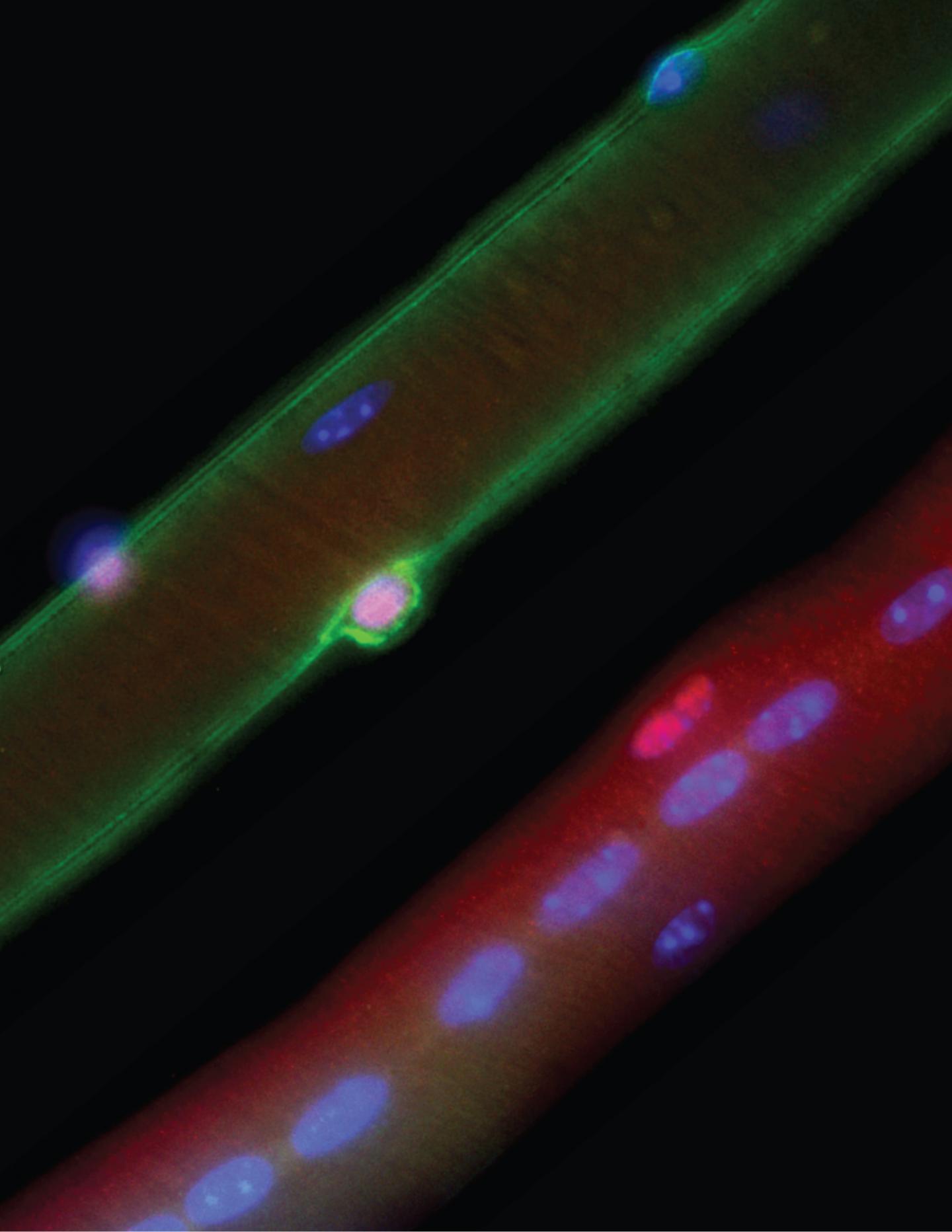
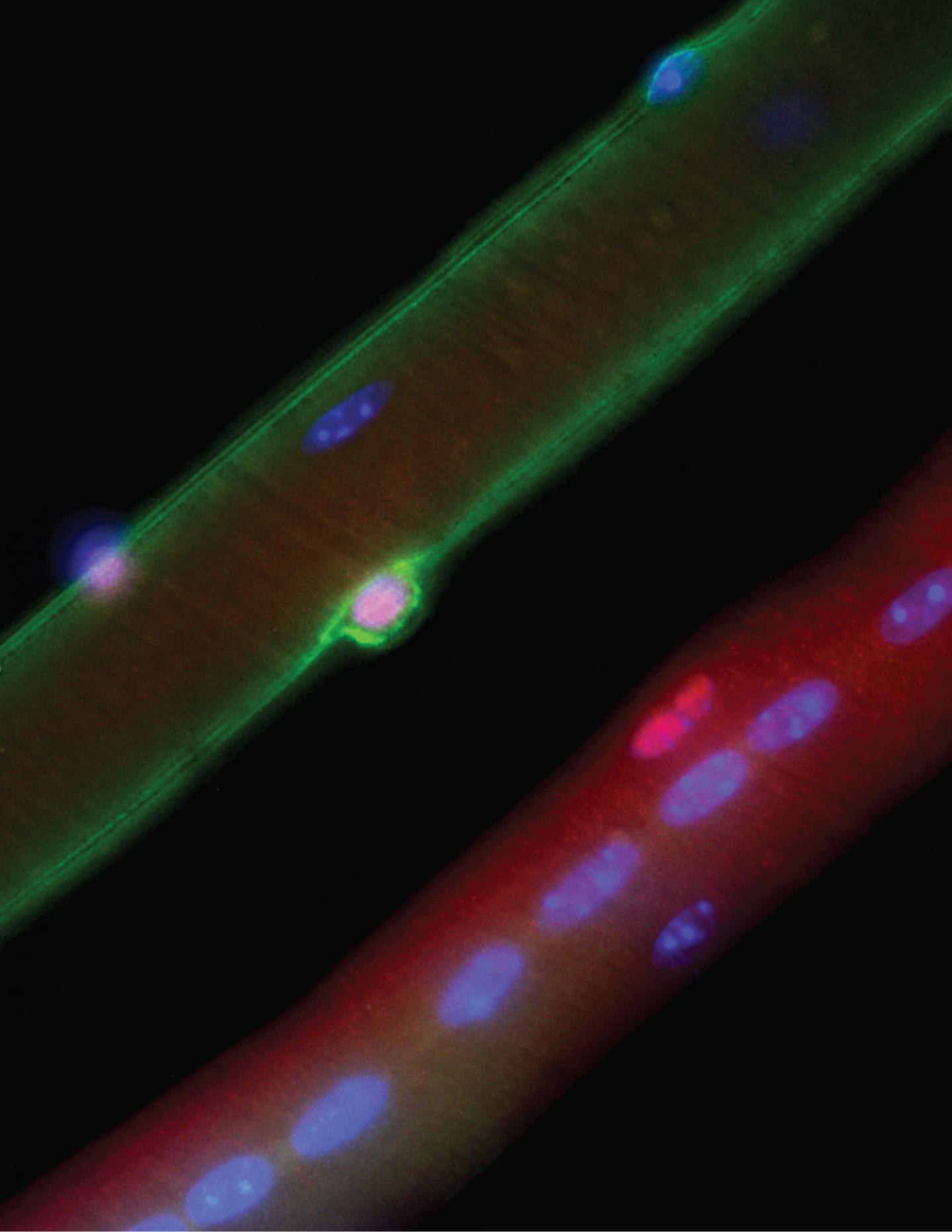
The study, published in Nature Medicine on November 16, 2015, is the first to show that Duchenne muscular dystrophy directly affects muscle stem cells.
"For nearly 20 years, we've thought that the muscle weakness observed in patients with Duchenne muscular dystrophy is primarily due to problems in their muscle fibres, but our research shows that it is also due to intrinsic defects in the function of their muscle stem cells," said Dr. Michael Rudnicki, senior author of the study. "This completely changes our understanding of Duchenne muscular dystrophy and could eventually lead to far more effective treatments."
Dr. Rudnicki is the Director of the Regenerative Medicine Program at The Ottawa Hospital and a professor at the University of Ottawa. He also holds the Canada Research Chair in Molecular Genetics.
Duchenne muscular dystrophy is the most common form of muscular dystrophy, affecting approximately one in 3,600 boys. It is caused by genetic mutations that result in the loss of the dystrophin protein, leading to progressive muscle weakness and death by the second or third decade of life.
Muscle stem cells are responsible for muscle repair after normal injuries and exercise. In response to muscle damage, these stem cells divide to generate precursor cells that become the fibres that make up our muscles.
For many years, dystrophin was thought to be a simple structural protein only found in muscle fibres. In the current study, Dr. Rudnicki and his team discovered that muscle stem cells also express the dystrophin protein, and without this protein, they produce ten-fold fewer muscle precursor cells, which in-turn generate fewer functional muscle fibres. They also discovered that dystrophin is a key member of the molecular machinery that enables muscle stem cells sense their orientation in the surrounding tissue.
"Muscle stem cells that lack dystrophin cannot tell which way is up and which way is down," said Dr. Rudnicki. "This is crucial because muscle stem cells need to sense their environment to decide whether to produce more stem cells or to form new muscle fibres. Without this information, muscle stem cells cannot divide properly and cannot properly repair damaged muscle."
This research was conducted in mouse cells, but it is expected that the findings will hold in humans, as the dystrophin protein is almost identical in all animals.
Current treatments for Duchenne muscular dystrophy are limited to steroids and physical therapy that slow disease progression and lessen symptoms. Experimental approaches such as gene therapy are also being investigated, but Dr. Rudnicki's research suggests that these approaches will have to be modified so that they target muscle stem cells as well as muscle fibres.
"We're already looking at approaches to correct this problem in muscle stem cells," said Dr. Rudnicki. "I'm not sure if we will ever cure Duchenne muscular dystrophy, but I'm very hopeful that someday in the future, we will have new therapies that correct the ability of muscle stem cells to repair the muscles of afflicted patients and turn this devastating, lethal disease into a chronic but manageable condition."
The discovery is being hailed by experts in the field, including Dr. Ronald Worton, who co-discovered the gene for Duchenne muscular dystrophy in 1987 and served as Vice-President of research at The Ottawa Hospital for 11 years.
"When we discovered the gene for Duchenne muscular dystrophy, there was great hope that we would be able to develop a new treatment fairly quickly," said Dr. Worton, who is now retired. "This has been much more difficult than we initially thought, but Dr. Rudnicki's research is a major breakthrough that should renew hope for researchers, patients and families."
###
Quotes from funding organizations will be available at http://www.ohri.ca/newsroom/newsstory.asp?ID=702.
Co-authors
Dr. Nicolas A. Dumont and Yu Xin (Will) Wang are co-lead authors on the paper. Other contributors include Dr. Julia von Maltzahn, Dr. Alessandra Pasut, Dr. Florian Bentzinger and Caroline Brun. All are (or were) members of The Ottawa Hospital's Regenerative Medicine Program, which includes the Sprott Centre for Stem Cell Research and the Sinclair Centre for Regenerative Medicine. All are (or were) also affiliated with the University of Ottawa.
Funders
The study was funded by the U.S. National Institutes of Health, the Canadian Institutes of Health Research, Muscular Dystrophy Canada, the Muscular Dystrophy Association (U.S.), the Stem Cell Network, the Canada Research Chairs program, the Ontario Ministry of Research and Innovation, Deutsche Forschungsgemeinschaft and the Swiss National Science Foundation.
About The Ottawa Hospital and the University of Ottawa
The Ottawa Hospital is one of Canada's largest learning and research hospitals with over 1,100 beds, approximately 12,000 staff and an annual budget of over $1.2 billion. Our focus on research and learning helps us develop new and innovative ways to treat patients and improve care. As a multi-campus hospital, affiliated with the University of Ottawa, we deliver specialized care to the Eastern Ontario region, but our techniques and research discoveries are adopted around the world. We engage the community at all levels to support our vision for better patient care. See http://www.ohri.ca for more information about research at The Ottawa Hospital.
The University of Ottawa is home to over 50,000 students, faculty and staff, who live, work and study in both French and English. Our campus is a crossroads of cultures and ideas, where bold minds come together to inspire game-changing ideas. We are one of Canada's top 10 research universities–our professors and researchers explore new approaches to today's challenges. One of a handful of Canadian universities ranked among the top 200 in the world, we attract exceptional thinkers and welcome diverse perspectives from across the globe.
Media Contact
Jennifer Ganton
Director, Communications and Public Relations
Ottawa Hospital Research Institute
[email protected]
Office: 613-798-5555 x 73325
Cell: 613-614-5253