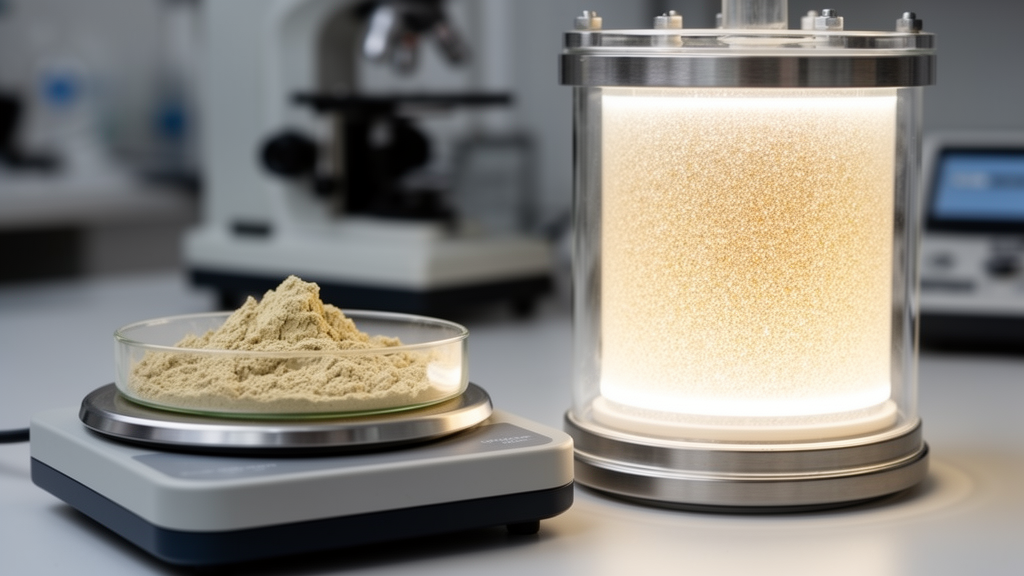
A critical review published in Frontiers in Nutrition evaluates how pre- and post-extraction drying technologies reshape the microstructural, conformational, and technofunctional properties of edible insect proteins, isolates, and hydrolysates, establishing that processing dehydration methods directly dictate ingredient stability and functionality. As expanding global populations place increased strain on conventional agricultural proteins, edible insects have garnered significant scientific and industrial attention due to their elevated protein density, favorable amino acid profiles, and substantially lower land and water footprints compared to traditional livestock production. However, developing functional insect-derived powders for food and feed formulations requires careful dehydration, which is one of the most critical unit operations influencing molecular conformation, aggregation state, moisture content, and oxidative stability during subsequent storage. Rather than serving as mere moisture removal, drying methods impose coupled thermal and hydration stresses that can alter protein functionality in ways that vary across species, matrix formulations, and downstream manufacturing targets.
Edible insect biomass constitutes a substantial global biomass with an established history of entomophagy comprising more than 2,000 species traditionally consumed across at least 113 countries throughout Latin America, Asia, Africa, and Oceania. Nutritional compositions vary widely across species, developmental life stages, rearing substrates, environmental conditions, and analytical testing methodologies, yet elevated protein density remains a hallmark characteristic across commercial species. Edible insects consistently average between 35 percent and 60 percent crude protein on a dry weight basis and 10 percent to 25 percent on a fresh weight basis, frequently exceeding the protein metrics of conventional plant-based sources. For instance, dry matter crude protein contents reach 35.3 percent in larvae, 45.9 percent in pupae, and 51.0 percent in adult honeybees (Apis mellifera), while male drone brood ranges from 32.0 percent to 52.4 percent when lyophilized. Similarly, dried silkworm (Bombyx mori) pupae provide 50 percent to 60 percent crude protein, exceeding 75 percent upon defatting with essential amino acids comprising over 40 percent of the total profile. Yellow mealworms (Tenebrio molitor) larvae yield between 41.0 percent and 53.2 percent dry weight crude protein, whereas house crickets (Acheta domesticus) and migratory locusts (Locusta migratoria) exhibit ranges between 55 percent and 70 percent, and black soldier fly (Hermetia illucens) larvae supply approximately 40 percent to 50 percent crude protein.
Transforming raw biomass into standardized, shelf-stable ingredients follows three principal technological processing approaches designed to optimize technofunctional traits and overcome consumer palatability barriers. In the first approach, whole insect bodies undergo direct thermal or non-thermal inactivation via blanching or freezing, followed immediately by drying without preliminary defatting or fractionated protein extraction, primarily targeting moisture depletion, water activity suppression below microbial spoilage thresholds, and mass reduction to lower transport costs. In the second route, whole insects are dried and subsequently defatted through mechanical pressing or organic solvents, yielding a concentrated protein meal that subsequently undergoes alkaline extraction and isoelectric precipitation (AE-IEP) to isolate high-purity protein fractions free from interfering lipids and chitin. In the third approach, isolated proteins are neutralized and subjected to controlled enzymatic hydrolysis using proteases such as Alcalase or Flavourzyme to generate specialized protein hydrolysates before conversion into micro-particulate powders via spray-drying. Each sequential mechanical and thermal treatment profoundly impacts molecular arrangement, requiring systematic tracking of conformational shifts through complementary spectroscopic and microscopic evaluations.
Structural and conformational evaluations demonstrate that drying methods alter secondary protein organization and particle morphology through distinct thermodynamic pathways. Analysis of the Fourier-transform infrared spectroscopy (FTIR) amide I region, which reflects peptide carbonyl stretching, shows that high-intensity thermal exposure typically promotes protein unfolding and β-sheet formation at the expense of native α-helical structures. Extracted yellow mealworm proteins exhibited a characteristic amide I peak shift from 1,655 reciprocal centimeters in freeze-dried preparations to 1,658 reciprocal centimeters under microwave drying, accompanied by a reduction in estimated α-helix content from 14.74 percent in undried samples to 13.10 percent and an increase in β-sheet proportions from 34.60 percent to 43.03 percent. Similarly, constant-power microwave drying of black soldier fly proteins generated higher β-sheet contributions of 31.99 percent compared to 30.46 percent for variable-power treatments. Morphological evaluations via scanning electron microscopy further reveal that microwave drying produces larger, rougher, and aggregated particles, yielding volume-weighted mean particle diameters of 3.65 micrometers in mealworm isolates compared to 1.79 micrometers after freeze-drying and 0.21 micrometers in undried controls, reflecting moisture vaporization dynamics and heat-induced polymerization.
Thermal analytical profiles acquired through thermogravimetric analysis (TGA) and differential scanning calorimetry (DSC) illustrate distinct physical phenomena that must be distinguished from native protein unfolding resistance. Thermogravimetric decomposition displays three classic mass-loss stages across insect protein isolates: moisture evaporation occurring below 150 degrees Celsius, volatilization and pyrolysis of organic constituents between 150 and 450 degrees Celsius, and matrix breakdown above 450 degrees Celsius. In black soldier fly preparations, peak decomposition temperatures reached approximately 540 degrees Celsius for microwave-treated samples compared to 520 degrees Celsius for convective oven-dried samples; however, such elevated decomposition thresholds reflect pyrolytic degradation behavior of the bulk matrix rather than native structural preservation. Meanwhile, calorimetric measurements tracking denaturation endotherms show reduced transition enthalpies under heightened microwave power inputs, consistent with prior thermal denaturation, yet measured values remain heavily influenced by moisture contents, residual lipid impurities, protein purity, and measurement heating rates.
The specific molecular forces driving drying-induced modifications encompass non-covalent hydrophobic associations, electrostatic repulsions, and covalent disulfide cross-linking. When insect proteins undergo thermal denaturation, buried non-polar amino acid residues become exposed to aqueous interfaces before aggregating into larger complexes that alter surface hydrophobicity. In mealworm larvae extracts, microwave pre-drying reduced total and free sulfhydryl contents to 27.40 and 26.32 micromoles per gram while elevating disulfide bonds to 5.21 micromoles per gram, compared to corresponding values of 30.71, 28.11, and 3.88 micromoles per gram in freeze-dried samples, and 41.34, 39.16, and 3.06 micromoles per gram in non-dried controls. SDS-PAGE electrophoresis under reducing and non-reducing conditions confirms that high-molecular-weight polymers exceeding 260 kilodaltons dissociate upon chemical reduction, demonstrating that covalent disulfide bridging contributes directly to thermal aggregate formation alongside non-covalent interactions.
These microstructural alterations directly dictate the technofunctional performance of insect ingredients across varied food formulations, including solubility, water holding capacity (WHC), oil holding capacity (OHC), emulsification, and foaming capabilities. In mealworm larvae, crude protein solubility measured at 53.24 percent in fresh biomass dropped substantially to between 12.65 percent and 19.25 percent following oven, microwave, and fluidized-bed drying, whereas gentle vacuum and freeze-drying preserved solubility levels at 49.70 percent and 40.65 percent, respectively. Similarly, at pH 8.0, mealworm protein isolates derived from freeze-dried and undried larvae retained approximately 80 percent solubility compared to only 50 percent in microwave-pretreated counterparts. Water holding capacity was likewise better maintained in freeze-dried mealworm flours at roughly 2.6 grams per gram compared to 2.2 grams per gram for microwave-dried powders, while conventional oven drying reduced house cricket water holding capacity by 1.7-fold compared to freeze-drying, demonstrating that excessive thermal exposure damages hydrophilic peptide interactions.
Interfacial technofunctional properties, including emulsion activity, emulsion stability, and foaming metrics, similarly depend on the surface conformational flexibility preserved during dehydration. Freeze-dried mealworm protein isolates experienced a 43 percent drop in emulsion activity and stability relative to undried isolates, whereas microwave drying caused a sharper 51 percent reduction, driven by extensive molecular aggregation that impedes rapid protein migration to oil-water interfaces. Nevertheless, freeze-dried protein isolates from Tenebrio molitor, Schistocerca gregaria, and Gryllodes sigillatus displayed overall emulsion activities ranging from 62.6 percent to 72.6 percent, outperforming conventional plant isolates such as soy and lupin. In foaming performance, freeze-dried Gryllodes sigillatus and Hermetia illucens isolates exhibited foaming capacities and stabilities exceeding 90 percent, whereas mealworm isolates reached 32.7 percent and 30.3 percent. When drying cricket species, microwave-assisted spouted bed drying preserved foaming stability in Acheta domesticus and foaming capacity in Gryllus bimaculatus more effectively than conventional oven drying, reflecting shorter exposure durations that safeguard functional surface groups.
Beyond initial functional performance, drying parameters establish baseline attributes that determine chemical deterioration and physical shelf stability over storage. Initial measurements immediately following drying must not be conflated with longitudinal shelf life, as different drying methods introduce divergent degradation pathways. Freeze-drying yellow mealworms resulted in significantly higher levels of lipid oxidation than microwave or vacuum drying, even though microwave processing caused far greater initial solubility losses. This trade-off underscores that residual lipid fractions serve as substrates for hydroperoxide and aldehyde generation, which can subsequently induce secondary protein oxidation, carbonyl accumulation, and thiol loss during storage. Physically, maintaining product water activity below 0.60 prevents microbial proliferation, but amorphous insect hydrolysates remain vulnerable to moisture-induced plasticization; for instance, Acheta domesticus hydrolysates exhibit glass transition temperatures that fall from 37.1–40.2 degrees Celsius at a water activity of 0.23 down to 18.7–20.0 degrees Celsius at 0.53, making moisture-barrier packaging essential to prevent caking, particle collapse, and solubility loss.
Ultimately, the evidence compiled across commercial species—including Acheta domesticus, Apis mellifera, Bombyx mori, Hermetia illucens, Locusta migratoria, and Tenebrio molitor—demonstrates that no single universal drying hierarchy exists for insect protein processing. Freeze-drying provides superior preservation of native secondary structures, solubility, and hydration capacities, yet its extended cycles exceeding 24 hours and substantial energy requirements limit cost-effective industrial scaling. Conversely, convective oven, microwave, and fluidized-bed drying offer operational rapidity and economic viability but require tight control over thermal and power trajectories, such as variable-power programming, to avoid excessive aggregation and functional degradation. Because the current literature remains predominantly focused on immediate post-drying modifications rather than systematic multi-month storage trials, the authors conclude that future industrial adoption relies on linking precise drying histories and residual lipid management to longitudinal stability, functional performance, and evolving international novel food regulatory standards.
Subject of Research: Drying effects on edible insect protein structure, functional properties, and shelf stability
Article Title: Drying-induced microstructural and technofunctional modifications of edible insects proteins, protein isolates, and hydrolysates and their implications for shelf stability
Article References: Aylanc, V., Paşca, C., & Mutlu, C. (2026). Drying-induced microstructural and technofunctional modifications of edible insects proteins, protein isolates, and hydrolysates and their implications for shelf stability. Frontiers in Nutrition, 13, Article 1999247. https://doi.org/10.3389/fnut.2026.1999247
Image Credits: AI Generated
DOI: 10.3389/fnut.2026.1999247
Keywords: edible insects, insect protein powders, protein drying methods, freeze-drying, spray-drying, microwave-drying, protein isolates, protein hydrolysates, Tenebrio molitor, Acheta domesticus, Hermetia illucens, technofunctional properties, protein solubility, water holding capacity, emulsification stability, lipid oxidation, protein secondary structure, novel foods
News Source: Gavin Prescott. (November 14, 2026). Drying Methods Reshape Edible Insect Protein Structure, Functionality, and Storage Stability. Scienmag.