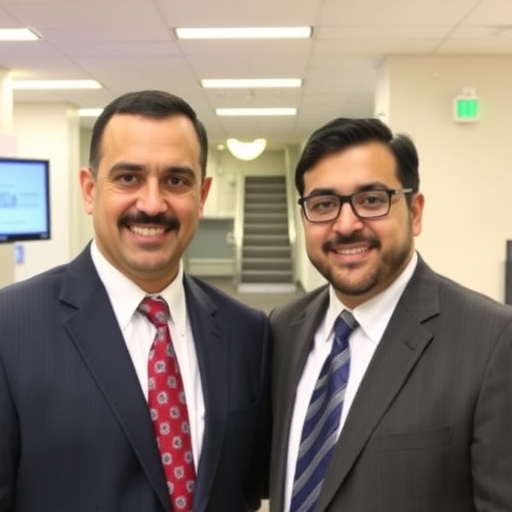
In a groundbreaking advancement at the intersection of nuclear medicine and nephrology, the Society of Nuclear Medicine and Molecular Imaging (SNMMI) has bestowed its prestigious 2026 Mars Shot Research Award upon Dr. Arvin Haj-Mirzaian and Dr. Pedram Heidari. These two distinguished physicians and researchers, affiliated with Massachusetts General Hospital and Harvard Medical School, have been allocated a $100,000 grant to spearhead a pioneering study examining the utility of ^18F-NaF PET/CT imaging for the early detection and diagnosis of calciphylaxis in patients undergoing dialysis. This rare yet devastating vascular calcification disorder remains notoriously difficult to diagnose at its nascent stages, making this research a beacon of hope for thousands of high-risk individuals suffering from end-stage renal disease.
Calciphylaxis manifests through pathological calcification and occlusion of dermal and subcutaneous arterioles, leading to severe ischemia and necrotic skin ulcerations notoriously refractory to treatment. The disease disproportionately impacts patients on chronic hemodialysis, bearing an alarmingly high mortality rate between 30 and 50 percent within the first year of onset. The current clinical gold standard for diagnosing calciphylaxis involves invasive skin biopsies, which only carry about a 50 percent sensitivity rate, underscoring a significant clinical challenge. Such invasive methods not only delay diagnosis but also risk worsening outcomes due to misdiagnosis or tardy intervention, which is unacceptable given the dire prognosis associated with this condition.
Dr. Haj-Mirzaian explains the limitations of existing diagnostic protocols: while biopsies provide tissue-level confirmation, their invasiveness combined with sampling error can mislead clinicians, undermining timely therapeutic decision-making. The landscape for noninvasive imaging biomarkers that can sensitively and specifically detect calciphylaxis remains a critical unmet need within nephrology and dermatology communities. This dire clinical gap is precisely where the study on ^18F-sodium fluoride (NaF) positron emission tomography/computed tomography (PET/CT) imaging as a molecular biomarker holds transformative promise. ^18F-NaF is a radiotracer renowned for its affinity for hydroxyapatite, effectively enabling visualization of microcalcifications at the molecular level before morphologic changes become clinically evident.
The ongoing prospective clinical trial meticulously includes three patient cohorts: those dialysis-dependent with clinical suspicion of calciphylaxis, high-risk dialysis patients without overt symptoms, and lower-risk individuals serving as control groups. All participants undergo ^18F-NaF PET/CT scans whose findings will then be rigorously evaluated against a composite reference including clinical assessment, histopathological data where available, and longitudinal clinical outcomes. This comprehensive approach ensures robust validation of ^18F-NaF PET/CT’s diagnostic accuracy and its capacity to discriminate disease presence amidst overlapping clinical presentations.
Pedram Heidari highlights an exciting clinical implication of the study: early and precise molecular imaging with ^18F-NaF PET/CT could revolutionize the diagnostic paradigm by enabling timely medical interventions. These may encompass advanced wound care strategies, pharmacological regimens such as sodium thiosulfate therapy, and the cessation of medications like warfarin that exacerbate vascular calcification. The potential to shift from a late-stage, invasive diagnostic model to an early, noninvasive, molecularly precise approach could drastically reduce morbidity and mortality, reshaping clinical management and patient prognoses.
The scientific endeavors of Dr. Haj-Mirzaian synergize molecular imaging innovations with genomic data and radiochemistry to unravel disease biology complexities. His research aims to harness PET imaging not merely as a diagnostic tool but as a precision medicine instrument capable of tailoring therapeutic regimens to individual molecular profiles. His academic journey, initiated with a medical degree from Shahid Beheshti University of Medical Sciences in Tehran, has been marked by a commitment to translational research that bridges molecular science and clinical practice.
Correspondingly, Dr. Heidari’s expertise resides in advancing targeted radiopharmaceuticals and theranostics tailored to oncology, accentuating precision imaging’s role in optimizing therapeutic dosing. Having earned his medical credentials from the University of Medical Sciences in Tehran, he has continually focused on the innovation pipeline from molecular imaging probe development to clinical application, thus enhancing patient-specific management of complex diseases including malignancies and now extending into calciphylaxis diagnostics.
The SNMMI Mars Shot Research Fund, inaugurated in 2023, epitomizes a visionary investment into the future realm of nuclear medicine. It provides critical resources to fast-track novel nuclear imaging and radiopharmaceutical therapies, alongside data science initiatives, thereby fostering advancements that promise real-world patient impact. This fund exemplifies the translational ethos required to materialize cutting-edge research discoveries into clinical tools or therapies capable of altering disease trajectories and improving life quality.
Calciphylaxis, often overshadowed by other renal complications, now emerges into the spotlight as this research endeavors to utilize molecular imaging to decode early disease mechanisms and identify patients before irreversible necrosis ensues. If successful, this paradigm shift could inaugurate a new frontier in the diagnostic armamentarium against microvascular calcific diseases, with the broader implications potentially resonating in cardiovascular and metabolic disorders marked by pathological calcification.
Importantly, the study’s multifaceted methodology—integrating advanced PET imaging with clinical and histological validation—sets a benchmark for rigor in translational research. By deploying sophisticated molecular imaging probes that target pathological calcification with high sensitivity, clinicians may soon gain unprecedented insight into the timing and extent of vascular injury. This could ultimately enable preemptive interventions tailored to interrupt disease progression at its molecular inception.
Moreover, this seminal work aligns with the emerging domain of theranostics, where diagnostic imaging is seamlessly combined with targeted therapy to deliver precision medicine. Innovations such as ^18F-NaF PET/CT not only refine diagnosis but may also guide treatment decisions and monitor therapeutic efficacy dynamically, ushering in an era of truly personalized nephrology care. The implications for reducing healthcare burdens through improved survival and reduced complications in dialysis populations are profound.
In sum, the award-winning research led by Drs. Haj-Mirzaian and Heidari epitomizes the cutting edge of nuclear medicine’s potential to revolutionize complex disease management. By illuminating calciphylaxis’s hidden molecular footprint with ^18F-NaF PET/CT, they aspire to overcome longstanding diagnostic barriers, enhance patient outcomes, and inspire further innovation at the nexus of molecular imaging and precision medicine. This project not only promises immediate clinical benefits but also lays foundational knowledge that could transform imaging sciences for years to come.
This bold initiative heralds a transformative leap forward in nuclear imaging applied to a vexing vascular calcification syndrome, with implications that could ripple across nephrology, dermatology, and beyond. As this clinical trial unfolds, the medical community watches closely, hopeful that this technology will soon transition from experimental to essential clinical practice, delivering on the promise of better, earlier detection and ultimately improved lives for patients suffering from calciphylaxis.
Subject of Research: Early detection and diagnosis of calciphylaxis in dialysis-dependent patients using ^18F-NaF PET/CT molecular imaging.
Article Title: Not explicitly stated in the source content.
News Publication Date: March 19, 2026
Web References: SNMMI – Society of Nuclear Medicine and Molecular Imaging
References: Not provided in the original source.
Image Credits: Image courtesy of SNMMI.
Keywords: Molecular imaging, Medical imaging, Personalized medicine, Calciphylaxis, ^18F-NaF PET/CT, Nuclear medicine, Vascular calcification, Dialysis, Theranostics, Precision medicine, Radiopharmaceuticals, Early diagnosis
Tags: ^18F-NaF PET/CT imaging for calciphylaxiscalciphylaxis in dialysis patientschronic hemodialysis patient careearly diagnosis of vascular calcificationend-stage renal disease complicationsHarvard Medical School medical innovationhigh-risk vascular disease detectionMassachusetts General Hospital nephrology researchnon-invasive imaging techniquesnuclear medicine research awardsrare vascular calcification disordersSNMMI Mars Shot Research Fund