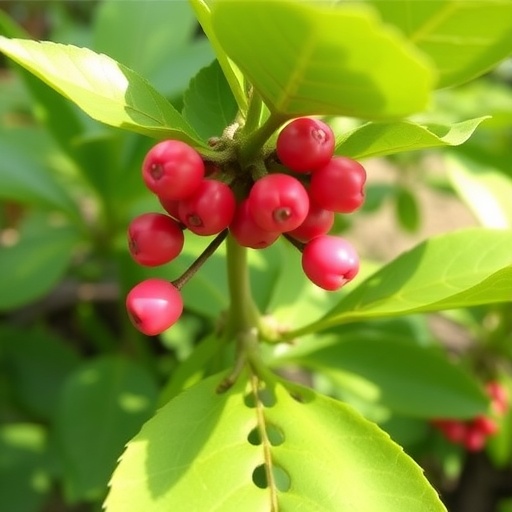
Recent investigations have revealed the adaptive mechanisms employed by the Syzygium cumini, or black plum, seedlings in response to varying levels of drought stress. The research conducted by Chowdhury and colleagues emphasizes the vital influences of mild and moderate drought conditions on the physiological and biochemical characteristics of this tropical species. Understanding how these seedlings cope with reduced water availability not only sheds light on plant resilience but also provides insights that could be applied in agricultural practices amidst changing climatic conditions.
Drought stress is among the most critical abiotic factors affecting plant growth and development. Its repercussions can lead to significant declines in crop yields and can threaten the survival of various plant species. The ability of plants to withstand periods of water deficit is crucial for their survival in arid and semi-arid environments. Given the increasing frequency and intensity of droughts associated with climate change, deciphering the coping mechanisms of species like Syzygium cumini becomes paramount. This study highlights the significance of moderate stress in promoting resilience, offering a counterintuitive perspective on the conventional understanding of plant stress responses.
The researchers meticulously implemented controlled experiments to evaluate the impact of drought stress on Syzygium cumini seedlings. By adjusting the moisture levels in their growing medium, they subjected the plants to varying intensities of drought, ranging from mild to moderate. Their findings provide a wealth of information regarding physiological adaptations, such as changes in leaf water potential, stomatal conductance, and photosynthetic efficiency during stress periods. These adaptations are vital for sustaining physiological functions and maintaining growth rates when faced with water scarcity.
Biochemical responses play a central role in how plants handle stress. The study dissected the alterations in various metabolites, including antioxidants, that Syzygium cumini produces as a response to drought. The researchers found that mild drought conditions triggered an increase in certain antioxidant compounds, aiding in combating oxidative stress that often results from water limitation. By mitigating damage at the cellular level and maintaining redox balance, these biochemical mechanisms are crucial for plant survival during adverse conditions.
Additionally, the study examined the role of plant hormones in mediating stress responses. Hormones like abscisic acid (ABA) are known to regulate several physiological processes under drought conditions. The findings illustrated that moderate drought led to elevated levels of ABA, which in turn prompted stomatal closure as a means to conserve water. This hormonal regulation forms a feedback loop that helps plants fine-tune their responses, balancing water conservation with the need for photosynthesis, thereby ensuring survival during periods of limited resources.
The implications of these findings extend beyond basic science; they have significant applications in agricultural systems. With the ever-growing global population, ensuring food security in the face of drought becomes critically important. The insights gathered from how Syzygium cumini seedlings acclimatize to water stress could be instrumental in developing drought-resistant crop varieties. By understanding the genetic and physiological basis of resilience, breeders can help cultivate plants that can thrive in increasingly stressed environments.
Moreover, the findings encourage reevaluation of agricultural practices in water-scarce regions. Instead of wholly preventing drought exposure, integrating strategies that include mild stress could lead to stronger plants capable of withstanding harsher conditions. Managed stress exposure may enhance root development, improve nutrient uptake, and ultimately increase yield. Therefore, this research not only enriches our understanding of plant physiology but also propels forward-thinking agricultural methodologies.
As the climatic conditions around the globe continue to shift, the resilience showcased by Syzygium cumini serves as a model for other species, both wild and cultivated. Exploring the genetic diversity within this species may further reveal pathways to resilience that could be harnessed in agricultural and conservation practices. Collaboration between ecologists, geneticists, and agricultural scientists will be paramount in the pursuit of sustainable practices informed by plant adaptation and resilience mechanisms.
The broader environmental context amplified by this study cannot be overlooked. Understanding how plant species respond to water scarcity is crucial for ecosystem management. Preserving biodiversity and ensuring the survival of various species in their native habitats depend heavily on insights into their adaptive capacities. The research on Syzygium cumini could signify a step towards a more integrated approach in conservation strategies focused on enhancing plant health while anticipating the challenges posed by climate change.
In conclusion, the resilience of Syzygium cumini seedlings under mild and moderate drought stress highlights a complex interplay of physiological and biochemical mechanisms that allow these plants to thrive in adverse conditions. As climate change looms larger on the horizon, studies like this one pave the way for innovative approaches to sustaining both agricultural systems and natural ecosystems. The knowledge generated holds promise not only for improving crop varieties but also for fostering a deeper appreciation of plant capabilities in adapting to a rapidly changing world.
Subject of Research: Resilience mechanisms of Syzygium cumini seedlings under drought stress conditions.
Article Title: Mild and moderate drought stress enhances resilience in Syzygium cumini seedlings by modulating physio-biochemical attributes.
Article References:
Chowdhury, T., Ador, M.A.H., Jui, L.A. et al. Mild and moderate drought stress enhances resilience in Syzygium cumini seedlings by modulating physio-biochemical attributes.
Discov. Plants 2, 357 (2025). https://doi.org/10.1007/s44372-025-00441-8
Image Credits: AI Generated
DOI: https://doi.org/10.1007/s44372-025-00441-8
Keywords: Plant resilience, drought stress, physiological adaptation, biochemical response, Syzygium cumini, agricultural practices.
Tags: agricultural practices for drought conditionsbiochemical adaptations in plantsblack plum seedling survival techniquesclimate change impact on plant growthcontrolled experiments on drought effects.coping strategies in arid environmentsdrought stress effects on seedlingsmoderate drought benefits for plantsphysiological responses to droughtplant resilience against abiotic stressSyzygium cumini resilience mechanismswater deficit tolerance in tropical species