A controlled progressive drought study conducted in Australia demonstrates that water limitation significantly alters diurnal and seasonal live fuel moisture content in eucalypt species, creating species-specific windows of heightened wildfire danger. These dynamic physiological shifts provide vital insights into how changing climate conditions interact with daily weather to dictate forest flammability. Published in Fire Ecology, the research reveals that live fuel moisture exhibits consistent daily cycles marked by lowest values at midday and partial recovery by late afternoon, with drought steepening these daily drops. By monitoring three-year-old potted saplings of Eucalyptus torquata and Corymbia maculata across a seventy-three-day trial at the Australian National University, researchers discovered contrasting physiological strategies that govern when sapling foliage reaches dangerous flammability thresholds. The empirical results confirm that while diurnal atmospheric fluctuations depress foliar moisture during peak midday hours, progressive drought accelerates these declines. In drought-sensitive species, this interaction rapidly pushes live fuel moisture below critical ignition benchmarks, whereas more resilient trees maintain higher moisture levels and delay acute flammability risks.
Wildfires have increased in frequency and intensity across Australia over recent decades, exemplified by the catastrophic 2019 to 2020 Black Summer fires that scorched more than eighteen million hectares of land. Native eucalypts comprise nearly eighty percent of Australia’s forest trees, possessing physiological, structural, and biochemical traits that strongly influence landscape flammability and fire spread. Live fuel moisture content, defined as the percentage ratio of water mass to dry vegetative mass, represents a vital physiological determinant of flammability because leaf water absorbs heat during evaporation, delaying ignition and mitigating combustion intensity. As plants transpire throughout the day, daytime warming and declining relative humidity increase vapor pressure gradients between foliage and ambient air, reducing fuel moisture. When leaves lose water, drier fuels ignite more readily and accelerate fire propagation. Although seasonal moisture trajectories are widely recognized, limited research has quantified how live fuel moisture and interrelated traits co-vary diurnally under progressive drought.
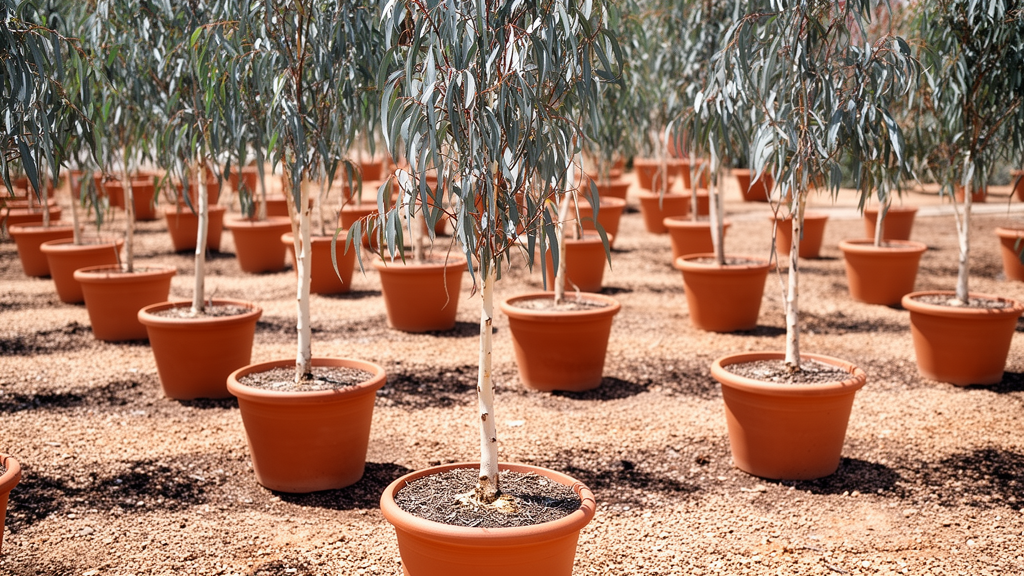
To evaluate these diurnal and drought-induced trait dynamics, researchers established an outdoor experiment using thirty-six three-year-old saplings sourced from a commercial nursery in New South Wales. The investigation examined eighteen individuals each of Eucalyptus torquata and Corymbia maculata, ranging from 1.5 to 2.5 meters in height and arranged in a completely randomized layout. The experimental design assigned nine trees per species to a drought treatment and nine to an irrigated control. Control plants received approximately two liters of water three times weekly, while drought-treated trees were subjected to complete water withholding. Researchers also wrapped the pots of drought-treated plants in heavy-duty plastic bags to limit water intake. The study ran from 17 July to 27 September 2024 on the Acton campus of the Australian National University, exposing all specimens to prevailing atmospheric conditions across late winter and early spring.
Foliage collections occurred across six distinct sampling dates on days 1, 8, 15, 29, 50, and 73, capturing progressive drought stages over the ten-week study period. To monitor diurnal variation, investigators sampled each tree three times daily at four-hour intervals: morning between 08:00 and 09:00, midday between 12:00 and 13:00, and late afternoon between 16:00 and 17:00. At each interval, five mature leaves were harvested from branches above one meter in height and transported on ice in sealed plastic bags. Laboratory processing measured fresh weight using an electronic balance accurate to 0.1 milligrams, while foliar surface area was quantified with Easy Leaf Area digital imaging software. Samples were oven-dried at 105 degrees Celsius for twenty-four hours to determine dry mass, enabling researchers to compute leaf water per area, dry matter content, specific leaf area, and percentage live fuel moisture following established physiological equations.
Ambient atmospheric drivers were evaluated using meteorological data from the Canberra Airport Weather Station nine kilometers away, where temperatures ranged from 1.1 to 18.1 degrees Celsius, relative humidity spanned 25.76 to 99.99 percent, and dew points varied from minus 1.80 to 12.70 degrees Celsius. Statistical assessments applied linear mixed-effects models fitted by restricted maximum likelihood separately for each species, incorporating tree identity as a random intercept to account for repeated temporal measurements. Diurnal models incorporated sampling time, vapor pressure deficit, dew point, and their interaction terms as fixed effects, excluding fuel moisture observations above 250 percent as outliers. Long-term drought progression was evaluated through models incorporating sampling day, treatment condition, and interaction terms, supported by daily Welch’s t-tests and partial eta-squared calculations to pinpoint the exact sampling dates when drought-stressed plants diverged significantly from well-watered controls.
The empirical results revealed clear diurnal patterns in live fuel moisture across both species, characterized by morning peaks, midday declines, and late-afternoon recoveries. In Eucalyptus torquata, control plants averaged 97.80 percent moisture in the morning, 97.46 percent at midday, and 100.46 percent in late afternoon, while droughted specimens registered 82.17 percent, 78.27 percent, and 82.63 percent across identical sampling times. Similarly, Corymbia maculata controls recorded 97.52 percent in the morning, 95.80 percent at midday, and 100.76 percent in late afternoon, compared to drought values of 86.17 percent, 80.78 percent, and 85.70 percent. Linear mixed-effects modeling indicated that midday vapor pressure deficit was 0.496 kilopascals higher than morning values in Eucalyptus torquata and 0.490 kilopascals higher in Corymbia maculata, driving midday moisture drops through significant interactions between vapor pressure deficit, dew point, and collection time. These atmospheric interactions demonstrate how daily weather rhythms periodically depress fuel moisture levels.
Across the seventy-three-day trial, the impact of progressive water deprivation became pronounced after four weeks of treatment. Variations in live fuel moisture remained negligible from day 1 to day 15, but statistically significant treatment differences emerged on day 29 for Eucalyptus torquata and day 50 for Corymbia maculata. In Eucalyptus torquata, drought treatment reduced fuel moisture by an average of 23.20 percentage points with a partial eta-squared of 0.114, while sampling day accounted for 39.7 percent of the observed variance. By comparison, drought reduced fuel moisture in Corymbia maculata by an average of 15.04 percentage points with a partial eta-squared of 0.044, with sampling day explaining 20.2 percent of trait variance. These contrasting statistical values highlight substantial differences in drought sensitivity between the two species, demonstrating that Eucalyptus torquata experienced earlier and more severe dehydration than Corymbia maculata under identical water limitation.
Eucalyptus torquata exhibited marked physiological vulnerability to sustained water withholding, displaying sharp declines in live fuel moisture and leaf water per area alongside increases in dry matter content. Its fuel moisture dropped from 129.5 percent on day 1 to below 60 percent by day 73, showing significant treatment divergence on day 29 that intensified through day 50 and day 73. Foliar water thickness, quantified as leaf water per area, declined by approximately 65 percent under drought, falling from 0.045 to 0.012 grams per square centimeter and resulting in the mortality of five saplings post-experiment. Concurrently, dry matter content increased from 0.395 to 0.819 grams per gram, representing a sixty percent rise driven by tissue water loss rather than new biomass production. Specific leaf area decreased by 18 percent from 29.8 to 23.8 square centimeters per gram, consistent with leaf thickening as water was lost.
In contrast, Corymbia maculata displayed greater drought tolerance, delaying significant fuel moisture reductions until day 50, eventually reaching 54.6 percent on day 73 under drought. Leaf water per area showed no significant differences through day 50, declining by only 25 percent from 0.027 to 0.014 grams per square centimeter by day 73. Dry matter content increased by twenty-six percent, rising from 0.451 to 0.686 grams per gram over seventy-three days, while specific leaf area remained relatively unchanged, shifting modestly from 44.4 to 43.5 square centimeters per gram. Trait covariation analyses demonstrated that water loss represented the primary driver of fuel moisture decline during progressive drought. The strongest statistical association occurred between live fuel moisture and leaf water per area in drought-treated plants, exhibiting a robust correlation coefficient of 0.81 compared to 0.26 in controls, whereas correlations between fuel moisture and specific leaf area remained weak under both drought and control conditions.
These findings have practical implications for wildfire management and satellite monitoring, particularly regarding ignition thresholds established by the National Wildfire Coordinating Group, where fuel moisture below 80 percent increases flammability and values below 60 percent represent critical ignition danger. Drought-treated plants frequently recorded fuel moisture below these thresholds, with Eucalyptus torquata falling below 60 percent by day 73 and reaching sub-threshold levels earlier than Corymbia maculata. Because peak fire danger coincides with midday vapor pressure deficit peaks, satellite systems like Oz-Fuel and Himawari-8 can optimize fuel monitoring by scheduling overpasses when foliar moisture is lowest and solar angles drop below thirty degrees. The authors acknowledged study limitations, noting that the winter-spring trial experienced maximum temperatures of 18.1 degrees Celsius, meteorological data originated nine kilometers away, and only two species were evaluated. Future research should examine summer heat extremes, monitor additional co-occurring species, measure local microclimates, and incorporate direct measurements of stomatal conductance, water potential, and soil moisture.
Subject of Research: Diurnal and seasonal dynamics of live fuel moisture content and leaf traits under drought in eucalyptus species
Article Title: Drought-induced diurnal and seasonal variability in fuel moisture content and leaf traits in two eucalyptus species: implications for wildfire behaviour
Article References: Itumo, M., Younes, N., Yebra, M., Setiawan, L., & Richardson, A. (2026). Drought-induced diurnal and seasonal variability in fuel moisture content and leaf traits in two eucalyptus species: implications for wildfire behaviour. Fire Ecology, 22(1), Article 104. https://doi.org/10.1186/s42408-026-00551-y
Image Credits: AI Generated
DOI: 10.1186/s42408-026-00551-y
Keywords: live fuel moisture content, Eucalyptus torquata, Corymbia maculata, leaf water per area, dry matter content, specific leaf area, wildfire behaviour, diurnal variation, progressive drought, vapour pressure deficit, equivalent water thickness, vegetation flammability, ignition thresholds, Oz-Fuel, Himawari-8, linear mixed-effects models, foliar traits, Australian forests
News Source: Drew Townsend. (November 11, 2026). Drought Accelerates Midday Fuel Moisture Loss in Potted Eucalypt Saplings. Scienmag.