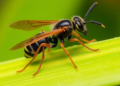
A leaf extract from Dracaena angolesnsis has emerged as a striking candidate for mosquito control, according to a peer-reviewed study published in BMC Biotechnology on 17 October 2026. The research, led by Aditi Pal and colleagues, tested the plant’s leaves against Aedes aegypti, the mosquito species that transmits dengue, yellow fever and other vector-borne diseases, and then examined whether the extract poses a risk to non-target aquatic life using adult zebrafish.
The motivation is straightforward: insecticide resistance in mosquito populations keeps rising, and chemical insecticides carry environmental hazards, making eco-friendly alternatives increasingly urgent. Phytochemical screening of the leaves revealed a suite of bioactive compounds with known insecticidal potential, including flavonoids, phenols, terpenoids, sterols, tannins and alkaloids.
Bioassays covering the mosquito’s larval, pupal and adult stages showed significant mortality across different solvent extracts, with aqueous and methanol extracts performing best. The lowest larval LC50 value, the concentration that kills half of exposed larvae, was recorded for the aqueous extract at 12.97 ppm. Strong pupicidal and adulticidal activities were also documented.
The most technically revealing part of the study involved the voltage-gated sodium channel gene known as kdr, short for knockdown resistance, which is a classic molecular marker of insecticide resistance. Using RT-qPCR, the researchers measured marked upregulation of kdr transcripts in treated larvae, with expression climbing from 90.65-fold to 10,524-fold relative to untreated control larvae from the same laboratory-maintained field strain. In other words, the mosquitoes mounted a substantial resistance-related transcriptional response, yet they died anyway.
Complete adult mortality of 100 percent was recorded at concentrations of 250 and 500 ppm following a 24-hour recovery period. Larval mortality reached 91.2 plus or minus 1.8 percent at 24 hours and climbed to 100 percent by 48 hours at 500 ppm. The authors interpret this as evidence that the extract’s multi-target action effectively suppressed mosquito survival despite the strong induction of kdr transcripts, indicating that the botanical mixture can overcome resistance-related defense mechanisms that often defeat single-target synthetic insecticides.
Environmental safety was then assessed in adult zebrafish (Danio rerio), a standard vertebrate model in ecotoxicology, exposed to concentrations ranging from 31.25 to 500 ppm over 96 hours. The extract produced only mild, concentration-dependent behavioral alterations at the highest tested concentration of 500 ppm, including transient changes in swimming orientation and social schooling. Zero mortality and zero structural deformities were recorded across all tested concentrations.
Those ecotoxicological results matter because a mosquitocide that kills larvae in the same water bodies where fish live is only useful if it leaves non-target vertebrates unharmed at effective doses. The gap between the concentrations that eliminate mosquitoes and the concentrations that merely nudge zebrafish behavior is a key part of the safety profile reported here.
The authors conclude that D. angolesnsis has high potential as an insecticidal plant for mosquito control. As with any early-stage bioassay study, the findings come from controlled laboratory conditions with a laboratory-maintained field strain, and the article is currently shared as an accepted manuscript that will be replaced by the final version of record.
Subject of Research: Botanical mosquitocidal activity of Dracaena angolesnsis leaf extract against Aedes aegypti and its ecotoxicity in zebrafish
Article Title: Dracaena angolesnsis leaf extract as a botanical mosquitocide: bioefficacy against Aedes aegypti, voltage-gated sodium channel (kdr) gene expression, and ecotoxicological evaluation in Danio rerio
Article References: Pal, A., Pradhan, A. K., Sahu, M. C., Das, B., & Pati, S. (2026). Dracaena angolesnsis leaf extract as a botanical mosquitocide: bioefficacy against Aedes aegypti, voltage-gated sodium channel (kdr) gene expression, and ecotoxicological evaluation in Danio rerio. BMC Biotechnology. https://doi.org/10.1186/s12896-026-01232-z
Image Credits: AI Generated
DOI: 10.1186/s12896-026-01232-z
Keywords: Dracaena angolesnsis, Aedes aegypti, botanical insecticide, mosquito control, kdr gene, voltage-gated sodium channel, larvicide, zebrafish, ecotoxicology, insecticide resistance, RT-qPCR, plant extracts
News Source: Gregory Coleman. (October 28, 2026). Dracaena leaf extract kills insecticide-resistant Aedes aegypti mosquitoes while sparing zebrafish. Scienmag.