


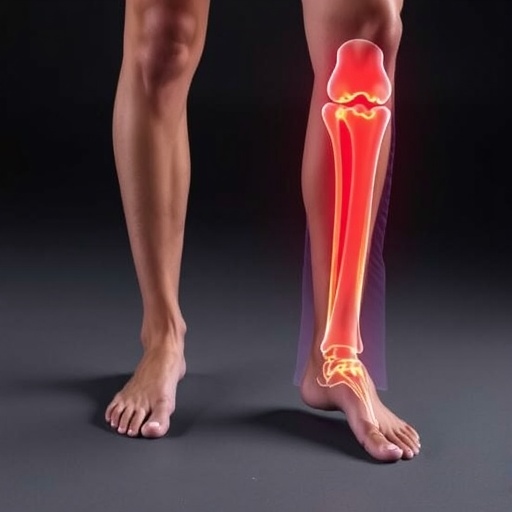
Total joint arthroplasty (TJA), a surgical intervention encompassing total hip arthroplasty (THA) and total knee arthroplasty (TKA), has been a transformative procedure for millions suffering from debilitating joint conditions. Widely recognized for its capacity to improve mobility and elevate quality of life, the surgery addresses severe osteoarthritis and other degenerative joint diseases by replacing damaged joints with prosthetic components. While the primary clinical goal is pain relief and restoration of function, an often-presumed secondary benefit has been the facilitation of weight loss. This assumption is driven by the expectation that improved mobility post-surgery would naturally result in increased physical activity and consequent reduction in body weight. However, emerging evidence now challenges this long-held belief, suggesting the relationship between joint replacement and sustained weight loss may be more complex than previously appreciated.
A groundbreaking retrospective cohort study conducted at a leading tertiary academic medical center, encompassing a vast sample size of 36,993 adult patients undergoing primary TJA from 2016 to 2021, represents one of the most comprehensive analyses to date examining weight trajectories post-joint replacement. This investigation meticulously recorded patients’ body mass index (BMI) and weight at the time of surgery and subsequently at standard three-month postoperative intervals, allowing a granular assessment of temporal weight changes with stratification by preoperative BMI categories: under 25, 25 to under 30, 30 to under 35, 35 to under 40, and 40 kg/m² or greater. The scale and duration of the follow-up provided an unprecedented opportunity to discern subtle trends and patterns across different weight strata.
The findings of this extensive analysis elucidate a nuanced weight profile following both THA and TKA procedures. In the immediate postoperative period spanning one to three months, modest reductions in BMI were observed—averaging approximately a 0.55% decrease for hip replacements and a slightly higher 1.15% decrease for knee replacements. These early decreases in BMI may reflect factors such as perioperative metabolic adjustments, postoperative fluid shifts, or decreased caloric intake during initial recovery phases rather than true fat mass loss driven by enhanced activity. Importantly, these short-term reductions, although statistically detectable, were considerably more limited in magnitude than conventional clinical expectations might predict.
As the postoperative period extended beyond the initial quarter, the trajectory of weight change substantially shifted. By the 13- to 15-month interval, the net change in BMI almost reverted to baseline for patients undergoing THA, with only a negligible 0.09% reduction remaining. Patients undergoing TKA fared marginally better but still saw weight changes approach pre-surgical levels, with an average BMI decline of just 0.65%. This pattern of weight rebound underscores a critical finding: the early postoperative weight loss observed is transient and does not typically translate into lasting, clinically meaningful reductions in body mass. The temporary nature of weight loss after joint arthroplasty challenges prevailing assumptions about the surgery’s role as a catalyst for durable weight management.
The study’s stratification by baseline BMI revealed an intriguing pattern among patients with severe obesity—defined as BMI values of 40 kg/m² or higher. This subgroup displayed the most pronounced initial reduction in BMI, averaging a 1.30% decrease at 1–3 months post-surgery. However, this early improvement did not persist; by 13–15 months, these individuals exhibited a rebound effect, gaining weight to slightly surpass their initial BMI by approximately 0.21%. This rebound phenomenon suggests that while some obese patients may initially shed excess weight, potentially from the combined effect of surgical stress and altered behavior during recovery, sustaining this loss amidst metabolic, behavioral, and biomechanical challenges proves difficult.
Looking holistically across all BMI groups, the absolute magnitude of both BMI and body weight changes remained minimal throughout the postoperative year. A critical inflection point was identified between seven and nine months after surgery, marking a turning point where patients generally transitioned from modest weight reduction or stabilization toward gradual weight regain. This timing aligns with the waning of acute postoperative restrictions and the resumption of habitual lifestyle patterns, implying that the absence of structured, integrated weight management interventions limits patients’ capacity to achieve and maintain weight loss following TJA.
The implications of these findings resonate widely within orthopedic, obesity, and rehabilitation domains. The absence of significant, sustained postoperative weight loss following TJA challenges the prevailing narrative that joint replacement surgery inherently induces favorable metabolic and weight outcomes via enhanced mobility. Instead, the data advocate for the routine inclusion of comprehensive perioperative weight management protocols that extend beyond the surgical episode. Multidisciplinary approaches encompassing nutritional counseling, behavioral therapy, physical activity promotion, and perhaps pharmacologic interventions may be crucial to truly harness the functional improvements gained from TJA and convert them into lasting metabolic health benefits.
Moreover, the data have high clinical relevance to preoperative patient counseling. Surgeons and allied health professionals should temper expectations regarding weight loss post-TJA and discuss realistic outcomes with patients, particularly those with obesity, who may anticipate the surgery as a means of weight reduction. Recognizing the transient and limited nature of weight changes after surgery can foster more informed shared decision-making and encourage active patient engagement in adjunctive lifestyle modification programs.
Further research is essential to unravel the mechanisms underpinning the observed weight trajectories. Disentangling the roles of postoperative pain, physical activity levels, nutritional intake, psychological factors, and metabolic adaptability will be critical. Additionally, exploring personalized interventions tailored to BMI substrata could identify effective strategies to optimize weight management outcomes post-arthroplasty.
This landmark study highlights the complex interplay between musculoskeletal health, surgical intervention, and metabolic regulation. By leveraging an unprecedented analytical scale and methodological rigor, it reframes our understanding of the weight consequences of joint replacement surgery. Ultimately, these insights contribute to evolving best practices that align surgical success with broader health goals, paving the way for more holistic patient care paradigms that integrate orthopedics, metabolic health, and rehabilitation science.
As the burden of obesity and osteoarthritis continues to rise globally, elucidating the subtle dynamics of postoperative weight change becomes increasingly vital. The integration of weight management into the perioperative care of TJA patients could not only magnify the functional benefits of surgery but also mitigate risks of comorbidities, reduce mechanical joint load, and enhance long-term prosthesis survival. This study forms a foundational evidence base, challenging assumptions and catalyzing future innovation in the comprehensive management of patients undergoing joint replacement surgery.
In summary, while total hip and knee arthroplasty unequivocally deliver improved mobility and life quality, their capacity to produce meaningful, lasting weight loss is limited. Early postoperative BMI reductions are modest and transient, with most patients eventually reverting to their original weight or gaining weight above baseline, especially those with severe obesity. These nuanced findings underscore the imperative for integrated and sustained perioperative weight management strategies to optimize patient outcomes and fully realize the health potential of joint arthroplasty.
Subject of Research: Weight and BMI changes following total hip and knee arthroplasty surgeries, with a focus on long-term postoperative weight trajectories stratified by baseline BMI.
Article Title: Is lower extremity joint replacement surgery associated with weight loss? An institutional retrospective study of 36,993 cases.
Article References:
Ren, R., Giannakis, P., Zhong, H. et al. Is lower extremity joint replacement surgery associated with weight loss? An institutional retrospective study of 36,993 cases. Int J Obes (2026). https://doi.org/10.1038/s41366-025-02014-x
Image Credits: AI Generated
DOI: 03 January 2026
Keywords: Total joint arthroplasty, total hip arthroplasty, total knee arthroplasty, weight loss, BMI change, obesity, postoperative weight trajectory, perioperative weight management, functional mobility, longitudinal cohort study
Tags: complexities of weight loss and joint healthhip joint replacement surgeryimpact of joint replacement on BMIknee joint replacement surgerylong-term weight management after surgerymobility improvement post-surgeryosteoarthritis treatment optionspatient outcomes after TJAphysical activity post-arthroplastyretrospective cohort study joint replacementtotal joint arthroplastyweight loss after joint replacement



