• HOME
  • NEWS
  • EXPLORE
    • CAREER
      • Companies
      • Jobs
    • EVENTS
    • iGEM
      • News
      • Team
    • PHOTOS
    • VIDEO
    • WIKI
  • BLOG
  • COMMUNITY
    • FACEBOOK
    • INSTAGRAM
    • TWITTER
Saturday, December 13, 2025
BIOENGINEER.ORG
No Result
View All Result
  • Login
  • HOME
  • NEWS
  • EXPLORE
    • CAREER
      • Companies
      • Jobs
        • Lecturer
        • PhD Studentship
        • Postdoc
        • Research Assistant
    • EVENTS
    • iGEM
      • News
      • Team
    • PHOTOS
    • VIDEO
    • WIKI
  • BLOG
  • COMMUNITY
    • FACEBOOK
    • INSTAGRAM
    • TWITTER
  • HOME
  • NEWS
  • EXPLORE
    • CAREER
      • Companies
      • Jobs
        • Lecturer
        • PhD Studentship
        • Postdoc
        • Research Assistant
    • EVENTS
    • iGEM
      • News
      • Team
    • PHOTOS
    • VIDEO
    • WIKI
  • BLOG
  • COMMUNITY
    • FACEBOOK
    • INSTAGRAM
    • TWITTER
No Result
View All Result
Bioengineer.org
No Result
View All Result
Home NEWS Science News Health

Do neonicotinoids inhibit the development of anti-predatory behaviors in wood frogs?

Bioengineer by Bioengineer
October 25, 2018
in Health
Reading Time: 2 mins read
0
Share on FacebookShare on TwitterShare on LinkedinShare on RedditShare on Telegram
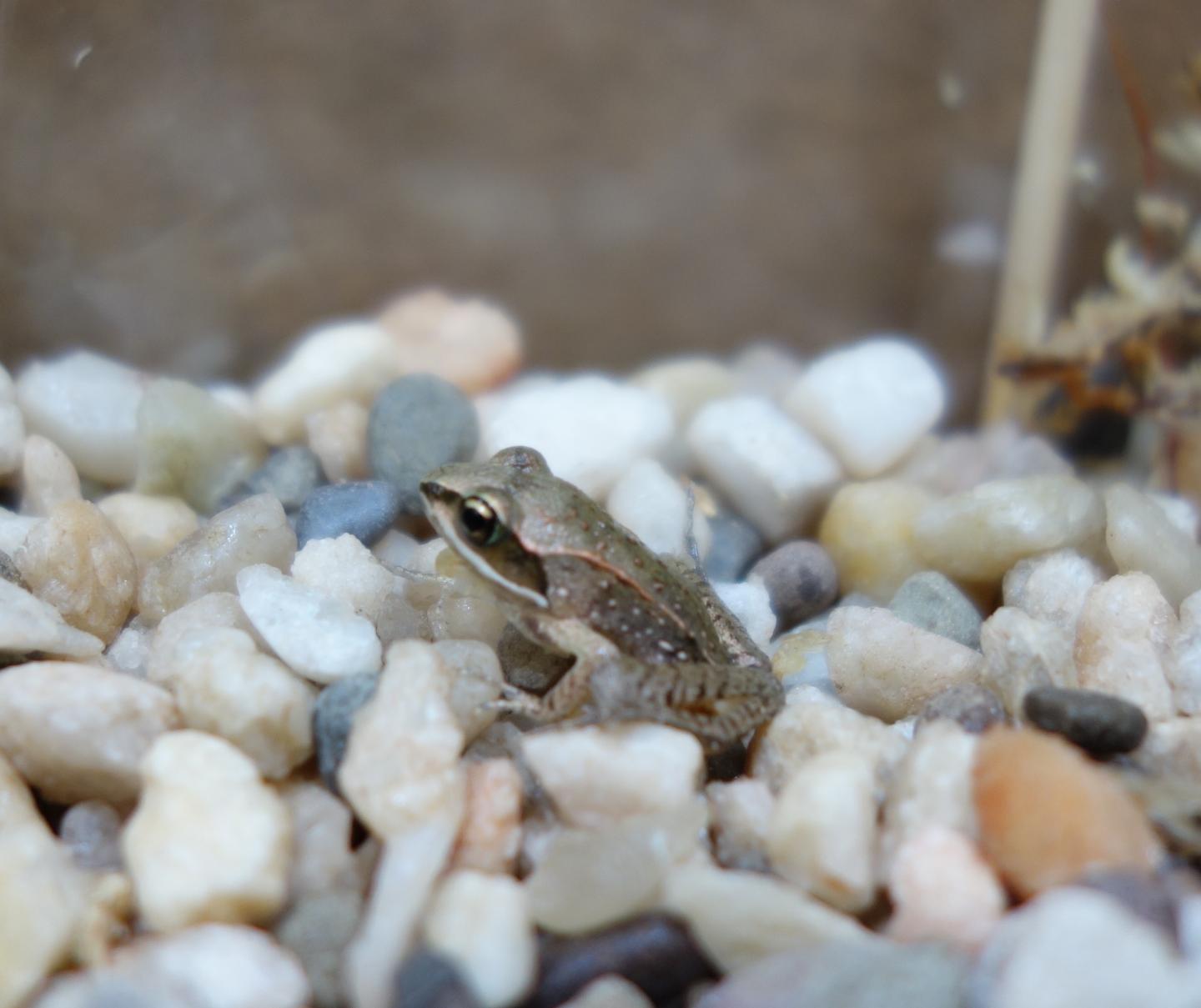
IMAGE

Credit: Stacey Robinson

In a recent study published in the journal Environmental Toxicology and Chemistry, scientists investigated the effects of popular agricultural insecticides – neonicotinoids – on wood frogs. Neonicotinoids are highly water soluble and can be easily carried via storm water to end up in streams and lakes. While the effect of these insecticides on growth and reproduction of wood frogs has been shown to be minor "environmentally relevant" concentrations – concentrations typically found in the natural environment – other types of effects have not been extensively studied.

Stacey Robinson and her co-author Stacey Lee-Jenkins evaluated the anti-predator behavior of wood frogs after exposure to neonicotinoids. Physical changes are most commonly studied, but behavioral changes can also affect the health of wood frog populations. Wood frogs employ a number of strategies and behaviors to avoid being eaten: camouflage, immobility, crouching or assuming an "anti-predator" posture, but being able to flee quickly once detected is also critical to survival. Using juvenile wood frogs that had been exposed to the insecticide as tadpoles, the researchers evaluated how likely the frogs were to respond to simulated predator attacks, as well as how fast they moved, the distance they traveled and the total number of jumps they took to escape.

The study found that when presented with a "predator," the frogs exposed to elevated levels of the insecticide as tadpoles jumped or moved less than those who had never been exposed. The good news is that both groups of frogs exhibited similar locomotive physical abilities in terms of distance jumped, number of jumps and the ability to find refuge. Robinson notes, "Behavior studies on juvenile frogs are rare; our study provides preliminary information or baseline characteristics on putative escape behavior of juvenile frogs to a mock heron attack. More work is required to develop standardized behavioral methods that have biological and population-level importance, particularly for sensitive amphibian life-stages."

Traditional ecotoxicology studies focus on the physical effects a chemical has on growth and reproduction, but this study highlights the need to evaluate behavior when assessing the effects of contaminants on wildlife populations.

###

Media Contact

Jen Lynch
[email protected]
850-469-1500
@setac_world

http://www.setac.org

Related Journal Article

http://dx.doi.org/10.1002/etc.4240

Share12Tweet7Share2ShareShareShare1

Related Posts

Hyperdynamic Circulation: A Key Obesity Indicator?

December 13, 2025

Intracranial Needle Found in Infant’s Brain: CT Discovery

December 13, 2025

Exploring Future Trends in Health Systems Research

December 13, 2025

Laser Acupuncture Boosts Post-Dialysis Fatigue and Sleep

December 13, 2025
Please login to join discussion

POPULAR NEWS

  • Scientists Uncover Chameleon’s Telephone-Cord-Like Optic Nerves, A Feature Missed by Aristotle and Newton

    Scientists Uncover Chameleon’s Telephone-Cord-Like Optic Nerves, A Feature Missed by Aristotle and Newton

    121 shares
    Share 48 Tweet 30
  • Neurological Impacts of COVID and MIS-C in Children

    108 shares
    Share 43 Tweet 27
  • Nurses’ Views on Online Learning: Effects on Performance

    69 shares
    Share 28 Tweet 17
  • NSF funds machine-learning research at UNO and UNL to study energy requirements of walking in older adults

    70 shares
    Share 28 Tweet 18

About

We bring you the latest biotechnology news from best research centers and universities around the world. Check our website.

Follow us

Recent News

Hyperdynamic Circulation: A Key Obesity Indicator?

Rethinking Vigabatrin for Infantile Spasms: Risks and Insights

Impact of LED Light on Turmeric Pigment Stability

Subscribe to Blog via Email

Enter your email address to subscribe to this blog and receive notifications of new posts by email.

Join 69 other subscribers
  • Contact Us

Bioengineer.org © Copyright 2023 All Rights Reserved.

Welcome Back!

Login to your account below

Forgotten Password?

Retrieve your password

Please enter your username or email address to reset your password.

Log In
No Result
View All Result
  • Homepages
    • Home Page 1
    • Home Page 2
  • News
  • National
  • Business
  • Health
  • Lifestyle
  • Science

Bioengineer.org © Copyright 2023 All Rights Reserved.