• HOME
  • NEWS
  • EXPLORE
    • CAREER
      • Companies
      • Jobs
    • EVENTS
    • iGEM
      • News
      • Team
    • PHOTOS
    • VIDEO
    • WIKI
  • BLOG
  • COMMUNITY
    • FACEBOOK
    • INSTAGRAM
    • TWITTER
Saturday, November 7, 2026
BIOENGINEER.ORG
No Result
View All Result
  • Login
  • HOME
  • NEWS
  • EXPLORE
    • CAREER
      • Companies
      • Jobs
        • Lecturer
        • PhD Studentship
        • Postdoc
        • Research Assistant
    • EVENTS
    • iGEM
      • News
      • Team
    • PHOTOS
    • VIDEO
    • WIKI
  • BLOG
  • COMMUNITY
    • FACEBOOK
    • INSTAGRAM
    • TWITTER
No Result
View All Result
Bioengineer.org
No Result
View All Result
Home NEWS Science News Biology

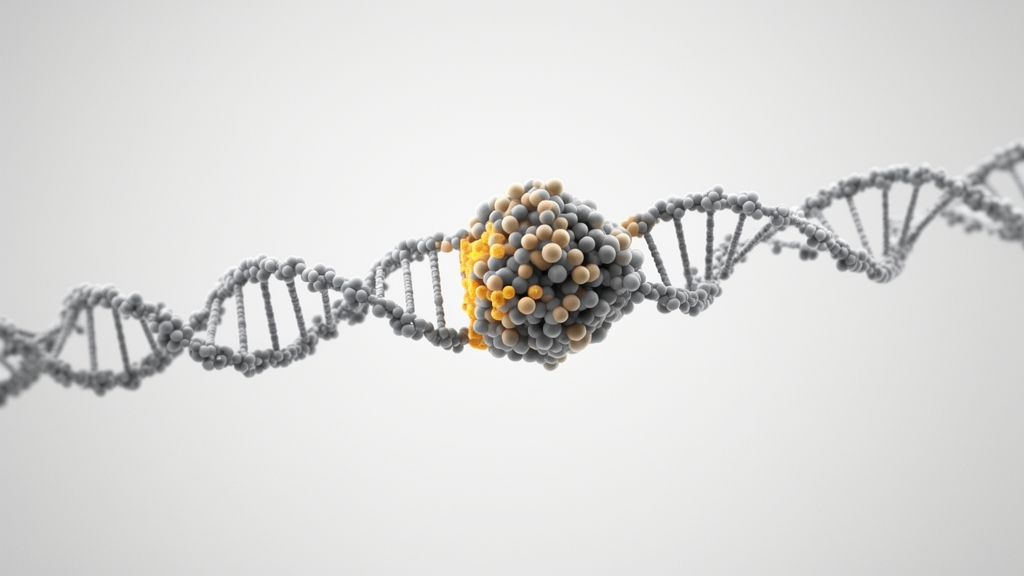
DNA Damage Tolerance Factor Rad5 Enriched at Yeast Telomeres During Replication

by
November 7, 2026
in Biology
Reading Time: 2 mins read
0
DNA Damage Tolerance Factor Rad5 Enriched at Yeast Telomeres During Replication

DNA Damage Tolerance Factor Rad5 Enriched at Yeast Telomeres During Replication

Share on FacebookShare on TwitterShare on LinkedinShare on RedditShare on Telegram

The DNA damage tolerance factor Rad5 binds to yeast telomeres and exhibits notable enrichment during telomere replication in unperturbed wild-type cells, according to a mini-review published in Current Genetics by researcher Stefano Mattarocci.

Telomeres consist of repetitive DNA regions situated at the ends of chromosomes and are tightly bound by tandem arrays of proteins. In the review, Mattarocci explains that these specialized protein-DNA structures create unique physical impediments to replication fork progression, presenting distinct challenges during chromosome duplication.

To overcome replication fork blocks, cells utilize the DNA Damage Tolerance pathway as a primary resolution mechanism. A central component of this pathway is the fork-associated clamp PCNA, which undergoes mono- or polyubiquitination to direct error-prone or error-free DNA damage bypass. Within Saccharomyces cerevisiae, the Rad5 factor, an HLTF/SNF2 family member, participates in both modes by promoting error-free bypass through PCNA polyubiquitination and transient template switching, and by interacting with specialized DNA polymerases in the error-prone pathway.

The work highlights how tolerance factors operate at challenging chromosomal ends in wild-type yeast without external replication stress.

Subject of Research: Binding and enrichment of DNA damage tolerance factor Rad5 at yeast telomeres during replication

Article Title: The DNA damage tolerance factor Rad5 and telomere replication

Article References: Mattarocci, S. (2025). The DNA damage tolerance factor Rad5 and telomere replication. Current Genetics, 71(1), Article 11. https://doi.org/10.1007/s00294-025-01315-y

Image Credits: AI Generated

DOI: 10.1007/s00294-025-01315-y

Keywords: Rad5, telomere replication, DNA damage tolerance, Saccharomyces cerevisiae, PCNA, replication fork, Current Genetics, yeast genetics, damage, tolerance, factor, telomere

News Source: Drew Townsend. (November 7, 2026). DNA Damage Tolerance Factor Rad5 Enriched at Yeast Telomeres During Replication. Scienmag.
Tags: Current GeneticsdamageDNA damage tolerancefactorPCNARad5replication forkSaccharomyces cerevisiaeTelomeretelomere replicationtoleranceyeast genetics
Share12Tweet7Share2ShareShareShare1

Related Posts

AI and Databases Streamline Rice Trait Ontology Curation

AI and Databases Streamline Rice Trait Ontology Curation

November 7, 2026
Engineered Enzyme Variant Boosts D-Pantolactone Conversion Eightfold

Engineered Enzyme Variant Boosts D-Pantolactone Conversion Eightfold

November 7, 2026

Scientists Map 36 Maize SPL Genes Linked to Stress Responses

November 7, 2026

Bibliometric Analysis Maps Rapid Growth of Silica Nanoparticle Research

November 7, 2026

POPULAR NEWS

  • New Model Assesses Densification Readiness in Bengaluru Neighbourhoods

    New Model Assesses Densification Readiness in Bengaluru Neighbourhoods

    29 shares
    Share 12 Tweet 7
  • Research report: High-density contrast echocardiography for patent foramen ovale assessment: sensitivity and relationship with invasively measured shunt severity and atrial septum morphology

    29 shares
    Share 12 Tweet 7
  • Sensorimotor Cascade Timing Uncovers a Neural Preparation Window in Subacute Stroke

    29 shares
    Share 12 Tweet 7
  • Gadolinium Vanadate Nanoparticles Show Dye Degradation and Antimicrobial Potential

    29 shares
    Share 12 Tweet 7

About

We bring you the latest biotechnology news from best research centers and universities around the world. Check our website.

Follow us

Recent News

Probable PTSD Evaluated Among Healthcare Workers in Post-War Tigray Hospitals

Early Oxygenation Trajectories Stratify Mortality Risk in Acute Hypoxemic Respiratory Failure

Machine Learning Model Shows Moderate Accuracy for Complex Coronary Lesions in Diabetes

Subscribe to Blog via Email

Enter your email address to subscribe to this blog and receive notifications of new posts by email.

Join 86 other subscribers
  • Contact Us

Bioengineer.org © Copyright 2023 All Rights Reserved.

Welcome Back!

Login to your account below

Forgotten Password?

Retrieve your password

Please enter your username or email address to reset your password.

Log In
No Result
View All Result
  • Homepages
    • Home Page 1
    • Home Page 2
  • News
  • National
  • Business
  • Health
  • Lifestyle
  • Science

Bioengineer.org © Copyright 2023 All Rights Reserved.