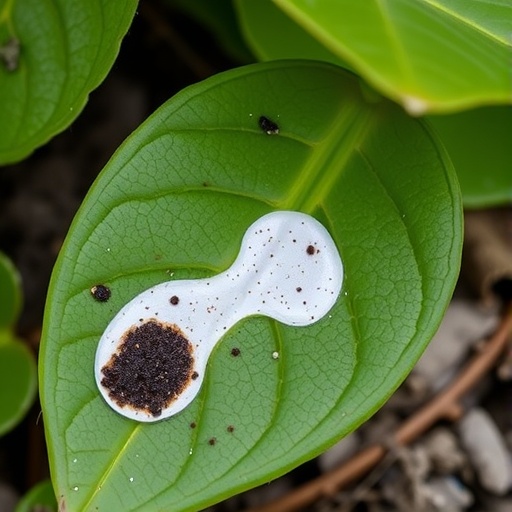
In a groundbreaking discovery that may redefine the strategies used to combat plant diseases, scientists have unveiled a novel microbial relationship involving the devastating angular leaf spot disease affecting common beans worldwide. This finding not only advances our understanding of the pathogen Pseudocercospora griseola but also holds significant promise for breeding disease-resistant crops and reducing the agricultural sector’s dependence on chemical pesticides.
Angular leaf spot is notorious for its destructive impact on common beans, a staple food crop for millions globally. The disease is caused by the fungus Pseudocercospora griseola, a highly variable pathogen that evolves in close association with its host plants. This dynamic interaction presents ongoing challenges for effective disease management, as the pathogen’s genetic adaptability often undermines resistance bred into bean varieties.
A recent study spearheaded by Luz M. Serrato-Diaz at the USDA-ARS Tropical Agriculture Research Station in Mayagüez, Puerto Rico, provides unprecedented insights into the genetic diversity and evolutionary mechanisms of P. griseola. The research team collected 48 fungal isolates from diverse geographic locations including Puerto Rico, Guatemala, Honduras, and Tanzania and utilized advanced DNA sequencing methods, specifically a technique known as 3RADseq, to analyze these isolates at a genomic level.
The DNA sequencing analysis confirmed previously understood population structures of P. griseola, categorizing the pathogen into two main genetic groups: Andean and Middle American. More importantly, the study dissected the Middle American group further, revealing three distinct subpopulations corresponding to geographic isolates from Guatemala and Honduras, Tanzania, and Puerto Rico. This subdivision illustrates how geographic isolation and localized farming techniques drive diversification within the fungal populations.
Delving deeper, researchers carried out extensive pathogenicity assays by infecting twelve different common bean varieties with fungal isolates from Puerto Rico. These experiments exposed a remarkable spectrum of fungal aggressiveness, identifying ten distinct pathogen strains. Intriguingly, variations in disease severity could not be directly linked to known virulence genes identified through genomic analysis, indicating that other factors may influence the pathogenicity of these strains.
Among the most compelling revelations was the detection of DNA from an endophytic bacterium, Achromobacter xylosoxidans, residing within several fungal isolates. Seven isolates harboring this bacterium consistently exhibited mild disease symptoms, contrasting sharply with highly virulent fungal strains that lacked the bacterial presence. This first-ever documented possible symbiotic relationship between P. griseola and A. xylosoxidans signals a paradigm shift. It opens the door to harnessing beneficial microbes to naturally suppress fungal pathogenicity, potentially leading to innovative biological control methods that reduce chemical fungicide use.
Further genomic exploration unearthed the presence of transposable elements—genetic sequences known as “jumping genes”—within the pathogen’s genome. These mobile elements have the potential to drive rapid pathogen adaptation by facilitating genetic rearrangements and mutations. Their presence may partially explain why P. griseola remains an elusive target, continually overcoming host resistance and environmental challenges.
Understanding the evolutionary pressures shaping P. griseola populations is critical not only for academic interest but also for real-world applications. The diversity and adaptability of this pathogen underscore the urgency in developing durable, broad-spectrum resistance in common bean cultivars. Advances in genomics, as showcased by this study, equip breeders with the tools to design more effective, informed resistance breeding programs.
While this study answered many questions, it also raised new ones. Chief among these is deciphering the exact nature of the interaction between A. xylosoxidans, P. griseola, and the host common bean. Future research must elucidate whether this bacterial endophyte modulates fungal virulence directly or indirectly through complex biochemical signaling pathways. Understanding these tripartite relationships will be essential for next-generation disease control strategies.
This research exemplifies the power of combining cutting-edge DNA technologies with classical plant pathology to illuminate the hidden complexities governing plant-microbe interactions. Such integrative approaches can unveil cryptic mechanisms that have gone unnoticed using traditional methods, offering fresh avenues to enhance global food security amid the relentless evolution of plant pathogens.
The implications extend far beyond bean cultivation. The discovery that beneficial microbes can coexist within virulent pathogens to influence disease outcome could catalyze a broader reconsideration of microbial ecology in agricultural systems. Exploiting microbial symbioses may emerge as a viable, sustainable path forward in mitigating crop diseases on a wide scale.
As the global demand for common beans continues to rise, fueled by their role in nutrition and food sovereignty, ensuring stable yields free from destructive diseases like angular leaf spot is paramount. This study equips agricultural scientists and practitioners with vital knowledge to stay ahead of an evolving foe, emphasizing the importance of genetic surveillance and microbial ecology in plant disease management.
For those interested in delving deeper, the full study titled “Population Genomics of Pseudocercospora griseola Reveals New Groups in the Middle American Clade and the Presence of the Endophytic Bacterium Achromobacter xylosoxidans” published in the journal Phytopathology offers comprehensive details and data supporting these remarkable findings.
This breakthrough underscores the enduring mission of Phytopathology, a journal with over a century of dedicated contributions to understanding plant diseases, their causative agents, and control measures. As plant pathogens grow increasingly complex, multidisciplinary studies like this pave the road toward sustainable agriculture and global food security.
Subject of Research: Population genomics and microbial relationships of the plant pathogen Pseudocercospora griseola causing angular leaf spot in common beans.
Article Title: Population Genomics of Pseudocercospora griseola Reveals New Groups in the Middle American Clade and the Presence of the Endophytic Bacterium Achromobacter xylosoxidans
News Publication Date: 1-Jan-2026
Web References: https://doi.org/10.1094/PHYTO-09-24-0302-R
Keywords: Angular leaf spot, Pseudocercospora griseola, common bean, population genomics, 3RADseq, endophytic bacterium, Achromobacter xylosoxidans, transposable elements, fungal pathogen, plant disease resistance, biological control, microbial symbiosis
Tags: 3RADseq genomic analysisadvanced DNA sequencing in plant pathologyangular leaf spot disease in common beansbacterial-fungal symbiosis in plant pathogensdisease-resistant bean crop breedingevolutionary mechanisms of fungal pathogensfungal pathogen population geneticsglobal impact of angular leaf spotmicrobial interactions in plant diseasesPseudocercospora griseola genetic diversityreducing chemical pesticide use in cropssustainable agriculture disease management