• HOME
  • NEWS
  • EXPLORE
    • CAREER
      • Companies
      • Jobs
    • EVENTS
    • iGEM
      • News
      • Team
    • PHOTOS
    • VIDEO
    • WIKI
  • BLOG
  • COMMUNITY
    • FACEBOOK
    • INSTAGRAM
    • TWITTER
Wednesday, April 1, 2026
BIOENGINEER.ORG
No Result
View All Result
  • Login
  • HOME
  • NEWS
  • EXPLORE
    • CAREER
      • Companies
      • Jobs
        • Lecturer
        • PhD Studentship
        • Postdoc
        • Research Assistant
    • EVENTS
    • iGEM
      • News
      • Team
    • PHOTOS
    • VIDEO
    • WIKI
  • BLOG
  • COMMUNITY
    • FACEBOOK
    • INSTAGRAM
    • TWITTER
  • HOME
  • NEWS
  • EXPLORE
    • CAREER
      • Companies
      • Jobs
        • Lecturer
        • PhD Studentship
        • Postdoc
        • Research Assistant
    • EVENTS
    • iGEM
      • News
      • Team
    • PHOTOS
    • VIDEO
    • WIKI
  • BLOG
  • COMMUNITY
    • FACEBOOK
    • INSTAGRAM
    • TWITTER
No Result
View All Result
Bioengineer.org
No Result
View All Result
Home NEWS Science News Biology

Discovery gives answers to parents of children with rare disease

by
September 6, 2025
in Biology
Reading Time: 2 mins read
0
MRI
Share on FacebookShare on TwitterShare on LinkedinShare on RedditShare on Telegram

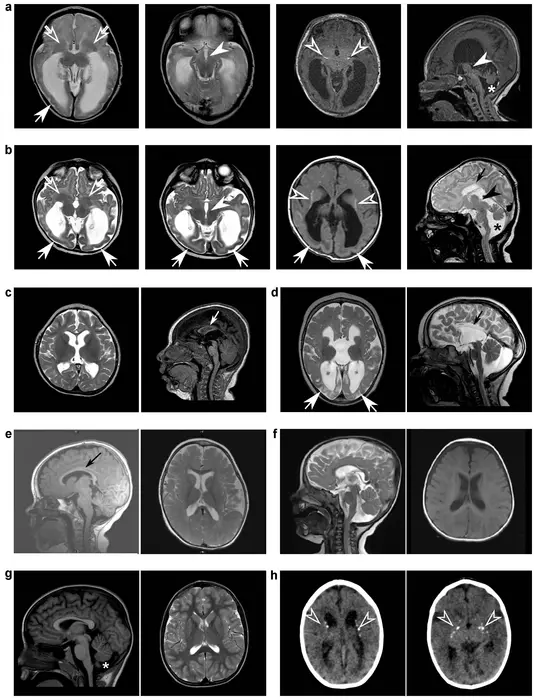
Shortly after Kelly Cervantes’ daughter Adelaide was born, she started having terrible seizures. Doctors were unable to give her a solution, or even a cause.

Shortly after Kelly Cervantes’ daughter Adelaide was born, she started having terrible seizures. Doctors were unable to give her a solution, or even a cause.

“We never had an overarching diagnosis for her, which was extraordinarily frustrating and isolating,” she says. “If we did, we could join groups or talk to people who had various symptoms in common. We also had no idea what her prognosis looked like, or if we could have other children.”

Over time her condition worsened and sadly she died five days before her fourth birthday.

“She never really progressed past about a three-to-six-month physical development, and we’re not entirely sure where she was intellectually. She was incredible but her life was really challenging and really hard.”

Cervantes had enrolled her daughter in a research program for people with undiagnosed illnesses. After her daughter’s death she got a call asking if she’d like to participate in a study being conducted at The Neuro. Now the results of that study have been published.

The scientists analyzed samples from Adeliade and 21 other people with the condition. By growing stem cells in a dish using the participants’ genetic code, the scientists found that mutations in a gene called DENND5A create disfunction, and this disfunction stops brain cells from dividing properly during development. The result is a developing brain with less stem cells, shortening the crucial time period that the brain forms as an embryo.

The finding provides answers to family of people with this rare condition. It also allowed family members to be tested for the mutations so they can make informed choices about family planning. For example, for aspiring parents who carry the mutation, genetic counselors can recommend genetic testing for their partners and give the odds of passing on the condition.

With advancements in gene editing technology, one day the mutation might be corrected with the knowledge this study provides. While such a step is years away at best, Cervantes says it would provide comfort knowing her daughter contributed to a cure.

“Maybe someday down the road, the next Adelaide will have a treatment, and there will be an answer for that family. And how incredible is that to think, that my baby girl had a hand in that?”


Journal

Nature Communications

DOI

10.1038/s41467-024-51310-z

Subject of Research

People

Article Title

Loss of symmetric cell division of apical neural progenitors drives DENND5A-related developmental and epileptic encephalopathy

Article Publication Date

22-Aug-2024

COI Statement

K.M. and R.P. are employed by GeneDx, LLC. All other authors report no competing interests.

Share12Tweet8Share2ShareShareShare2

Related Posts

Do Your Genes Influence How Lifestyle Choices Affect Aging?

Do Your Genes Influence How Lifestyle Choices Affect Aging?

April 1, 2026
Combining Single-Cell Multiomics Unlocks Precise Identification of Rare Cell Types and States

Combining Single-Cell Multiomics Unlocks Precise Identification of Rare Cell Types and States

March 31, 2026

Genetically Engineered Marmosets Pave the Way for Advancements in Human Deafness Research

March 31, 2026

How Great Hammerhead Sharks Outsmart Ocean Temperature Swings: Insights from FIU Researchers

March 31, 2026

POPULAR NEWS

  • blank

    Revolutionary AI Model Enhances Precision in Detecting Food Contamination

    96 shares
    Share 38 Tweet 24
  • Imagine a Social Media Feed That Challenges Your Views Instead of Reinforcing Them

    1006 shares
    Share 398 Tweet 249
  • Promising Outcomes from First Clinical Trials of Gene Regulation in Epilepsy

    51 shares
    Share 20 Tweet 13
  • Popular Anti-Aging Compound Linked to Damage in Corpus Callosum, Study Finds

    43 shares
    Share 17 Tweet 11

About

We bring you the latest biotechnology news from best research centers and universities around the world. Check our website.

Follow us

Recent News

Frailty, Malnutrition Link Falls to Daily Functioning

Dactylides D, E: Novel 22-Membered Polyol Macrolides

Longer Leukocyte Telomeres Linked to Premature Membrane Rupture

Subscribe to Blog via Email

Enter your email address to subscribe to this blog and receive notifications of new posts by email.

Join 78 other subscribers
  • Contact Us

Bioengineer.org © Copyright 2023 All Rights Reserved.

Welcome Back!

Login to your account below

Forgotten Password?

Retrieve your password

Please enter your username or email address to reset your password.

Log In
No Result
View All Result
  • Homepages
    • Home Page 1
    • Home Page 2
  • News
  • National
  • Business
  • Health
  • Lifestyle
  • Science

Bioengineer.org © Copyright 2023 All Rights Reserved.