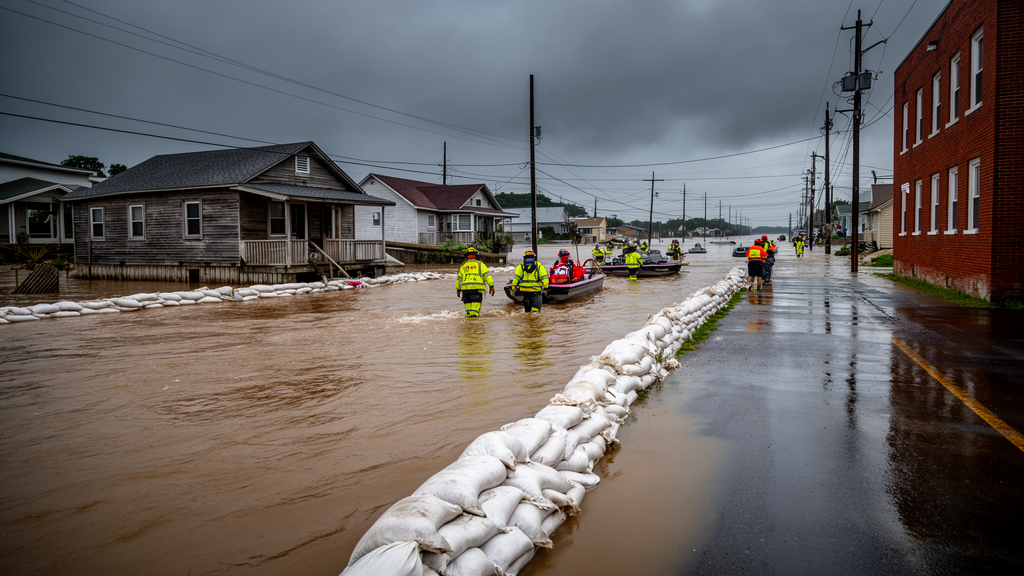
Disasters rarely occur in isolation, and the conventional methods used to assess them often overlook the dynamic relationships driving cumulative damage, according to a peer-reviewed perspective published in the journal Risk Analysis. Led by researchers from the International Institute for Applied Systems Analysis (IIASA) Systemic Risk and Resilience Research Group (SYRR) in collaboration with institutions including EURAC Research’s Center for Climate Change and Transformation, the NASA Jet Propulsion Laboratory, and Stanford University, the paper calls for a fundamental rethinking of disaster and climate risk science. The analysis developed from a 2025 workshop held at IIASA that convened more than 20 specialists across disaster and climate risk analysis, resilience, ecology, economics, engineering, geography, and the social sciences to examine the frontiers of risk assessment.
Standard disaster and climate risk assessments typically treat three primary drivers—the hazard itself, the exposed population or assets, and their underlying vulnerability—as separate variables that are evaluated individually and subsequently combined into an overall estimate of risk. The authors argue that this compartmentalized method fails to capture how these factors actively shape each other over time. To conceptualize this interconnected dynamic, the researchers introduce the term inseparability, describing how hazard, exposure, and vulnerability co-evolve through continuous, reciprocal modifications and systemic transformations rather than operating as independent components of a static formula.
The practical implications of these coupled interactions mean that changes in one factor inevitably alter the others, creating compounding feedback loops. As coauthor Stefan Hochrainer-Stigler, a principal research scholar in SYRR, notes, hazards, exposure, and vulnerability are not fixed puzzle pieces, but evolve together in ways that can amplify or dampen risk. Hochrainer-Stigler points out that understanding these systemic connections within the context of the polycrisis and climate emergency is essential for designing practical interventions. From this perspective, advancing risk science requires researchers to determine which feedbacks dominate under specific conditions and to design measures that significantly alter those core feedbacks rather than merely modifying hazard, vulnerability, or exposure at the margins.
The study highlights real-world examples where treating hazards and exposure as co-evolving components altered policy outcomes. Following severe river floods in 1993 and 1995 across the Rhine and Meuse catchments, authorities in the Netherlands moved beyond traditional civil engineering focused exclusively on raising dikes to reduce hazard levels. Instead, the Dutch government implemented the Room for the River Programme, an initiative that integrated floodplain restoration, dike relocations, and designated bypass channels. By acknowledging that flood hazards and spatial exposure evolve together, the adaptive land-use initiative successfully reduced overall exposure while accommodating river dynamics, ultimately serving as an influential model for international river-management and climate-adaptation strategies.
A critical analytical obstacle identified in the paper is non-ergodicity, the condition where historical trends cannot reliably predict future outcomes. Lead author Alexandre Dunant, a researcher at EURAC Research, observes that an aggregate risk estimate derived by multiplying hazard, exposure, and vulnerability is fundamentally limited by its least predictable component, even though the final output conveys a misleading impression of precision. Dunant notes that while climate models could plausibly outline broad hazard trends decades in advance, foreseeing the long-term evolution of exposure and vulnerability is vastly more challenging due to the increasingly interconnected nature of modern socioeconomic systems and livelihoods.
To build better analytical foundations, the researchers suggest incorporating the concept of autopoiesis, which examines how a vulnerable system produces and maintains itself through internal processes. Defining what operates within a system versus what lies outside its boundaries is considered an essential prerequisite for structuring meaningful risk interventions. While acknowledging that the established risk equation has provided a foundational framework for Intergovernmental Panel on Climate Change (IPCC) reports covering impacts, adaptation, and vulnerability, the authors stress that practitioners must make underlying assumptions explicit and pay closer attention to how components interact across different places and timescales.
Because risk is increasingly systemic and historical patterns can no longer reliably forecast future conditions, the authors conclude that risk mitigation and resilience frameworks must become equally systemic. Concrete initiatives demonstrating this shift include the Climate Resilience Alliance, an action-focused collaboration uniting six nongovernmental organizations, research partners including IIASA, and the Zurich Foundation as funder and partner. The alliance has shifted from addressing isolated, single-hazard threats toward multi-hazard resilience investments, encompassing multi-hazard early warning systems, social protection mechanisms, governance strengthening, and shared infrastructure. As coauthor Reinhard Mechler emphasizes, decisions regarding preparedness, recovery, and long-term development dictate disaster vulnerability for decades, making it imperative for decision makers to evaluate how risks interact to strengthen community resilience over time.
Subject of Research: Systemic and co-evolutionary assessment of disaster and climate risks
Article Title: Why disaster risks are systemic and co-evolutionary
Article References: Why disaster risks are systemic and co-evolutionary. Original publication (Bibliographic details unavailable.)
Image Credits: AI Generated
DOI: Not provided
Keywords: Systemic risk, Disaster risk assessment, Hazard exposure, Vulnerability dynamics, Inseparability, Risk Analysis journal, IIASA, EURAC Research, Non-ergodicity, Autopoiesis, Room for the River Programme, Floodplain restoration, Climate adaptation, Climate Resilience Alliance, Multi-hazard resilience, Feedback mechanisms, IPCC risk framework, Disaster preparedness
News Source: Sloane Callahan. (November 24, 2026). Disaster Risks Evolve Systemically Through Interacting Hazard Exposure and Vulnerability. Scienmag.