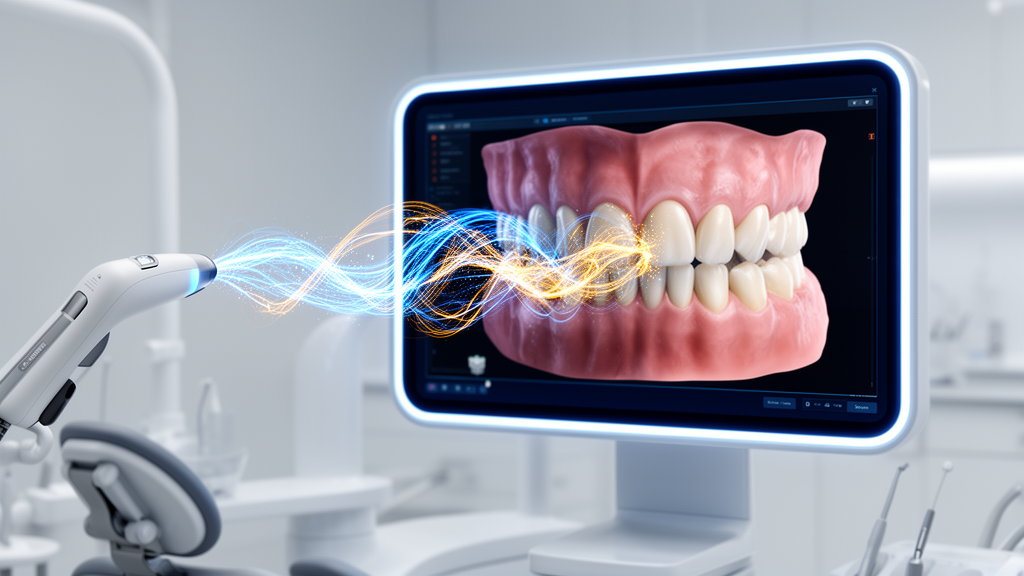
A comprehensive narrative review published in the Digital Dentistry Journal indicates that digital twin technology holds substantial potential to transform clinical dentistry across multiple specialties, while currently remaining in its early developmental stages. Authored by David B. Olawade and colleagues, the review synthesises literature published between January 2015 and February 2026 across databases including PubMed, Scopus, Web of Science, and IEEE Xplore to assess how dynamic virtual representations of oral structures could advance precision healthcare. Digital twins, which originally emerged within manufacturing and aerospace industries, are characterized by three fundamental, interconnected components: an actual physical entity comprising the patient’s anatomical structures and physiological processes, a computational virtual counterpart, and a continuous bidirectional data connection layer that links the two. Unlike static three-dimensional computer models or isolated digital workflows that have become common in contemporary dental practices, a genuine dental digital twin represents an evolving computational model that continuously incorporates incoming patient data, dynamically mirrors biological and functional changes, and facilitates iterative simulation and treatment optimization across the patient’s lifetime.
A critical analytical contribution of the review centers on distinguishing authentic digital twin architectures from the broader suite of digital dentistry technologies currently deployed in routine practice. The authors emphasize that widely utilized tools—such as cone beam computed tomography, high-resolution intraoral scanning, computer-aided design and computer-aided manufacturing systems, virtual try-ins, and static three-dimensional surgical guides—do not independently constitute digital twins. While these technologies represent indispensable enabling components and precursors, they lack the continuous, bidirectional data exchange and real-time computational feedback required by strict technical definitions. Much of the contemporary dental literature frequently applies the digital twin terminology to computer-assisted workflows and linear diagnostic imaging processes that operate without closed-loop data interaction. The authors argue that maintaining this technical distinction is necessary for accurate scientific evaluation, noting that computer-assisted simulations and virtual surgical guides represent vital steps in computerized dentistry but must be integrated within adaptive, bidirectional frameworks to fulfill the clinical definition and predictive potential of true digital twins.
Constructing a functional dental digital twin requires the rigorous integration of multidimensional datasets captured across diverse clinical modalities. According to the conceptual framework outlined by Olawade and co-authors, an integrated dental virtual replica must amalgamate anatomical data derived from volumetric cone beam computed tomography and optical surface scans with functional metrics, including computerized occlusal analysis and bite force measurements. Furthermore, these models must incorporate temporal datasets that track tissue healing and treatment progression, biological parameters detailing tissue properties and mechanical resistance, and longitudinal clinical histories archived in electronic health records. The technical sophistication of these systems ranges from baseline geometric models used for procedural planning to advanced multiphysics computational platforms that integrate biomechanical, biological, and physiological parameters. By capturing both structural geometry and dynamic functional behaviors, these comprehensive virtual representations allow clinicians to explore multiple therapeutic scenarios, forecast tissue responses, and evaluate stress distributions without subjecting the physical patient to procedural risks or experimental interventions.
Within the dental specialties, orthodontics and prosthodontics demonstrate notable avenues for early digital twin implementation. In orthodontic care, digital twin frameworks simulate dynamic tooth movement across an entire therapeutic course by integrating baseline anatomical scans, periodontal biomechanics, planned force vectors, and chronological milestones. This multi-parameter modeling enables clinicians to evaluate alternative appliance configurations, improve the precision of aligner designs, minimize mid-course corrections, and visually demonstrate anticipated dental trajectories to patients before initiating mechanical adjustments. In prosthodontics, patient-specific virtual twins facilitate the design and computerized fabrication of crowns, bridges, and removable dentures by modeling dynamic masticatory movements and occlusal contact points. By testing prosthetic fit, evaluating stress concentration through virtual simulation, and assessing aesthetic parameters prior to milling or printing, digital workflows reduce the need for physical adjustments at the chairside, shorten laboratory fabrication turnaround times, and enhance collaborative communication between dental practitioners and laboratory technicians.
Implantology and oral and maxillofacial surgery similarly leverage digital twin concepts to enhance surgical precision and manage complex anatomical risks. In implant dentistry, digital models integrate cone beam computed tomography with assessments of bone quality, anatomical boundaries, and prosthetic load specifications to establish precise implant placement and angulation. Virtual surgical rehearsal enables clinicians to identify potential complications, avoid critical neural or vascular structures, and model post-placement osseointegration and functional loading protocols before performing invasive procedures. For oral and maxillofacial surgeons handling orthognathic interventions, tumor resections, and complex reconstructive procedures, surgical digital twins enable virtual osteotomies, predict soft tissue facial changes, and guide the design of patient-specific fixation hardware. The ability to rehearse complex surgical steps virtually reduces operating room time, mitigates intraoperative uncertainties, and assists surgical teams in achieving planned aesthetic and functional outcomes, particularly when managing multifaceted craniofacial discrepancies or revision surgeries.
In endodontics and periodontics, digital twin applications are increasingly directed toward intricate anatomical navigation and tissue regeneration modeling. Endodontic digital workflows combine volumetric imaging data with clinical diagnostics to generate detailed three-dimensional visualizations of complex root canal morphology, identifying calcified canals, severe curvatures, and anatomical variations that standard radiography fails to resolve. Virtual simulation of access cavity preparation, endodontic instrument selection, and canal obturation provides procedural guidance that helps reduce procedural errors and instrument fractures during complex treatments. In periodontics, virtual patient models integrate periodontal probing depths, radiographic alveolar bone levels, and soft tissue biomechanics to model periodontal disease progression and evaluate regenerative therapies. Clinicians can simulate guided bone regeneration, soft tissue grafting, and therapeutic interventions in advance, anticipating biological responses and refining patient-specific protocols, although current evidence within both specialties remains confined largely to technical proof-of-concept demonstrations and preliminary case reports.
The operational infrastructure supporting dental digital twins relies upon a coordinated technological ecosystem spanning data acquisition, computer-aided design, advanced simulation, and artificial intelligence. Modern cone beam computed tomography captures internal skeletal structures with reduced radiation exposure, while optical intraoral scanners record high-resolution surface topology without traditional impression materials. Computer-aided design platforms apply parametric modeling tools to manipulate virtual meshes and interface seamlessly with manufacturing equipment, facilitating the utilization of high-strength, biocompatible materials with enhanced marginal fit. Finite element analysis and biomechanical simulation software introduce dynamic predictive power by computing stress distribution, fluid dynamics, and biological strain under varying load conditions. Meanwhile, artificial intelligence and deep learning algorithms automate the segmentation of anatomical structures from imaging files, improve diagnostic pattern recognition, and continuously refine predictive algorithms as clinical datasets accumulate, transitioning static three-dimensional datasets into adaptive, intelligent diagnostic systems.
Despite these technological capabilities, the review highlights that the clinical evidence base underpinning digital twin claims remains preliminary and heavily reliant on early-stage investigations. While reported benefits include heightened procedural precision, greater outcome predictability, reduced patient chair time, and improved patient engagement through interactive visual models, much of the supporting literature consists of small case series, technical descriptions, and exploratory proof-of-concept projects rather than prospective randomized clinical trials. The authors point out an ongoing tension in the literature, where studies simultaneously acknowledge the scarcity of rigorous clinical validation while presenting benefit claims that imply established therapeutic efficacy. Consequently, many reported improvements in placement accuracy or operative efficiency cannot yet be decisively attributed to fully integrated, bidirectional digital twin systems as opposed to standard computer-guided surgery or conventional computer-aided workflows, underscoring the urgent need for large-scale, controlled clinical trials to confirm therapeutic advantages.
Widespread adoption of digital twin technology in dental practice is further hindered by substantial economic, technical, and educational barriers. Implementing digital twin infrastructure demands extensive capital investment in advanced imaging systems, computational hardware, specialized software licenses, and ongoing technical support, posing significant financial hurdles for solo practitioners and smaller clinics. The lack of updated insurance reimbursement models that recognize digital planning workflows further exacerbates economic constraints. On a technical level, proprietary software formats, data silos, and uneven compliance with interoperability standards such as DICOM and Health Level Seven hinder the seamless data integration required across electronic health records, imaging systems, and simulation platforms. Furthermore, the steep learning curve demands comprehensive professional training, which is currently lacking in conventional dental curricula that remain focused on manual techniques, while the handling of vast patient anatomical and physiological datasets introduces complex compliance challenges under regulatory frameworks including HIPAA and GDPR.
Looking toward future perspectives, the authors suggest that advancing dental digital twins will require coordinated developments in real-time intraoperative tracking, multi-scale biological data integration, and professional standardization. Future iterations may shift from static pretreatment planning toward dynamic, intraoperative platforms that capture real-time clinical data during procedures to deliver immediate computational guidance and adaptive re-planning. In orthodontics, for instance, regular intraoral scans could update digital models continuously to detect tracking errors and automatically modify aligner staging. Integrating genomic and molecular biomarkers related to inflammation, bone turnover, and tissue healing could transform geometric replicas into comprehensive biological twins capable of truly personalized predictive care. Achieving these objectives will ultimately depend on interdisciplinary collaboration among clinicians, software engineers, professional organizations, and regulatory authorities to establish common data formats, clear validation benchmarks, and strict definitions that distinguish genuine bidirectional digital twins from everyday digital dentistry.
Subject of Research: Clinical applications, technological requirements, and implementation barriers of digital twin systems in dentistry
Article Title: Digital twin technology in dentistry: Applications, challenges, and future perspectives in precision oral healthcare
Article References: Olawade, D. B., Fidelis, P. C., Olawuyi, O. F., Olasilola, O. R., Makanjuola, B. D., & Alabi, J. O. (2026). Digital twin technology in dentistry: Applications, challenges, and future perspectives in precision oral healthcare. Digital Dentistry Journal, 4(1), Article 100119. https://doi.org/10.1016/j.ddj.2026.100119
Image Credits: AI Generated
DOI: 10.1016/j.ddj.2026.100119
Keywords: digital twin, dentistry, precision oral healthcare, orthodontics, prosthodontics, implant dentistry, oral surgery, endodontics, periodontics, cone beam computed tomography, intraoral scanners, finite element analysis, artificial intelligence, biocompatibility, data integration, biomechanical simulation, patient-specific modeling
News Source: Ophelia Keating. (November 24, 2026). Digital Twin Systems in Dentistry Require Bidirectional Data to Guide Care. Scienmag.