• HOME
  • NEWS
  • EXPLORE
    • CAREER
      • Companies
      • Jobs
    • EVENTS
    • iGEM
      • News
      • Team
    • PHOTOS
    • VIDEO
    • WIKI
  • BLOG
  • COMMUNITY
    • FACEBOOK
    • INSTAGRAM
    • TWITTER
Tuesday, November 17, 2026
BIOENGINEER.ORG
No Result
View All Result
  • Login
  • HOME
  • NEWS
  • EXPLORE
    • CAREER
      • Companies
      • Jobs
        • Lecturer
        • PhD Studentship
        • Postdoc
        • Research Assistant
    • EVENTS
    • iGEM
      • News
      • Team
    • PHOTOS
    • VIDEO
    • WIKI
  • BLOG
  • COMMUNITY
    • FACEBOOK
    • INSTAGRAM
    • TWITTER
No Result
View All Result
Bioengineer.org
No Result
View All Result
Home NEWS Science News Technology

Digital Twin Framework Achieves 92 Percent Zero-Day Attack Detection in IoT

by
November 17, 2026
in Technology
Reading Time: 2 mins read
0
Digital Twin Framework Achieves 92 Percent Zero-Day Attack Detection in IoT

Digital Twin Framework Achieves 92 Percent Zero-Day Attack Detection in IoT

Share on FacebookShare on TwitterShare on LinkedinShare on RedditShare on Telegram

Researchers have evaluated a Digital Twin-Driven Federated Continual Learning framework designed for the predictive modeling of zero-day attack evolution across distributed Internet of Things networks. In research published in Discover Applied Sciences, authors M. B. Bharath, B. A. Mala, and N. Pavithra address limitations in existing intrusion detection systems, which struggle against the rapid evolution of cyberattacks when relying on static models, centralized security data, and historical attack knowledge.

According to the authors, traditional intrusion detection systems operating in distributed IoT environments provide little ability for privacy-preserving collaboration, long-term adaptation, or the anticipation of unknown new attack behaviors.

To address these specific limitations, the proposed framework combines digital twin-based attack mutation, privacy-preserving federated learning, continual adaptation, and temporal threat-evolution prediction. By integrating these four functional components, the system models changing adversarial behavior across distributed IoT environments while supporting decentralized collaboration that preserves privacy across participating network nodes.

The framework was evaluated under a revised temporal and attack-aware evaluation protocol. In experimental testing, the proposed model achieved an overall detection accuracy of 97.68 percent and an F1-score of 97.07 percent. The evaluation also measured performance on emerging threats, recording a 92.47 percent zero-day detection accuracy and an attack-evolution prediction accuracy of 92.18 percent.

The experimental results also demonstrated operational resilience during distributional shifts, with detection performance recovering from 88.92 percent during concept drift back up to 94.86 percent after continual adaptation was applied. Furthermore, communication analysis indicated a 17.62 percent reduction in communication requirements compared with reference federated configurations.

To build upon these findings, the authors identified several technical directions for future research. Planned future work will consider lightweight edge deployment alongside better privacy measures. The researchers also intend to explore foundation-model-assisted threat reasoning together with empirical verification across real-world IoT deployments.

Subject of Research: Predictive modeling of zero-day cyberattack evolution in distributed IoT networks

Article Title: Digital twin driven federated continual learning for predictive modeling of zero day attack evolution in IoT networks

Article References: Bharath, M. B., Mala, B. A., & Pavithra, N. (2026). Digital twin driven federated continual learning for predictive modeling of zero day attack evolution in IoT networks. Discover Applied Sciences. https://doi.org/10.1007/s42452-026-09850-0

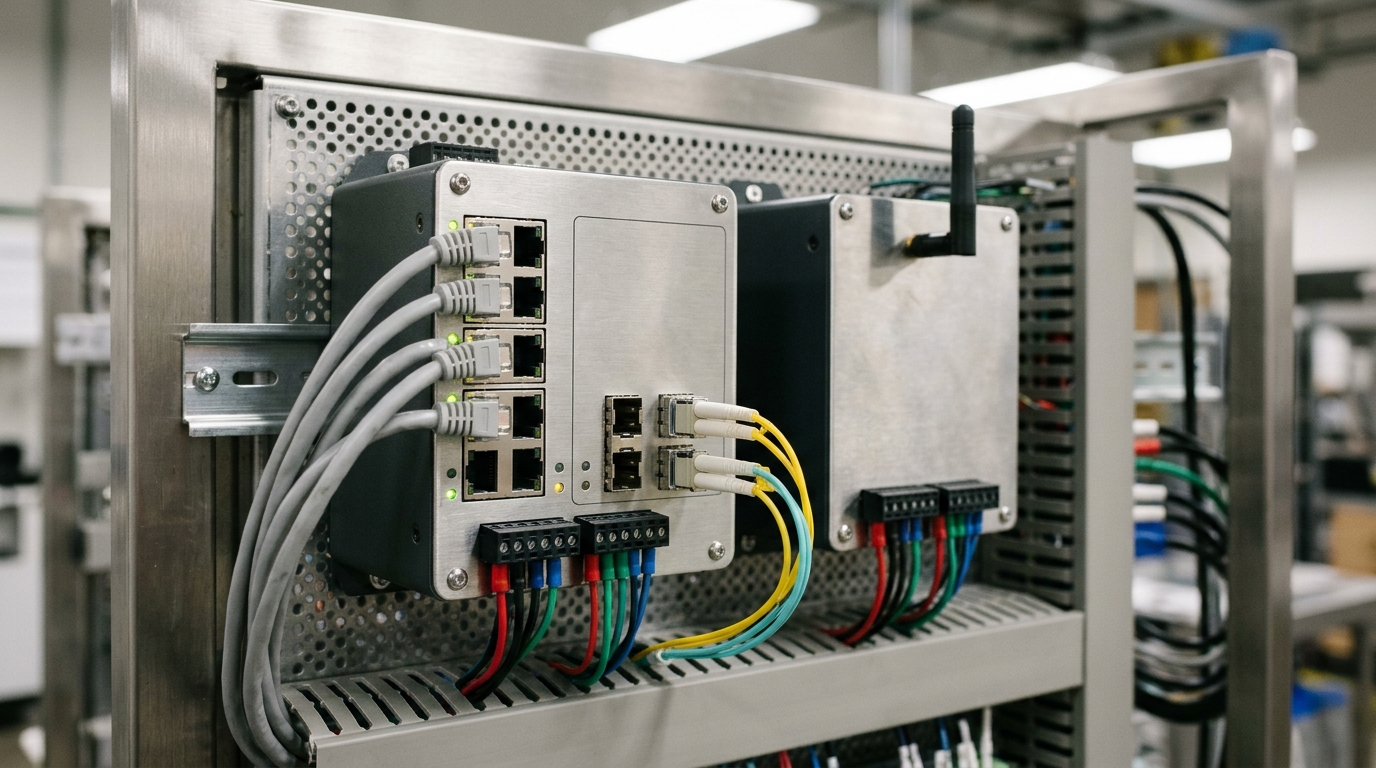
Image Credits: AI Generated

DOI: 10.1007/s42452-026-09850-0

Keywords: Internet of Things, IoT security, digital twins, federated learning, continual learning, zero-day attacks, intrusion detection systems, attack mutation, threat evolution prediction, concept drift, privacy-preserving collaboration, cyberattack detection, continual adaptation, distributed IoT, threat reasoning, network security, adversarial behavior, edge deployment

News Source: Gavin Prescott. (November 17, 2026). Digital Twin Framework Achieves 92 Percent Zero-Day Attack Detection in IoT. Scienmag.


Tags: adversarial behaviorattack mutationconcept driftcontinual adaptationContinual LearningCyberattack Detectiondigital twinsdistributed IoTedge deploymentfederated learningInternet of Thingsintrusion detection systemsIoT securitynetwork securityprivacy-preserving collaborationthreat evolution predictionthreat reasoningzero-day attacks
Share12Tweet7Share2ShareShareShare1

Related Posts

Federated Framework Boosts Cross-Domain Accuracy While Cutting Uplink Data by 88 Percent

Federated Framework Boosts Cross-Domain Accuracy While Cutting Uplink Data by 88 Percent

November 17, 2026
DFT Screening Shows Sulfur Tuning Lowers Band Gaps in Kesterite Semiconductors

DFT Screening Shows Sulfur Tuning Lowers Band Gaps in Kesterite Semiconductors

November 17, 2026

Waterfront Urban Design Creates Everyday Opportunities for Social Connection in Perth

November 17, 2026

Machine Learning Concrete Mix Designs Often Fail Experimental Performance Tests

November 17, 2026

POPULAR NEWS

  • Review Links Hyperinsulinaemia to Molecular Pathways in Cholesterol Gallstone Formation

    Review Links Hyperinsulinaemia to Molecular Pathways in Cholesterol Gallstone Formation

    29 shares
    Share 12 Tweet 7
  • Self-Assessed Hirsutism Accurately Flags Endocrine and Metabolic Disruptions in Oligomenorrheic Women

    29 shares
    Share 12 Tweet 7
  • Genomic Radiosensitivity Metrics Fail to Predict Survival in Canine Sinonasal Tumors

    29 shares
    Share 12 Tweet 7
  • Global Review Highlights Escalating Burden and Care Deficits for Migraine Patients

    29 shares
    Share 12 Tweet 7

About

We bring you the latest biotechnology news from best research centers and universities around the world. Check our website.

Follow us

Recent News

Federated Framework Boosts Cross-Domain Accuracy While Cutting Uplink Data by 88 Percent

Systematic Review Reveals Language and Discrimination Barriers in Emergency Care

DFT Screening Shows Sulfur Tuning Lowers Band Gaps in Kesterite Semiconductors

Subscribe to Blog via Email

Enter your email address to subscribe to this blog and receive notifications of new posts by email.

Join 88 other subscribers
  • Contact Us

Bioengineer.org © Copyright 2023 All Rights Reserved.

Welcome Back!

Login to your account below

Forgotten Password?

Retrieve your password

Please enter your username or email address to reset your password.

Log In
No Result
View All Result
  • Homepages
    • Home Page 1
    • Home Page 2
  • News
  • National
  • Business
  • Health
  • Lifestyle
  • Science

Bioengineer.org © Copyright 2023 All Rights Reserved.