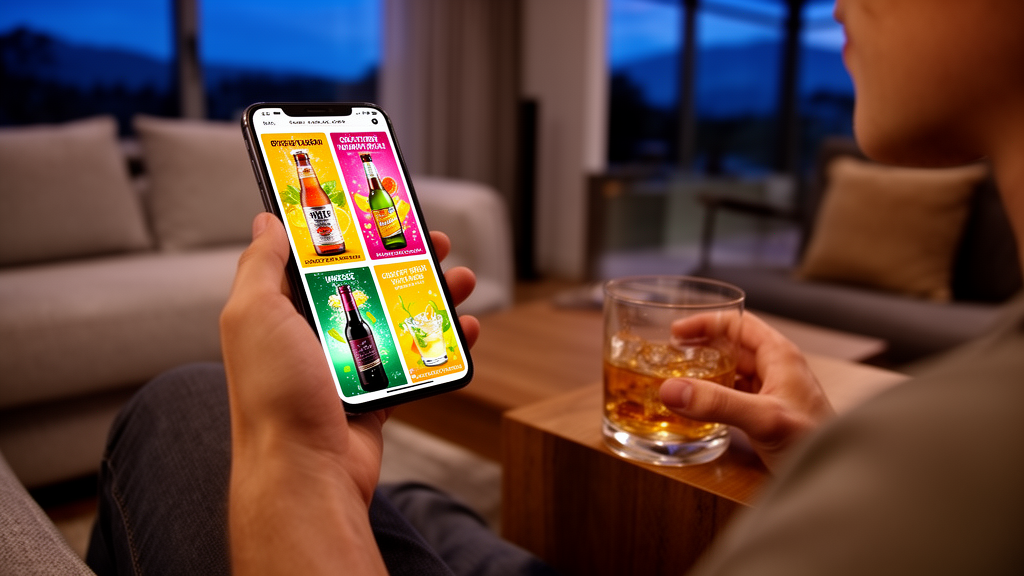
A comprehensive systematic review of quantitative studies has identified consistent positive associations between individuals interacting with digital alcohol marketing and heightened alcohol-related behaviors, including increased drinking frequency and elevated drinking intentions. Published in the Journal of Epidemiology and Global Health, the synthesis analyzed 18 empirical consumer research investigations published between 2017 and late 2024. Across the fourteen studies evaluating commercial digital exposure or active consumer engagement, all reported positive associations with alcohol-related outcomes. The findings demonstrate that digital promotional tactics—ranging from algorithmic banner advertisements to interactive social media participation—exert a measurable influence on drinking attitudes, normative beliefs, and actual consumption patterns across international populations, particularly adolescents and young adults.
The research was conducted against a complex backdrop of shifting global alcohol consumption patterns and expanding digital communication channels. Between 2010 and 2019, recorded global per-capita alcohol intake among individuals aged 15 and older fell slightly from 5.7 liters to 5.5 liters of pure alcohol, representing a 4.5 percent decrease. Despite this modest historical decline, public health forecasts estimate that global adult per-capita intake is projected to expand by 17 percent to reach 7.6 liters per person annually by 2030. High rates of consumption remain concentrated geographically, with 59.9 percent of European adults, 54.1 percent in the Americas, and 53.8 percent in the Western Pacific Region identifying as current drinkers. In the World Health Organization European Region, per-capita intake reached 9.2 liters in 2019, with more than half of males and females consuming alcohol, presenting elevated risks of heavy episodic drinking, liver disease, cardiovascular harms, and multiple forms of cancer.
To investigate how contemporary online environments shape individual drinking habits, an international research team led by Sandra Tricas-Sauras, Vania Filipova, Gorazd Levičnik, Giulia Ferrarese, Wim van Dalen, Nils Garnes, and Sandra Radoš Krnel executed an exhaustive protocol compliant with the Preferred Reporting Items for Systematic Reviews and Meta-Analyses guidelines. The researchers systematically searched eight major scientific databases: PubMed, Web of Science, Scopus, JSTOR, PsycINFO, Medline, Taylor & Francis Online, and ScienceDirect. The search syntax joined distinct clusters of terms covering exposure and engagement, digital alcohol marketing, social media advertising, and drinking intentions, attitudes, and behaviors. The investigation aimed to update earlier foundational reviews that evaluated studies published prior to 2017, explicitly addressing the transformative expansion of participatory digital features, algorithmic targeting, and integrated commercial promotions that have evolved across modern social platforms.
Initial database queries yielded 4,460 potential bibliographic records, which the authors screened across titles and abstracts to eliminate non-relevant citations. A total of 328 articles were sought for full-text retrieval, from which 255 records were excluded based on predefined eligibility standards, leaving 73 full-text manuscripts for comprehensive evaluation during the initial phase. Eleven investigations met all inclusion requirements, and an updated search conducted in October 2024 captured an additional 47 records, from which seven met eligibility. The final synthesis encompassed 18 primary quantitative studies comprising 10 cross-sectional surveys, seven experimental designs, and one prospective longitudinal study. Eligible investigations focused specifically on consumer research methodologies evaluating individual attitudes, intentions, and behaviors, while excluding macroeconomic econometric papers based solely on industry ad expenditures, qualitative investigations, and content analyses.
Every included publication underwent methodological quality assessment using an adapted framework established by Hawker and colleagues, operationalized through the Centre for Evidence-Based Management Survey Scoring System. Two reviewers independently evaluated nine distinct methodological criteria: Abstract and Title, Introduction and Aims, Method and Data, Sampling, Data Analysis, Ethics and Bias, Findings and Results, Transferability and Generalisability, and Implications and Usefulness. Each category received a rating from 1 to 4, generating cumulative quality scores between 9 and 36 points. Evaluators achieved strong inter-rater reliability, evidenced by a Spearman rank-order correlation coefficient of 0.945.
Across the synthesized literature, primary investigations measured the direct consequences of exposure to digital alcohol promotions, which comprised six studies representing 33.3 percent of the sample. In cross-sectional surveys, self-reported recall of alcohol advertisements displayed on branded corporate websites and social network feeds consistently correlated with higher alcohol intake, with male respondents and self-identified current drinkers reporting significantly higher baseline exposure to paid commercial promotions. In the solitary longitudinal study identified by the review, researchers tracked adolescents aged 12 to 14 years across time. The findings revealed a statistically significant prospective relationship between baseline exposure to alcohol advertisements on websites and subsequent occasional drinking in the following year. Furthermore, adolescents who had already initiated drinking reported higher exposure to digital promotions and developed stronger drinking intentions, highlighting an escalating cycle of marketing receptivity.
Eight primary studies, accounting for 44.4 percent of the reviewed evidence base, evaluated active user engagement with digital alcohol marketing, encompassing behaviors such as liking, commenting, and sharing corporate promotional materials across digital channels. Young adults aged 18 to 25 exhibited significantly higher probabilities of engaging with digital alcohol marketing and endorsing perceived social norms that peer drinking is ubiquitous compared to adolescents aged 13 to 17. In controlled laboratory experiments, individuals exposed to commercial alcohol advertisements accompanied by pro-drinking peer comments exhibited intensified desires to drink and elevated ad engagement.
Six investigations in the corpus examined user-generated content and embedded health warnings as potential moderating factors influencing digital advertising effectiveness. User-generated content—defined as brand-related media, photographs, posts, and text created by individual internet consumers rather than corporate producers—exerted pronounced behavioral influences. In a cross-sectional study of 675 Chinese residents aged 18 to 34, user-generated promotional posts demonstrated a stronger statistical association with the desire to drink than standard corporate-sponsored advertising. Experimental manipulations further clarified these mechanisms: while positive pro-drinking peer commentary increased ad appeal and eroded participants’ perceived behavioral control over drinking, anti-drinking comments authored by peers significantly depressed purchase intentions, demonstrating that peer communication serves as a powerful independent modifier of commercial marketing reception.
The review also scrutinized emerging evidence on health warnings embedded within digital advertising contexts to evaluate their potential as public health countermeasures. Experimental findings highlighted that warning effectiveness depends heavily on placement, format, and design integration. In an experimental study evaluating 65 participants aged 18 to 20, warning labels integrated visually directly into the graphic frame of social media advertisements successfully commanded greater visual attention and produced significantly less favorable consumer attitudes toward both the post and the featured alcohol brand. Conversely, studies testing textual warning labels presented merely as separate user comments located beneath the advertising graphic found that warning comments performed similarly to self-regulated industry responsibility slogans and exerted significantly weaker deterrent effects than explicit anti-drinking peer commentary, underscoring the critical necessity of prominent visual integration.
The systematic review authors emphasized critical limitations across the current evidence base that warrant caution when interpreting policy and clinical applications. Of the 18 included studies, 11 were conducted within the United States, with only single investigations originating in the United Kingdom, New Zealand, Hong Kong, Taiwan, Mongolia, Australia, India, and the African continent. This heavy geographical skew leaves European populations and older adult demographics above age 30 substantially under-researched, despite Europe exhibiting the world’s highest drinking rates. Methodologically, reliance on non-probabilistic convenience samples of university students, cross-sectional designs, and retrospective self-reported recall of online media exposure introduces potential recall and selection biases. To overcome these limitations and address rapidly emerging marketing domains, the authors call for future objective digital tracking investigations, longitudinal European cohorts, and rigorous assessments of novel immersive environments including metaverse platforms and algorithmic influencer promotions.
Subject of Research: Systematic review of quantitative studies evaluating associations between digital alcohol marketing, user engagement, health warnings, and drinking behaviors
Article Title: Associations Between Digital Alcohol Marketing and Alcohol-related Behaviours: A Systematic Review of Quantitative Studies
Article References: Tricas‑Sauras, S., Filipova, V., Levičnik, G., Ferrarese, G., van Dalen, W., Garnes, N., & Krnel, S. R. (2026). Associations Between Digital Alcohol Marketing and Alcohol-related Behaviours: A Systematic Review of Quantitative Studies. Journal of Epidemiology and Global Health, 16(1), Article 143. https://doi.org/10.1007/s44197-026-00629-5
Image Credits: AI Generated
DOI: 10.1007/s44197-026-00629-5
Keywords: alcohol marketing, digital marketing, social media, systematic review, drinking behavior, user-generated content, health warnings, public health, alcohol policy, binge drinking, adolescent health, consumer research, PRISMA, online advertising, alcohol consumption, advertising regulation
News Source: Ophelia Keating. (November 19, 2026). Digital Alcohol Marketing Strongly Correlates with Increased Drinking Across Quantitative Studies. Scienmag.