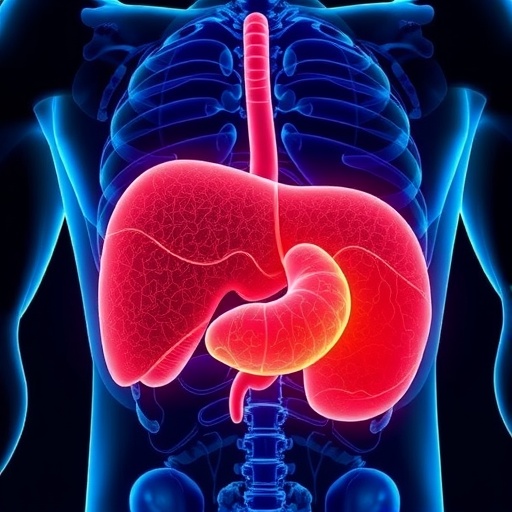
In a groundbreaking study published in Nature Communications, researchers have unveiled a novel molecular mechanism linking dietary habits to the pathogenesis of Metabolic dysfunction-associated steatotic liver disease (MASLD), a rapidly escalating global health concern. The study illuminates how diet-induced downregulation of Raf kinase inhibitor protein (RKIP) disrupts the delicate balance of phosphatidylcholine (PC) and phosphatidylethanolamine (PE) homeostasis within the endoplasmic reticulum (ER), driving metabolic dysfunction and liver pathology. This discovery not only broadens our understanding of MASLD but also opens new therapeutic avenues targeting lipid metabolism and protein regulation in hepatic tissues.
MASLD, previously termed non-alcoholic fatty liver disease (NAFLD), represents a spectrum of liver conditions characterized by abnormal fat accumulation in hepatocytes, which can progress to inflammation, fibrosis, and cirrhosis. Its alarming prevalence, closely tied to dietary patterns and sedentary lifestyles, underscores the urgency for elucidating the molecular underpinnings fueling its progression. This latest inquiry by Li et al. delves deep into the interface between diet, intracellular signaling pathways, and lipid biochemistry, highlighting RKIP as a critical regulatory node.
RKIP is known primarily for its role in modulating key signaling cascades, such as the MAPK/ERK pathway, thereby influencing cell proliferation and survival. However, its involvement in lipid metabolic pathways within the liver has remained largely unexplored until now. The authors demonstrate that diet-induced metabolic stress leads to a significant reduction in hepatic RKIP levels, which in turn perturbs the dynamic equilibrium between PC and PE in the ER membrane. This homeostatic imbalance disrupts ER function, triggering a cascade of metabolic disturbances deserving of further mechanistic exploration.
Phospholipids like PC and PE are essential constituents of cellular membranes, particularly within the ER, where they govern membrane fluidity, curvature, and the proper functioning of membrane-bound enzymes. The precise ratio of PC to PE is critical for maintaining ER homeostasis and ensuring effective lipid and protein processing. By employing advanced lipidomic profiling and molecular biology techniques, the study reveals that RKIP downregulation skewers the PC/PE ratio, which compromises ER integrity and fosters an environment conducive to metabolic stress and lipotoxicity.
The disruption in PC/PE balance manifests as aberrant activation of the unfolded protein response (UPR), an adaptive mechanism elicited by ER stress. Chronic UPR engagement leads to cellular dysfunction, culminating in hepatocyte injury and inflammation—hallmark features observed in MASLD progression. The research team’s integrative approach, combining genetic knockdown models with diet-induced MASLD phenotypes, convincingly attributes the pathophysiological alterations to RKIP’s influence on phospholipid homeostasis.
Further dissecting the molecular circuitry, the authors identified that the reduction in RKIP affects the enzymatic machinery responsible for phospholipid remodeling. Specifically, altered expression and activity of enzymes like phosphatidylethanolamine N-methyltransferase (PEMT), which catalyzes the conversion of PE to PC, contribute to the skewed lipid ratio. This enzymatic dysregulation underpins a self-reinforcing pathogenic loop, wherein compromised phospholipid balance escalates metabolic derangements in hepatocytes.
Crucially, the study underscores the role of diet as a modifiable environmental factor instigating RKIP downregulation. High-fat, high-sugar diets, commonly implicated in metabolic disorders, were shown to precipitate RKIP decline, suggesting that nutritional interventions could potentially restore RKIP levels and thereby recalibrate PC/PE homeostasis. This insight lays the foundation for novel preventative strategies against MASLD, centering on dietary modulation combined with molecular targeting.
The authors also explored whether augmenting RKIP expression or function could ameliorate the metabolic phenotype. Encouragingly, experimental reconstitution of RKIP in hepatocyte models restored PC/PE balance, diminished ER stress markers, and improved cellular viability under metabolic challenge. These findings point towards RKIP-based therapies as a promising frontier, with implications for drug development focused on liver disease and metabolic syndrome.
Intriguingly, this work situates RKIP within a broader context of hepatocellular lipid metabolism, intersecting with pathways involving not just phospholipids but also sphingolipids and cholesterol homeostasis. By expanding the focus beyond triglyceride accumulation to the nuanced regulation of membrane lipid species, the study offers a paradigm shift in how we conceptualize lipid-related liver pathology. This holistic perspective enhances the potential impact of future research and clinical applications.
The implications of these findings extend beyond MASLD, given that ER stress and phospholipid dysregulation are common denominators in numerous metabolic and degenerative diseases. Understanding RKIP’s regulatory function could therefore shed light on pathologies ranging from insulin resistance and type 2 diabetes to neurodegenerative disorders, where ER function and lipid metabolism are critically intertwined.
This study also raises compelling questions regarding the interplay between genetic predisposition and environmental triggers in MASLD. Variability in RKIP expression or function across populations might explain differential susceptibility to diet-induced liver damage, suggesting that personalized approaches to prevention and treatment could be informed by genetic screening. Further epidemiological and functional studies are warranted to explore this dimension.
Technological advances employed in this research, including state-of-the-art lipidomics, transcriptomics, and precise gene editing, exemplify the power of integrated methodologies in unraveling complex disease mechanisms. Such multidisciplinary strategies will be indispensable in moving from molecular insights to translational breakthroughs that can benefit patients worldwide.
Highlighting the urgent public health relevance, the authors emphasize that MASLD is poised to become the leading cause of liver transplantation if current trends persist. Thus, uncovering modifiable molecular mediators like RKIP provides a beacon of hope, promising to shift the clinical landscape towards more effective management and prevention of liver disease in the context of global metabolic challenges.
In conclusion, this study by Li and colleagues identifies RKIP downregulation as a pivotal event linking diet-induced metabolic stress to disruption of phospholipid homeostasis and ER dysfunction, ultimately driving MASLD pathogenesis. Their findings redefine the molecular framework within which metabolic liver diseases can be understood and managed, heralding a new era of targeted interventions grounded in lipid biology and cell signaling.
As the scientific community builds upon this foundational work, further exploration of RKIP-associated pathways may unlock additional therapeutic targets, while clinical trials will be essential to translate these discoveries into real-world benefits. The battle against MASLD is complex, but illuminating its molecular secrets like those revealed here lights the way towards healthier futures.
Subject of Research: Molecular mechanisms linking diet-induced RKIP downregulation to phospholipid homeostasis and MASLD pathogenesis.
Article Title: Diet-induced RKIP downregulation disrupts PC/PE-ER homeostasis to drive MASLD.
Article References:
Li, M., Ou, Q., Qin, Q. et al. Diet-induced RKIP downregulation disrupts PC/PE-ER homeostasis to drive MASLD. Nat Commun 16, 11092 (2025). https://doi.org/10.1038/s41467-025-65982-8
Image Credits: AI Generated
DOI: https://doi.org/10.1038/s41467-025-65982-8
Tags: diet-induced metabolic dysfunctiondietary patterns and liver healthendoplasmic reticulum stressintracellular signaling pathways in liverlipid metabolism and liver pathologyliver lipid homeostasisMASLD and dietary habitsmetabolic dysfunction-associated steatotic liver diseasenon-alcoholic fatty liver disease progressionphosphatidylcholine and phosphatidylethanolamine balanceRaf kinase inhibitor protein regulationtherapeutic targets for liver diseases